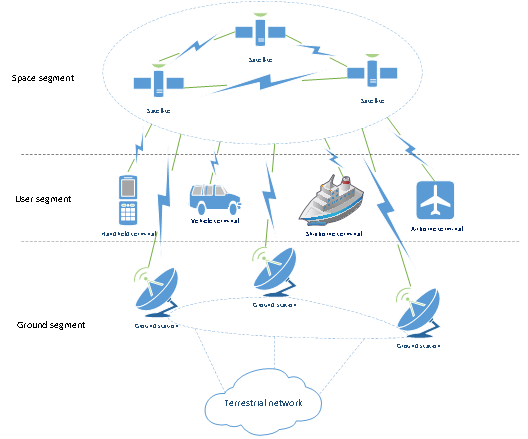
Low Earth Orbit (LEO) satellite communication systems have emerged as a critical solution to address the growing demand for global, seamless, and low-latency connectivity. Compared with Geosynchronous Earth Orbit (GEO) satellites, LEO satellites enable reduced signal delays and broad coverage. Therefore, they are particularly suitable for remote and underserved regions. This paper provides a comprehensive review of LEO satellite communication systems, focusing on three major aspects: frequency band division, system architecture, and case analysis. The study explores the utilization of various frequency bands, including L, S, C, X, Ku, Ka, Q, and V bands, highlighting their characteristics and applications. The system architecture, including the space, user, and ground segments, is analyzed in detail. Additionally, the paper examines the Starlink constellation as a typical example and discusses its architecture, performance, and coverage capabilities. However, LEO satellite communication systems face significant challenges, such as limited resources, high costs, and problems due to the high speed of satellites. Therefore, advancements in artificial intelligence, ultra-narrow beamforming, and 5G and 6G networks present promising opportunities for future development.