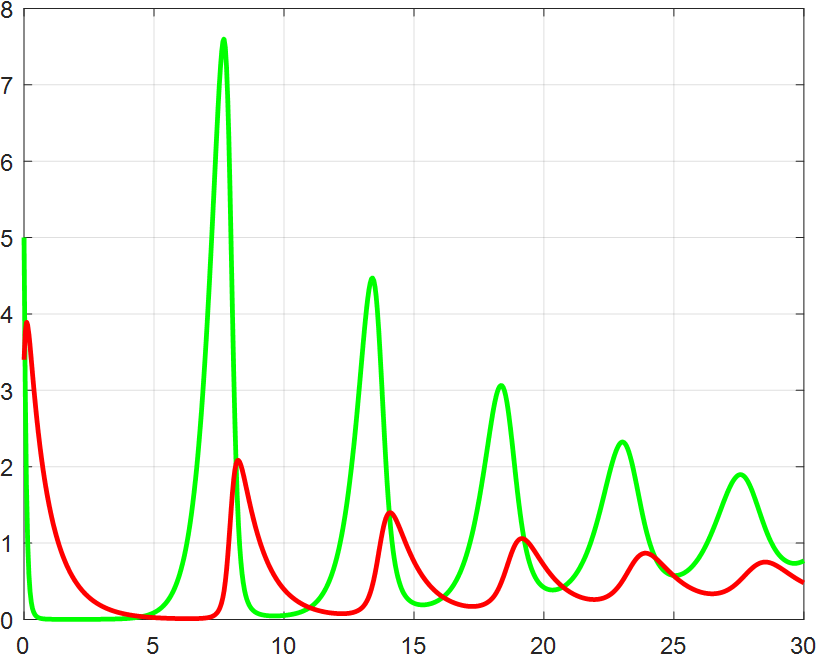
The invasive sea lamprey Petromyzon marinus poses a significant threat to aquatic ecosystems, particularly in the North American Great Lakes, due to its density-dependent sex determination mechanism. While traditional models have addressed population dynamics, they often overlook the nonlinear impacts of sex ratio variation on reproduction efficiency and ecosystem stability. This study develops a sex ratio-integrated multispecies Lotka-Volterra model to quantify how adaptive sex ratio dynamics in sea lampreys influence host-parasite interactions and energy flow. By incorporating a sex ratio factor into a tri-trophic system, we coupled nonlinear differential equations solved via the fourth-order Runge-Kutta method, with genetic algorithms optimizing parameters such as environmental carrying capacity and parasitic efficiency. Sensitivity analyses revealed threshold effects of sex ratio imbalance on genetic diversity, host resistance, and ecosystem oscillations. Results demonstrated that male-biased populations (η≥ 0.7) exhibit suppressed growth due to intra-sex competition and reduced female fecundity, aligning with logistic saturation. Conversely, female-biased ratios (η = 0.1) amplified host-parasite synchronization, increasing parasitic efficiency by 40% and destabilizing ecosystem equilibrium. Furthermore, parameter α modulated oscillation damping, while β regulated cycle periodicity, highlighting the nonlinear coupling between sex ratio dynamics and ecosystem resilience. These findings provide a mechanistic understanding of sex ratio adaptability in invasive species management and underscore the importance of integrating sex-specific traits into ecological models to predict ecosystem stability under anthropogenic and environmental stressors.