Articles in this Volume

Research Article Open Access
Research of Common Optical Microresonator Applications
Article thumbnail
Optical resonators are fundamental optical components valued for their excellent monochromaticity, high sensitivity, and integrability. These attributes make them highly versatile, enabling widespread use in laser technology, optical signal processing, imaging, detection, and high-sensitivity biochemical sensing. Studying diverse resonator structures provides deeper insights into their overall functionality and offers crucial theoretical and data foundations. This paper reviews several prevalent optical microresonator structures, focusing primarily on a comparative analysis of microrings, microtubes, microspheres, and microdisks. It examines key performance metrics, including quality factor (Q), free spectral range (FSR), and mode volume, across these resonator types. Furthermore, the application scenarios for each structure are explored, highlighting how their distinct properties—such as ultra-high Q in spheres or efficient integration potential in rings—dictate their suitability for specific uses in sensing, lasing, or communications. The influence of resonator materials on these characteristics is also addressed. Finally, the discussion encompasses current fabrication challenges and future research perspectives for advancing microresonator technology towards enhanced performance and broader integration.
Show more
Read Article PDF
Cite
Research Article Open Access
Comparison Between Low Earth Orbit Satellite and Geostationary Earth Orbit Satellite in Direct-to-Phone Satellite Communication Technology
Direct-to-phone satellite communication technology is primarily applied in remote areas, emergency rescue and other scenarios where communication network coverage is significantly insufficient or a coverage dead zone. This paper mainly compares the differences between GEO and LEO satellites achieving direct-to-phone connectivity through literature analysis and comparative analysis methods. The differences include hardware technology comparisons and non-terrestrial network technology comparisons. The aim is to elucidate the differences and key technologies between GEO and LEO satellites at different orbital altitudes in achieving satellite direct-to-phone Communication, and to point out the possibilities for future integration and development of these technologies. Through the research and comparison in this paper, it is found that the GEO scheme needs a special terminal with particular chips, suitable for emergency communication but limited capacity; LEO scheme is compatible with existing mobile phones and is implemented by spaceborne base stations and large-scale antennas, which have low latency but requires dense networking. The NTN technologies effectively solve the problems of time delay and frequency shift and so on in satellite-ground fusion. In the future, the coordinated development of terminal-satellite-NTN network should be combined to realize a more efficient satellite-ground integrated communication system.
Show more
Read Article PDF
Cite
Research Article Open Access
Research on Performance Parameters and Testing Methods of Near-Infrared Photo-Detectors
Article thumbnail
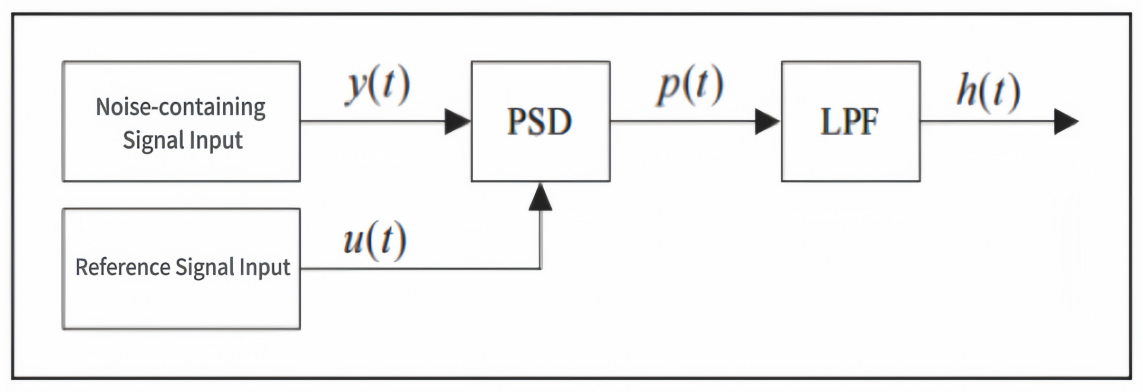
The study focuses on the performance parameters of near-infrared photo-detectors and their measurement methods to standardize and refine testing technology. It introduces methods for responsivity, detectivity, and response time. Direct measurement methods are highly accurate but complex and harsh, while indirect methods are easy but lack uniform standards in the near-infrared optical band. The detection rate is measured indirectly using noise voltage size and phase-locked amplification technology for improved accuracy. Response time measurement methods include frequency response and impulse response methods, with frequency response having high accuracy but limited applicability and impulse response being intuitive but requiring high bandwidth. Future parameter measurement technology will focus on high precision and fast test development.
Show more
Read Article PDF
Cite
Research Article Open Access
Control Strategies for Embodied Humanoid Robots: Reinforcement Learning vs. Multi-Contact Planning
As the application demand for humanoid robots in complex and unstructured environments increases, how to balance adaptability and stability in control strategies has become increasingly critical. This paper compares and analyzes two typical humanoid robot control methods: a reinforcement learning-based controller on the Digit V3 platform and a multi-contact planning and control (MCPC) framework on the COMAN+ platform. This work addresses a gap in the literature that lacks a comparative perspective on cross-method and cross-platform practical verification. It first introduces the design concept and training mechanism of the reinforcement learning controller, which removes reliance on gait clocks and achieves the natural switching between standing and walking under external disturbances. Then it analyzes the MCPC framework, which combines posture sampling, nonlinear programming (NLP) trajectory optimization, and torque-level balance control to support the robot to stably perform complex multi-contact tasks. Experimental results show that the reinforcement learning controller exhibits excellent robustness in disturbance response and command switching, while the MCPC method shows higher accuracy and repeatability in structured tasks. The results of this study show that reinforcement learning is suitable for dealing with scenarios with strong dynamic adaptability, while planning control emphasizes interpretability and physical feasibility. The comparative analysis presented in this article provides a reference for understanding the trade-offs in humanoid robot control strategies and also offers guidance for truly realizing embodied intelligence in humanoid robots in the future.
Show more
Read Article PDF
Cite
Research Article Open Access
The Progress in the Coupling and Optimization of Mechanical and Corrosion Properties in High-Entropy Alloys
High-Entropy Alloys (HEAs), as emerging multi-component materials, exhibit great potential for functional applications, particularly in corrosion-resistant coatings due to their outstanding mechanical performance and excellent corrosion resistance. However, achieving an effective balance between mechanical performance and corrosion resistance remains a key challenge for practical implementation. This study aims to elucidate the intrinsic relationship between mechanical performance and corrosion behavior in HEAs, while summarizing recent advances and emerging trends in the field. Through a review of recent literature, this paper summarizes the mechanical advantages of HEAs over conventional alloys in terms of strength, ductility, fracture toughness, fatigue endurance, and crack resistance. In addition, it examines their corrosion characteristics, particularly under chloride-containing environments. The results demonstrate that HEAs possess unique potential for achieving a synergistic optimization of mechanical and corrosion performance, although challenges such as compositional complexity and unclear service mechanisms persist. As such, it outlines the major bottlenecks and future research directions, offering theoretical insights and practical implications for the design and application of HEAs.
Show more
Read Article PDF
Cite
Research Article Open Access
Resource Allocation in Hybrid and Aggregated VLC-RF Systems
Article thumbnail
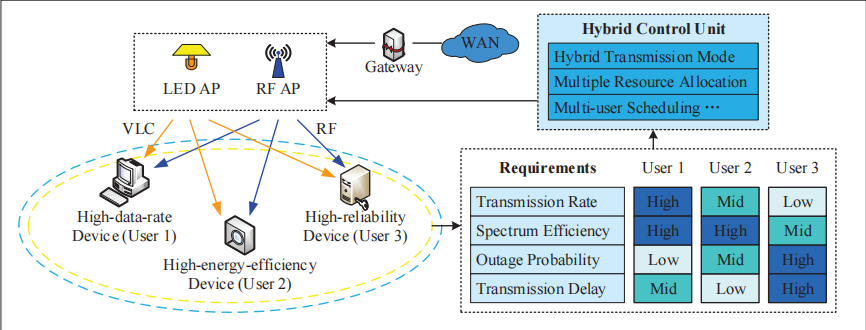
This paper comprehensively reviews resource allocation strategies in hybrid and aggregated visible light communication (VLC) and radio frequency (RF) systems. Leveraging the complementary characteristics of VLC and RF technologies, these systems aim to enhance data rates, energy efficiency, and system fairness. The study synthesizes recent advancements in optimization algorithms, including convex optimization, heuristic approaches, and emerging machine learning techniques, addressing critical challenges such as incomplete channel state information (CSI), user fairness, handover latency, and interference coordination. The analysis identifies the strengths and limitations of hybrid and aggregated systems under varying conditions by analysing key research contributions. The results demonstrate that hybrid systems offer greater adaptability in low-capacity environments, while aggregated systems are more energy-efficient when capacity is high. In addition, the study emphasizes the importance of using artificial intelligence to manage resources in a flexible way. This summary offers important information for the creation of future wireless communication systems.
Show more
Read Article PDF
Cite
Research Article Open Access
Research on the Coordinated Optimization Scheduling Strategy of the Multi-Source Power Generation System Incorporating EH-CSP Power Station
Article thumbnail
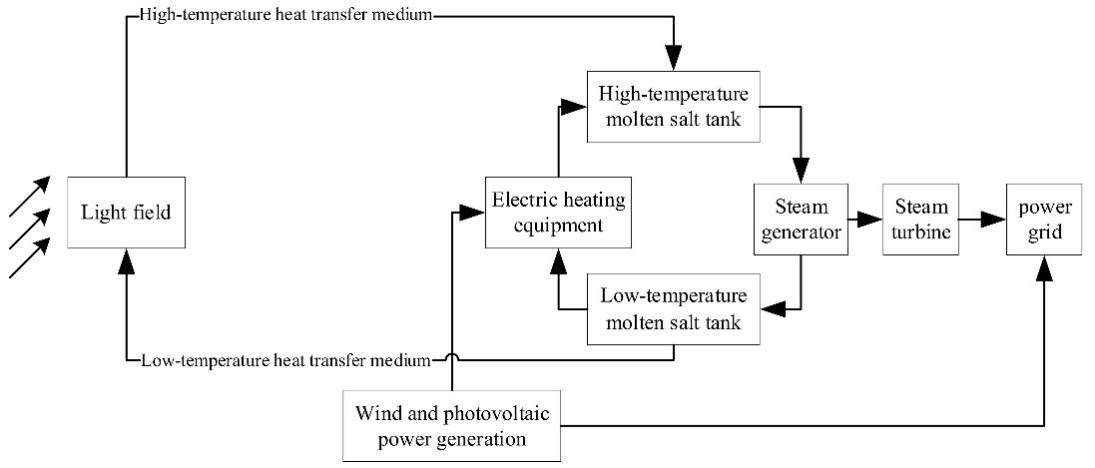
To achieve efficient accommodation of renewable energy and ensure the safe and stable operation of the power system, this paper proposes a day-ahead and intra-day optimal dispatch method for a multi-source power generation system incorporating an Electric Heaters-Concentrating Solar Power (EH-CSP) plant. The proposed model consists of two components: a day-ahead dispatch plan with a 1-hour time resolution, which determines the generation schedule one day in advance based on load demand curves and renewable energy output prediction curves, serving as input variables for the intra-day dispatch; and an intra-day dispatch plan with a 15-minute time resolution over a 4-hour execution cycle. Without considering thermal unit start-up/shutdown costs, the intra-day dispatch first performs rolling optimization for hours 1-4 using day-ahead scheduling data and ultra-short-term load/renewable energy forecasts. Subsequently, it predicts the next hour's load demand and renewable output based on optimized results from hours 1-4, then performs rolling optimization for hours 2-5. This process repeats 24 times to obtain 96-time-point data for load, wind, PV, and EH-CSP plant outputs. Finally, these data are used to determine power source dispatch schedules and system spinning reserve plans. The model is solved using the Curve-Incremental Strategy-based Adaptive Particle Swarm Optimization (CIPSO) algorithm. Case studies on a modified IEEE 30-node system demonstrate that the proposed method effectively enhances renewable energy utilization and reduces operational costs in power systems.
Show more
Read Article PDF
Cite
Research Article Open Access
Recent Advances in Interface Engineering for Enhancing the Performance of Ceramic Matrix Composites
Article thumbnail
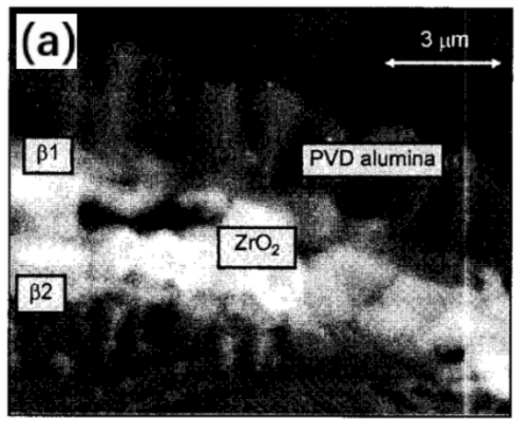
Due to their exceptional thermal stability, oxidation resistance, and mechanical strength, ceramic matrix composites (CMCs) are required in high-temperature, chemically aggressive, and mechanically demanding environments, where traditional materials often fail. These attributes make CMCs well-suited for demanding applications in aerospace, energy, and industrial sectors, where they withstand extreme heat, mechanical stress, and chemical exposure, playing a crucial role in areas such as aircraft engines, space exploration, and energy conversion systems. Therefore, the paper reviews recent progress in interfacial modification strategies for CMCs, summarizing key findings via a comparative analysis of experimental results and a meta-analysis of relevant literature. The results indicate that innovative interface engineering techniques like fiber coating, interphase tailoring, chemical vapor infiltration, and thermal treatment under controlled atmospheres, notably enhance the thermal resistance and fracture toughness of CMCs. In addition, it scrutinizes the existing limitations of current engineering strategies and provides valuable insights into future trends in interface engineering for CMCs.
Show more
Read Article PDF
Cite
Research Article Open Access
The Collaborative Optimization Path of Lightweight Design and Additive
In the era of advanced manufacturing, lightweight design and additive manufacturing have become core elements for enhancing the performance of mechanical systems. Lightweight design optimizes material distribution and structural forms to effectively reduce product weight, thereby minimizing energy consumption and improving efficiency. Additive manufacturing, with its unique layer-by-layer fabrication process, enables the rapid production of complex structures and significantly expands design freedom. However, their independent applications face limitations: lightweight design may be constrained by traditional processing techniques, while additive manufacturing still needs improvements in material properties and production efficiency. Collaborative optimization integrates the two approaches, breaking through the bottlenecks of traditional design and manufacturing to create more efficient and economical innovative structures. This strongly promotes the leapfrog development of mechanical systems in aerospace, the automotive industry, medical devices, and other fields. This paper deeply focuses on the collaborative optimization path of the two, systematically exploring its revolutionary significance for the design and production of mechanical components.
Show more
Read Article PDF
Cite
Research Article Open Access
Flood Risk Management and Optimization of Flood Control Infrastructure in the Context of Resilient Cities
In the context of resilient cities, flood risk management and the optimization of flood control infrastructure hare key issues for urban sustainable development. Climate change and urbanization have increased the frequency and severity of floods, prompting governments and researchers to focus on flood risk assessment and management. This paper comprehensively analyzes the research status at home and abroad in the fields of resilient cities and flood control infrastructure, points out that the concept of resilient cities provides new ideas for flood risk management, and emphasizes that urban planning and design with “resilience” as the core should be integrated into the construction of flood control facilities. At the same time, the study found that the existing flood control infrastructure is vulnerable to sudden flood events and urgently needs to improve its resilience through optimized design and scientific management. Through the assessment of flood risks, the vulnerable links of the city in the face of floods can be identified, and corresponding optimization strategies can be proposed. The paper aims to contribute to the understanding of resilient city development, promote the scientific planning and rational allocation of flood control infrastructure, thus enhancing disaster resistance and adaptability of the city, and ultimately achieving sustainable development goals.
Show more
Read Article PDF
Cite