Articles in this Volume

Research Article Open Access
Lightweight Model Inference Techniques in Edge Computing Environments: Review
Computation methods of artificial intelligence are gradually shifting from cloud computing to edge computing and on-device machine learning (ODML). How to contribute an effective machine learning model in the resource-limited environment, has become a significant and rapidly evolving research field. The training and inference of deep learning model used to be performed on the cloud high-performance computing clusters. There are many problems with uploading data to cloud, for example, high latency, round-trip latency, security issues, and a lack of privacy guarantees, and in this case, people cannot make real-time decisions. So, using edge devices to process tasks can significantly decrease the cost of transmission. The need of low latency, quick response, privacy protection and high adaptability has become the drive force of this change. This report aims to provide a comprehensive overview of lightweight model inference technologies in edge computing environments, mainly targeting low performance devices, such as mobile phones, intelligent equipment in vehicle, VR/AR headsets and Internet of Things (IoT). This paper introduces efficient learning and inference on edge devices from four aspects: 1) the definition of core terminology and concrete application environment; 2) the core technology of model compression, neural networks and knowledge distillation, which is used to deal with the tasks in the resource-limited environment; 3) the standards for evaluation of time/space complexity; 4) the challenge and opportunity which people face currently and in future.
Show more
Read Article PDF
Cite
Research Article Open Access
Adaptation of Multicultural Music Teaching Resources Supported by Generative Artificial Intelligence
Article thumbnail
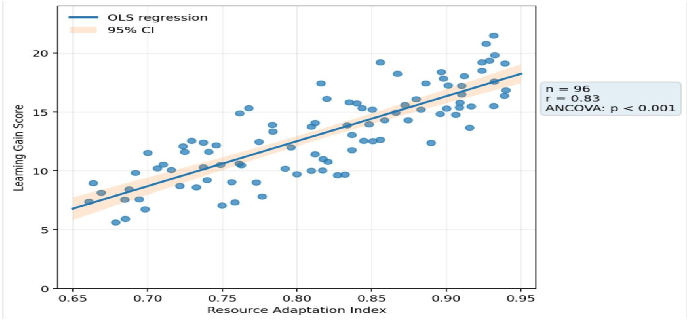
Multicultural music education plays an important role in expanding students' aesthetic experience and cultural understanding. However, the development of traditional teaching resources is often limited by scattered materials, insufficient difficulty differentiation, and low classroom adaptability. Generative artificial intelligence provides computer supported methods for the rapid generation of cultural background notes, listening questions, rhythm exercises, and differentiated quizzes. It also allows resource quality to be measured through semantic similarity, keyword coverage, difficulty matching, and platform based learning behavior. Focusing on the adaptation of multicultural music teaching resources supported by generative artificial intelligence, this study designed an experimental process that included resource generation, teacher review, platform release, and quantitative evaluation. The experiment involved 96 senior high school students, who were assigned to an experimental group and a control group. Moodle was used to collect pretest and posttest scores, task completion rate, learning duration, interaction frequency, and resource adaptation index. The results showed that the resource adaptation index increased from 0.72 to 0.84 after teacher revision. The experimental group achieved a higher learning gain than the control group. The resource adaptation index also showed a significant positive correlation with learning gain. Random forest results further indicated that the resource adaptation index, task completion rate, and interaction frequency were the main predictors of learning outcomes. These findings suggest that generative artificial intelligence can improve the structural quality of multicultural music resources, while teacher review and computerized evaluation remain essential for ensuring cultural accuracy and instructional effectiveness.
Show more
Read Article PDF
Cite