Articles in this Volume

Research Article Open Access
Research on Dynamic Regulation Mechanism of Embodied Tactile Feedback Based on Stimuli-Responsive Wrinkled Interfaces
Article thumbnail
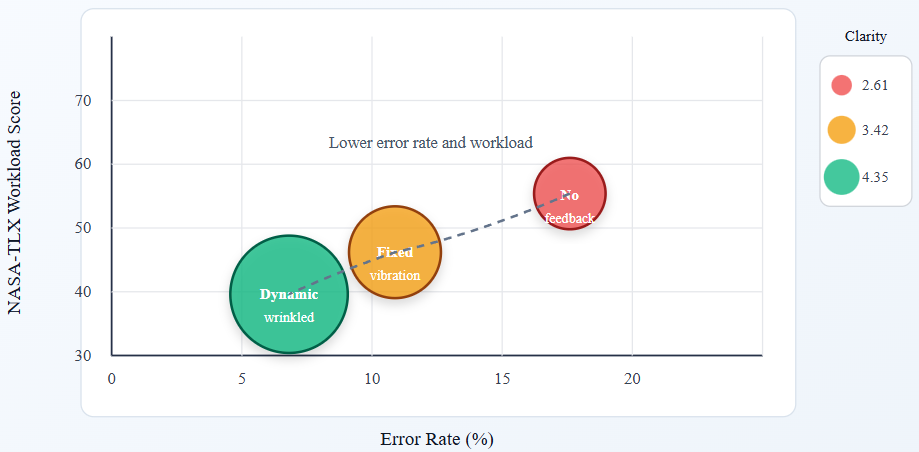
Human-computer interaction in embodied intelligent systems is moving from visual and auditory dominance toward multimodal bodily perception. Tactile feedback has become a key perceptual channel in teleoperation, soft robotics, and immersive interaction. Traditional vibration feedback can provide basic cues, but its feedback pattern is relatively fixed. It is difficult to form continuous and computationally controllable tactile regulation according to contact states and user operations. Stimuli-responsive wrinkled interfaces can generate reversible surface morphological changes under thermal, pressure, or electrical stimulation. Thus, wrinkle wavelength, amplitude, and stimulation intensity can serve as adjustable tactile parameters. Based on this issue, a wrinkled interface composed of a PDMS elastic substrate and a responsive polymer film was constructed. Pressure sensors, a temperature control module, a signal acquisition system, and machine learning models were used to analyze the relationship among interface morphology, tactile signal features, and user behavioral responses. The experimental results show that dynamic wrinkled feedback outperforms no tactile feedback and fixed vibration feedback in texture recognition, contact force discrimination, response time, and task workload. This study shows how these wrinkle structures can be used as dynamic tactile coding elements within embodied intelligence systems. These structures offer a much more natural and tunable method of providing feedback.
Show more
Read Article PDF
Cite
Research Article Open Access
Fundamental Aerodynamic and Propulsion Principles of Aerospace Vehicles Based on Fluid Mechanics and Rocket Dynamics
Aerospace engineering is built entirely upon two core modules taught in university courses: classical fluid mechanics and rocket dynamics. Although university courses cover these theories separately, the logical links between low-speed flow, supersonic aerodynamics and space propulsion are rarely summarized systematically in lecture materials. This papersystematizes the complete theoretical framework using the entire teaching content of the aerospace engineering course delivered by Professor Ian Eames. This study employs document review and theoretical comparison to synthesize flow similarity criteria, governing equations, airfoil theories, shock wave relations, gas turbine cycles and rocket motion formulas, and to compare flow features taught in different course chapters. The study derives from course knowledge that Reynolds number controls viscous flow while Mach number dominates compressible flow; boundary layer and shock waves are the main sources of flight drag; rocket thrust is produced by mass ejection, and Hohmann transfer is the optimal fuel-efficient orbit as taught in orbital lessons. This paper integrates scattered course knowledge into one framework and explains the limitations of ideal theoretical models used in class.
Show more
Read Article PDF
Cite
Research Article Open Access
Research on the Application of Cu/W Composites in Thermal Management of Electronic Packaging
Article thumbnail
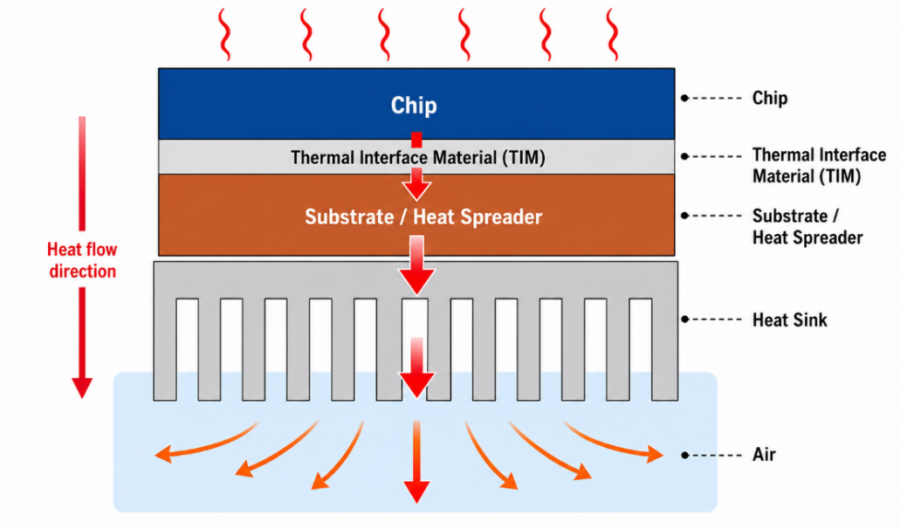
The copper-tungsten (Cu/W) composite material relies on the Cu phase to undertake the major heat-transfer function and uses the W phase to restrict thermal expansion. Therefore, its composition can be designed to balance the thermal conductivity and dimensional stability required for packaging heat sinks. Starting from the problems of heat-flow transmission and thermal mismatch in electronic packaging, this paper reviews the research progress in preparation and application of Cu/W materials. By comparing the densification routes including powder metallurgy, infiltration, hot-press sintering and spark plasma sintering, this work analyzes the influences of pores, connectivity of Cu phase and W-Cu interfaces on thermal conductivity and thermal expansion behaviour. The functions and limitations of activated sintering, surface coating and functionally graded structures are also discussed. Existing studies indicate that performance optimization should not take relative density as the sole objective. Interfacial thermal resistance, processing cost and thermal-cycling stability also need to be considered simultaneously. On this basis, this paper summarizes the unsolved problems in large-scale preparation and packaging reliability, and provides references for material selection and structural design of Cu/W heat sinks and packaging substrates.
Show more
Read Article PDF
Cite
Research Article Open Access
Research Progress and Recycling Strategies of Crystalline Electrode Materials for Sustainable Energy Storage
With the massive development of new-energy vehicles and renewable energy, the demand for high-performance, safe, and sustainable energy storage technologies has constantly increased. The increasing demand for electric vehicles and renewable energy systems has accelerated the development of lithium-ion batteries, making them one of the most widely adopted solutions for modern energy storage. However, issues including metal resource consumption, environmental impacts during production, and the recycling of spent batteries have attracted increasing attention. Therefore, exploring electrode materials with high performance, low resource consumption, and excellent recyclability is crucial for future green energy storage technologies. This review focuses on crystalline electrode materials for sustainable lithium-ion batteries and summarizes recent research progress in representative cathode and anode materials. Typical cathode materials, including lithium iron phosphate and lithium manganese oxide, as well as anode materials such as graphite and silicon-based materials, are investigated. Their crystal structures, energy storage mechanisms, and optimization strategies are analyzed. Moreover, recycling and direct regeneration technologies for crystalline electrode materials from spent lithium-ion batteries are reviewed. Life cycle assessment is used as an important tool to evaluate energy consumption and environmental impacts throughout material production and recycling processes. The results demonstrate that optimizing crystal structure design and improving material recyclability can effectively reduce resource consumption and environmental pressure. This review emphasizes the strategies for achieving improved performance, reduced cost, and enhanced sustainability in future energy storage applications.
Show more
Read Article PDF
Cite
Research Article Open Access
Energy Storage Mechanisms and Recent Advances in Iodine-Modified Carbon-Based Supercapacitors
Article thumbnail
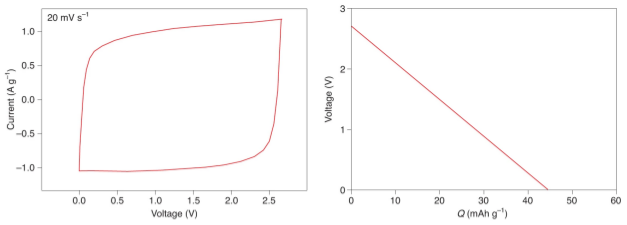
Porous carbon materials are an important series of materials for the electric double layer supercapacitors (EDLCs). However, they have a limited energy storage performance due to non-Faradaic charge storage. The incorporation of iodine in the porous carbon structure offers an interesting pathway to bring both electric double-layer capacitance and extra Faradaic charge storage. The review details three key mechanisms in iodine modified carbon-based supercapacitors, namely: iodine redox reaction to enhance the charge storage capacity, interfacial interaction between iodine and carbon to control electronic transport to the carbon surface and the retention of iodine by nanoscale confinement to stabilize iodine species, and to inhibit the migration of polyiodide. It is proposed that the iodine redox chemistry and iodine-assisted pore-structure optimization primarily improve the charge-storage ability and the interfacial regulation could improve the rate capability and iodine utilization. The suppression of the migration of polyiodide and the improvement of cycling stability is especially effective at the nanoscale, because of the nanoscale confinement and interfacial stabilization. In conclusion, the ability to optimize the iodine utilisation and pore accessibility and reduce the polyiodide migration is the key to high-performance iodine-based supercapacitor. The present review offers a guideline to assess these features based on the criteria of energy density and long cycle life.
Show more
Read Article PDF
Cite
Research Article Open Access
Magnesium Phosphate Cement for Rapid Repair: Hydration Mechanisms, Early-Age Strength Development, and Application Perspectives
Article thumbnail
Magnesium phosphate cement (MPC) is a rapid-hardening cementitious material with high early-age strength and good bonding performance, making it attractive for emergency and rapid repair applications. This review summarizes the hydration mechanisms, early-age strength development, and engineering applications of MPC. The setting and hardening of MPC are mainly governed by phosphate dissolution, MgO dissolution, ion interactions, and the rapid precipitation of struvite-type hydrates. The resulting interlocking crystal network provides the structural basis for rapid strength development. Key factors affecting early-age performance include MgO reactivity, M/P ratio, water-to-binder ratio, retarder dosage, and curing conditions, which interact strongly and should be optimized together. MPC has been successfully applied in pavements, bridge decks, airport runways, railway facilities, and other localized repairs requiring short closure periods. However, short working time, concentrated heat release, early-age water sensitivity, and relatively high material cost still limit wider application. Future research should focus on multi-objective mix design, durability, low-cost raw materials, and standardized reopening criteria.
Show more
Read Article PDF
Cite
Research Article Open Access
The Limits of Evidence-Based Material Selection for Children's 3D-Printed Tactile Learning Aids: A Structured Re-analysis of Polylactic Acid, Glycol-Modified Polyethylene Terephthalate and Acrylonitrile Butadiene Styrene
Article thumbnail
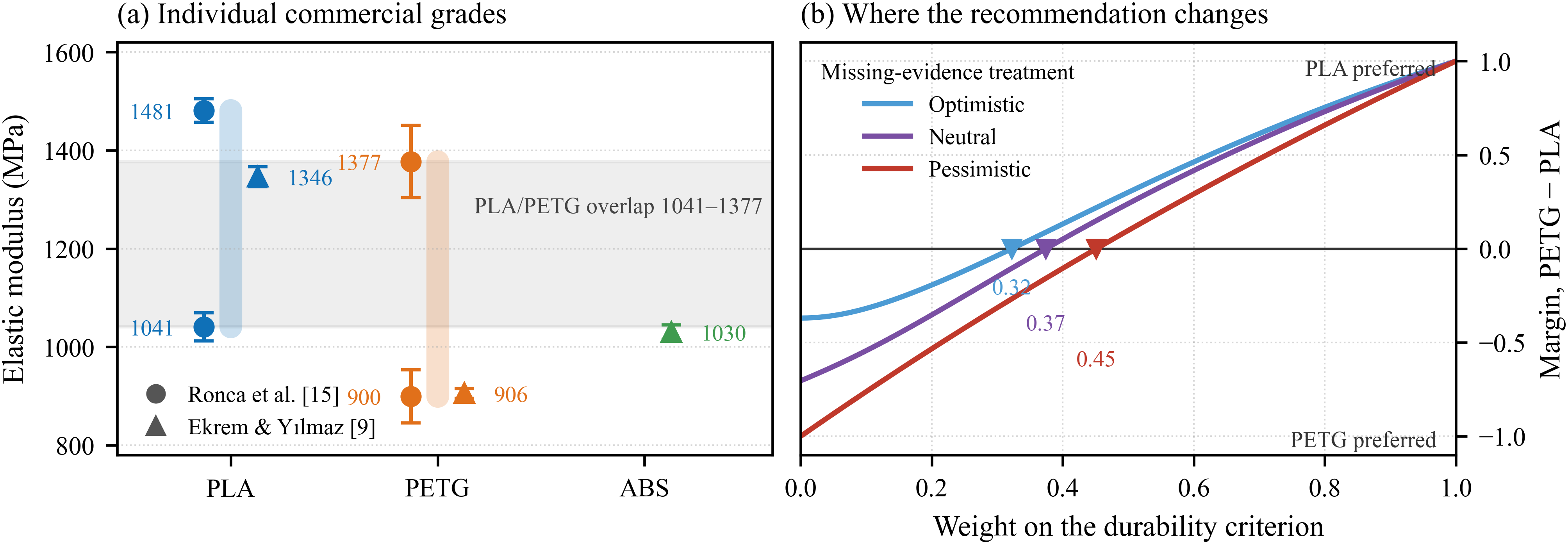
Low-cost material extrusion has made customised tactile learning aids available to children with visual impairment, but the literature comparing polylactic acid (PLA), glycol-modified polyethylene terephthalate (PETG) and acrylonitrile butadiene styrene (ABS) does not state which polymer such an aid should use, and the application literature does not report the filament it employs. Reported values were extracted from fifteen sources under a declared protocol, normalised, and combined in a weighted decision model with a sensitivity analysis over criterion weights and over three treatments of cells for which no evidence exists. Three results follow. Elastic modulus ranges for individual commercial PLA and PETG grades overlap between 1041 and 1377 MPa across two laboratories, so supplier identity outweighs polymer identity. ABS attains first rank in none of 10,626 sampled weight vectors. The durability weight at which PETG replaces PLA moves from 0.32 to 0.45 according only to how untested cells are treated. Recommendations at polymer level are therefore unsupported; selection must specify grade, process parameters and service conditions.
Show more
Read Article PDF
Cite
Research Article Open Access
Intelligent Assessment of Living Street Spatial Quality in Older Residential Communities Based on Streetscape Semantic Segmentation
Article thumbnail
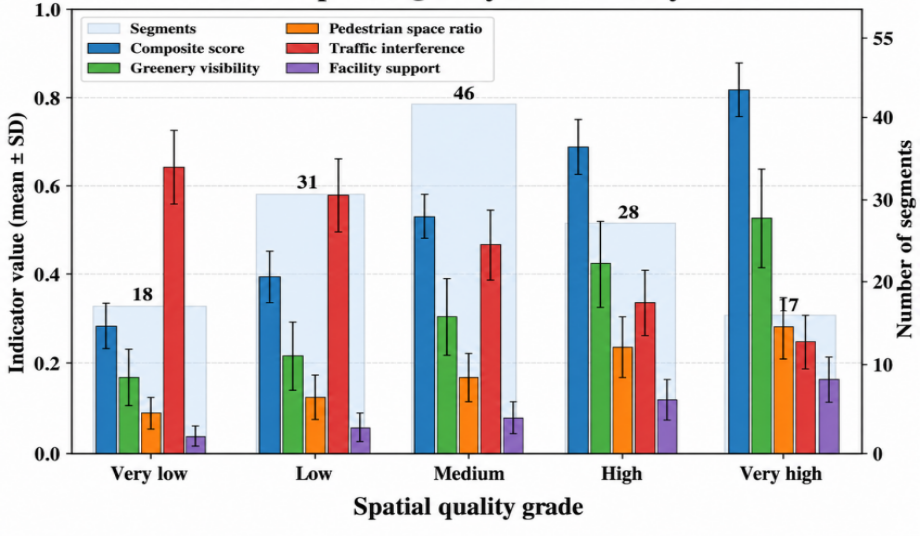
Old residential neighborhoods include living streets that serve pedestrians, parking, accessibility, informal gathering, and maintenance of the neighborhood. Traditional approaches to evaluate such streets are based on field observations and expert ratings, limiting the possibility to compare different places. In this paper, an intelligent approach is developed to assess the living street spatial quality through the use of Baidu Street View imagery and semantic segmentation. Xuhui District, Shanghai, is the studied area with 1,200 directional street-view images taken in 2024 and analyzed through a fine-tuned DeepLabV3+ model. From the semantic output of pixels, six indices are calculated: greenness visibility index, pedestrian space ratio, traffic interference, enclosure index, facilities support, and interface openness. Indices are standardized and aggregated through entropy weighting method, with visualizations created in ArcGIS Pro. The model attains 0.786 ± 0.041 Intersection-over-Union (IoU) score and 0.842 ± 0.036 macro-F1 score. Scores show clear spatial distinctions between internal streets, boundary streets, and entrance interfaces.
Show more
Read Article PDF
Cite
Research Article Open Access
Research Progress on Catalyst Supports for the Oxygen Evolution Reaction in Water Electrolysis
Article thumbnail
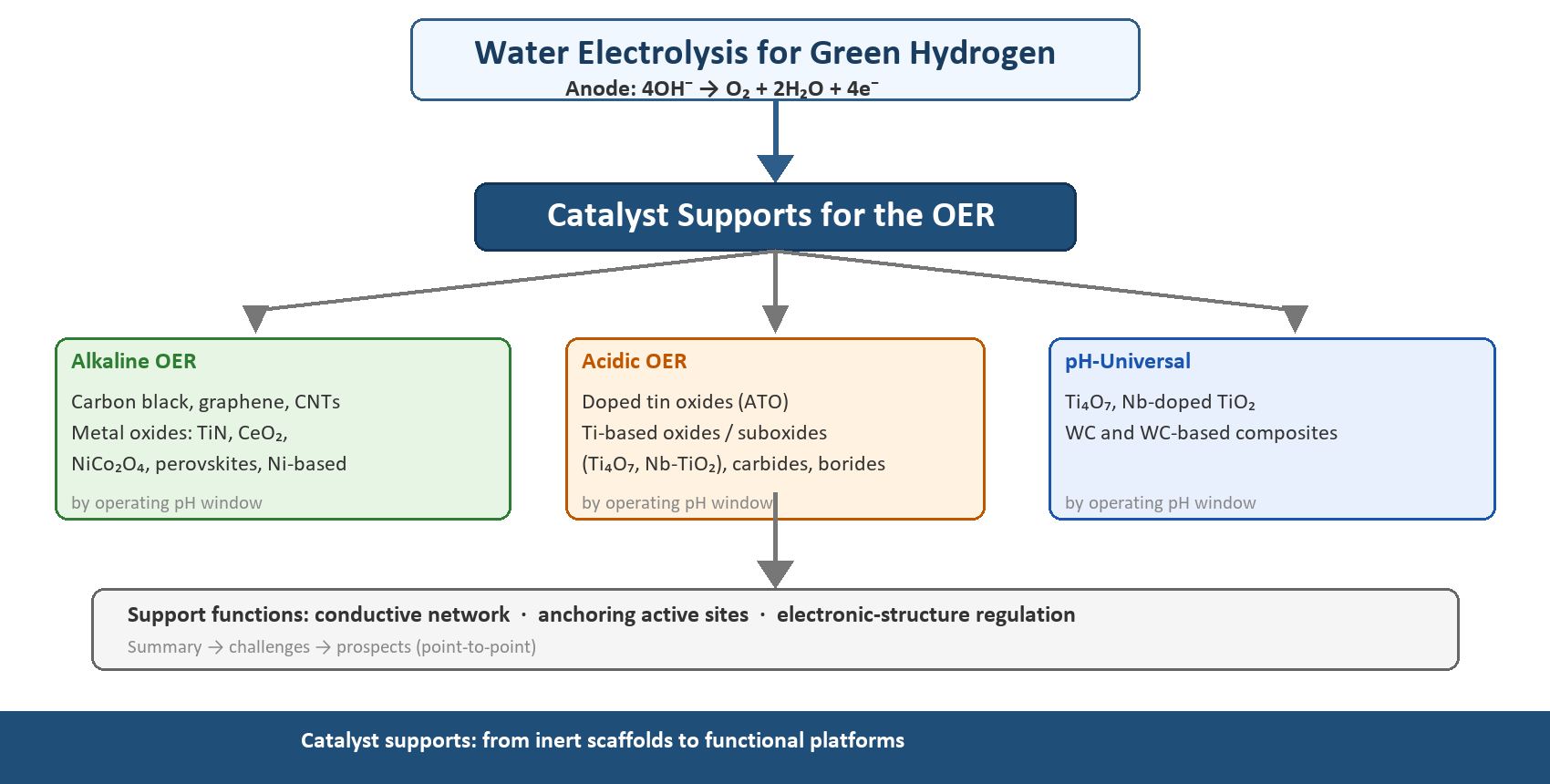
The oxygen evolution reaction (OER) is the slow half-reaction of water electrolysis, and its kinetics largely set the ceiling on the energy efficiency of green hydrogen production. In a supported electrode, what the support does is easily overlooked. It controls the dispersion of active components, the efficiency of electron transport, and the lifetime of the electrode; on these three counts rests the practicality of any catalyst. Support design has therefore grown into a central topic of OER research. This review summarizes recent progress on catalyst supports for the OER in water electrolysis, grouping them by the pH window in which they operate: supports common under alkaline OER (carbon materials and metal oxides), supports common under acidic OER (doped tin oxides, titanium-based oxides and suboxides, and conductive carbides and borides), and pH-universal supports (titanium suboxide Ti₄O₇, doped TiO₂, and tungsten carbide). For each family we introduce representative materials, recent preparation strategies, and the performance reached in typical studies, and then compare the advantages and limitations of the different support families in a single table. The review ends with a summary of the field, a point-by-point discussion of current challenges, and the prospects that follow from them, in the hope of providing a workable reference for the rational design of OER catalyst supports.
Show more
Read Article PDF
Cite
Research Article Open Access
Chemical Degradation of Microplastics: Current Technologies, Mechanisms, Challenges, and Future Perspectives
Article thumbnail
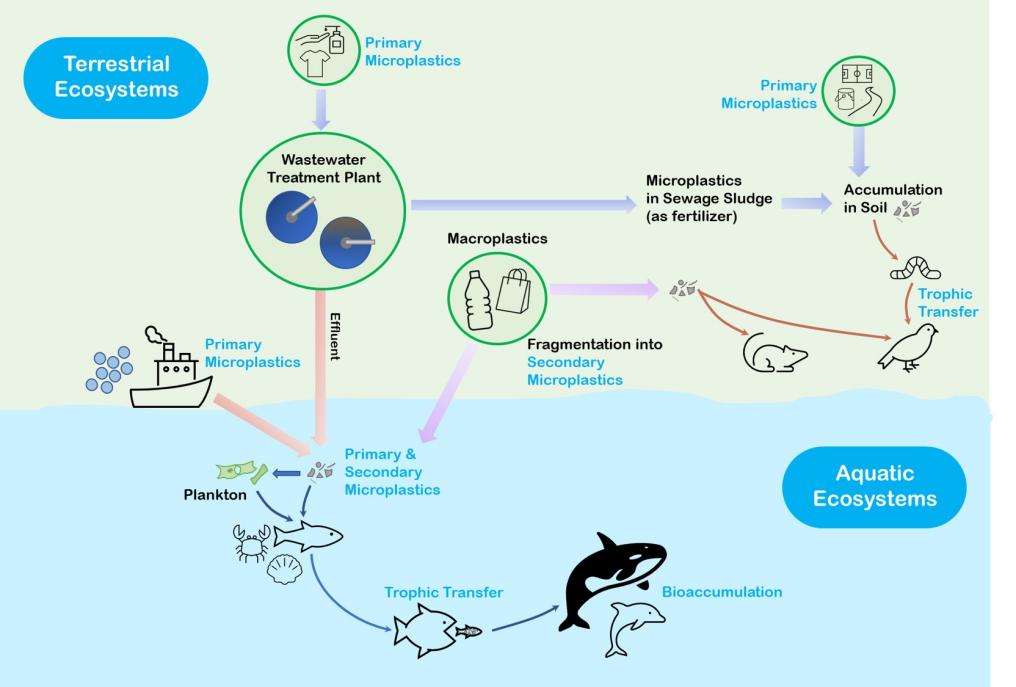
Plastic pollution and pervasive microplastic contamination across terrestrial- aquatic ecosystems have raised widespread environmental concerns. Nevertheless, conventional water treatment only physically separates microplastics instead of destroying polymer structures, merely transferring pollutants rather than eliminating them completely. Against this backdrop, advanced oxidation processes (AOPs)- based chemical degradation stands out as a promising strategy, for highly reactive radicals can directly cleave polymer backbones. This review first outlines chemical properties and degradation patterns of typical microplastics including PE, PP, PET, PS and PVC. Subsequently, it systematically compares core mechanisms, merits and drawbacks of representative AOP technologies: photocatalysis, Fenton-like oxidation, ozonation, electrochemical oxidation and persulfate-activated hybrid systems. Notably, particle fragmentation should not be confused with genuine mineralization, since surface cracking and weight loss cannot guarantee full conversion of plastic carbon into harmless CO₂ and H₂O. In addition, practical application faces major obstacles such as incomplete mineralization, high energy consumption, difficult catalyst recovery and toxic intermediate risks. More importantly, most laboratory tests use pristine microplastics, whose behaviors differ greatly from environmentally aged counterparts. Accordingly, renewable-energy-driven hybrid systems are highly recommended for future research. Ultimately, standardized evaluation criteria, reusable catalysts and toxicity assessments are essential to translate lab-scale achievements into real-world microplastic remediation.
Show more
Read Article PDF
Cite