Articles in this Volume

Research Article Open Access
Battery health status assessment technology based on big data and artificial intelligence
Article thumbnail
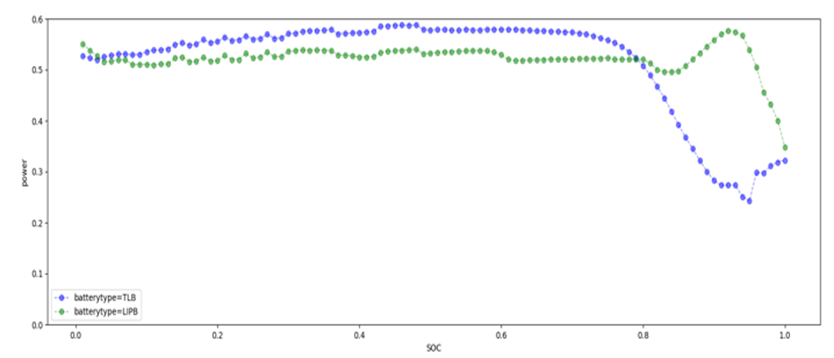
A data-driven battery health status evaluation method based on electrochemical models, big data, and mathematical statistics is proposed in this paper to address the issues of long cycle, low efficiency, and high cost in current battery health status detection. This detection method in this study first calculates the Soc-power parameters of the vehicle series based on the log data of valid orders in the history of the vehicle series. Then, combined with the data of each order, the initial evaluation capacity of the order is calculated. Next, an anomaly detection algorithm is used to exclude abnormal orders from the vehicle within the past 60 days. The average of the initial evaluation capacity of the order is used to obtain the final evaluation capacity of the order. Finally, a sliding average is used to obtain the evaluation capacity of the battery, divide the evaluated capacity by the nominal capacity to obtain the battery health status. Based on this technology, the current health status of the battery can be quickly and accurately obtained, while reducing the detection cost and cycle, allowing for real-time detection of the battery's health status.
Show more
Read Article PDF
Cite
Research Article Open Access
Research on the effects of global warming on forest litter decomposition
Global warming is currently one of the foremost environmental challenges, exerting a profound and extensive influence on natural ecosystems. The alteration of forest litter, as a crucial source of organic matter within these ecosystems, plays a pivotal role in the context of global warming. Litter decomposition represents the process through which carbon and nutrients contained therein are transferred, serving as a crucial nexus for vegetation-litter-soil nutrient cycling and biogeochemistry, playing a significant role in soil nutrient composition. This paper aims to investigate the impact of global warming-induced changes in certain factors on the rate of forest litter decomposition, while evaluating their potential implications for ecosystem function, the carbon cycle and climate change. This study delves into the complex interplay between various environmental factors and their impact on forest litter decomposition. The five factors examined in this research—temperature, precipitation, snow cover and associated freeze-thaw phenomena, soil composition, and disasters—all play a crucial role in shaping the rate of decomposition. Based on the findings presented in this paper, it can be inferred that global warming will exert direct or indirect influences on forest litter decomposition from multiple perspectives.
Show more
Read Article PDF
Cite
Research Article Open Access
Application of nanotechnology-based battery performance improvement in the field of electric vehicles
Article thumbnail
With the global energy demand on the rise, lithium-ion batteries (LIBs) have attracted more attention as they play a pivotal role in electrification revolution. This research intends to investigate how does the application of nanotechnology have an impact on the current commercialized LIBs among electric vehicles through different components such as cathode, anode and electrolyte of the battery itself under the carbon neutral context in the next decade. The major trends for cathode material are NMC/NCA though efforts have been made to reduce the reliance on cobalt; anode material is mainly graphite-based, and the mainstream electrolyte remains in liquid organic solvent that’s electrochemically unstable. Through current research findings presented in different research, a summary of the current progress made in the nanotechnology field for better battery performance will be generated, and a proposed future research focus and innovations with lingering challenges like energy density and sustainability issues for battery recycling will be carried out.
Show more
Read Article PDF
Cite
Research Article Open Access
Application of metal-based nanomaterials in lithium batteries
Article thumbnail
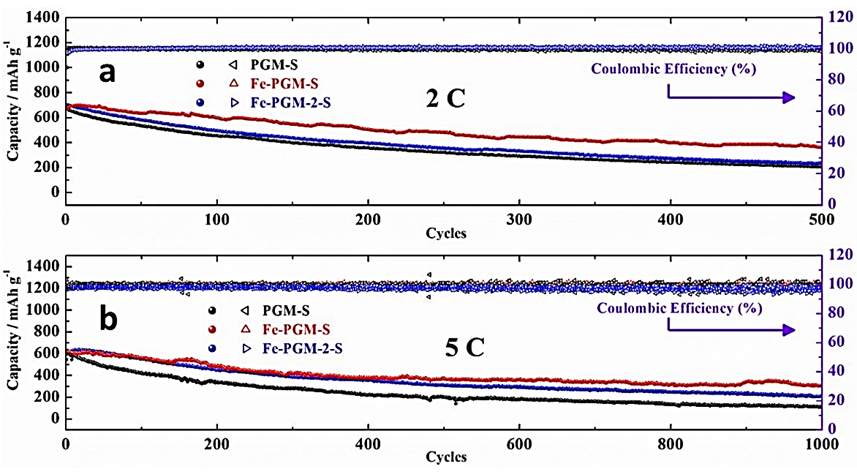
Due to the current lithium-ion battery performance there are still many deficiencies, battery performance needs to be improved, so people through the synthesis of metal-based nanomaterials, and its application in lithium batteries to improve the electrochemical performance of batteries. This paper summarizes the application of some metal nanomaterials in lithium batteries, such as silver, platinum and gold. These metal nanomaterials can not only be used in the positive electrode as a supported catalyst to solve the problems of low charge and discharge overpotential, insufficient battery capacity, and unstable cycle performance, but also can be used in the anode. Among them, TiO2 nanoparticles used in the anode can enhance lithium ion diffusion and charge transfer, which can provide higher battery capacity, rate performance and cycle stability for lithium batteries. Lithium batteries are expected to become a new generation of all-round use of energy in the future, not only because it is significantly less than the traditional fuel cell pollution to the environment, lithium batteries also have a higher performance limit than fuel cells, so how to improve the capacity of the existing lithium batteries, cycle stability and other performance is the direction that people need to study.
Show more
Read Article PDF
Cite
Research Article Open Access
Applying different nanomaterials to improve the performance of lithium-ion batteries
Article thumbnail
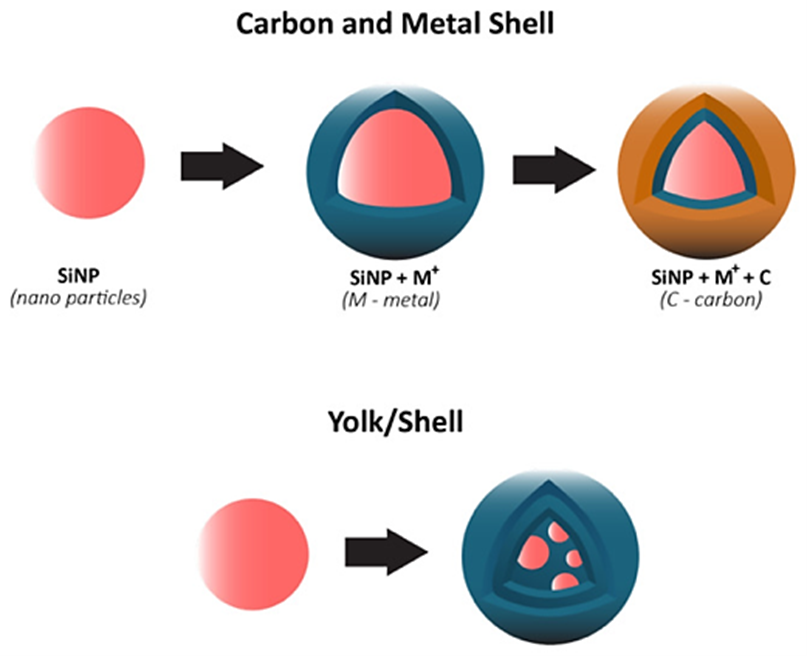
Due to their superior qualities, lithium-ion batteries (LIBs) have lately taken the top spot among rechargeable secondary batteries. To achieve the increasing demand for electricity in the related industries, its improvement and development are in full swing, especially the nanomaterials have become an important direction of improvement because of their special structure matching with charging-discharging mechanisms. This paper focuses on the application of nanomaterials in the LIBs. It briefly introduces carbon-based and silicon-based nanomaterials, metal (alloy), metal oxide (sulfide), MOFs nanomaterials, and Mxenes in lithium-ion batteries and lithium-sulfur batteries by reviewing the pertinent literature from recent years. including the reasons for their application, the application mechanism and the effectiveness of their improvement. It has been discovered that nanoparticles have numerous and intricate uses in the LIBs. It is hoped that this study can provide new ideas for the structural design and functional modification of nanomaterials in battery applications in the future.
Show more
Read Article PDF
Cite
Research Article Open Access
The response of Pacific decadal variability to global warming
Article thumbnail
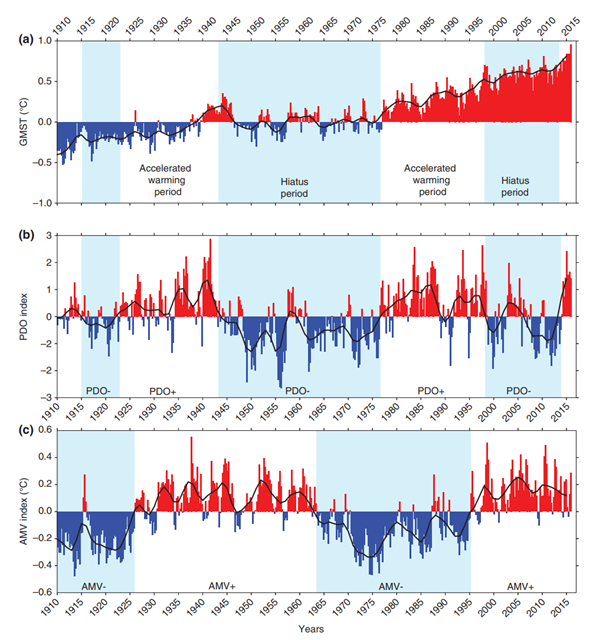
Pacific Decadal Variability (PDV) plays a pivotal role in understanding climate shifts. This study focuses on investigating the primary components of PDV, namely, the Pacific Decadal Oscillation (PDO) and the North Pacific Gyre Oscillation (NPGO). These components are defined as the first and second principal modes of the North Pacific sea surface temperature anomaly field. Our analysis indicates that under the influence of global warming, both PDO and NPGO exhibit a weakening of the amplitude and a shortening of the period. Furthermore, NPGO demonstrates a more pronounced response to a 2°C warming scenario compared to a 1.5°C increase. This heightened sensitivity is attributed to the accelerated propagation of Rossby waves, a consequence of enhanced ocean stratification. The findings of this research contribute to the establishment of a scientific foundation for informed environmental policy development, facilitating the promotion of environmental conservation and sustainable development.
Show more
Read Article PDF
Cite
Research Article Open Access
Detection and quantitation methods for β-blockers
Beta-blockers, also known as β-blockers, are a class of medications commonly prescribed to treat arrhythmias (Drugs such as Bisoprolol, metoprolol succinate), prevent secondary heart attacks, and sometimes manage hypertension. These drugs inhibit the activity of endogenous catecholamines—namely epinephrine and norepinephrine—within the sympathetic nervous system by targeting adrenergic beta-receptors. While some beta-blockers non-competitively block all beta-adrenergic receptors, others do so in a competitive manner. It is targeted at the beta receptor on the cell wall, selectively binds to the beta adrenergic receptor, antagonizes the excitatory effect of neurotransmitters and catecholamines on the beta receptor, and is mainly used in the treatment of hypertension, coronary heart disease, heart failure and other diseases, which can cause adverse reactions. Moreover, It may cause bradycardia, second degree type II and above atrioventricular block, bronchial asthma, and hypotension. Central nervous system adverse reactions, multiple dreams, hallucinations, insomnia, fatigue, vertigo and depression and other symptoms, especially high-fat soluble β-blockers, easy to cross the blood-brain barrier to cause adverse reactions, such as propranolol. The commonly used β-blockers in clinic include metoprolol, atenolol and ecolol. In the United States Food and Drug Administration (FDA) classification of drugs according to the degree of harm to pregnant women, most drugs are classified as class C or D.
Show more
Read Article PDF
Cite
Research Article Open Access
Properties of stainless steel and its application in construction
Article thumbnail
Stainless steel, an alloy of iron and chromium with the inclusion of other elements, has gained significant prominence in the construction industry due to its remarkable properties such as corrosion resistance, high strength, good durability, and aesthetic quality. In other words, its unique mechanical, chemical, and aesthetic properties make it a valuable material applied in the construction field. Through case studies, this paper provides a comprehensive analysis of the diverse applications of stainless steel in construction, encompassing its structural, architectural, and functional uses. According to the analysis, it can be concluded that stainless steel is well-performed in resisting corrosion and improving structural performance. Due to these properties, stainless steel is widely used in the architecture of different countries. However, there are still some challenges for it to overcome, including the high production costs, poor thermal conductivity, and large weight. Moreover, it is easy to rust after a long time exposure to chemicals such as chloride and sulfide. Therefore, it is necessary to further optimize stainless steel from various aspects.
Show more
Read Article PDF
Cite
Research Article Open Access
Research on the comprehensive evaluation of light pollution
Article thumbnail
Light pollution refers to the inappropriate and excessive use of artificial light. The increasing extent and intensity of artificial light has impacted the biology and ecology of species significantly. Admittedly, the widespread use of light benefits people to a large extent and is positively associated with modernization, security, and wealth. But its catastrophic effects can never be ignored. To be specific, light pollution can arouse negative health impacts such as headaches, dizziness, increased anxiety, pressure, and fatigue. The paper wants to find applicable indicators regarding the risk levels of light pollution and establish criteria to judge the risk of light pollution in different areas. In the process, the research first measures the interconnection between the indicators, which are chosen to reflect the risk of light pollution, and then uses PCA to implement dimensionality reduction so as to simplify the model. After that, EWM and TOPSIS are applied to determine the weight of each indicator and the rating of the cities. Institutions or governments that are responsible for managing light pollution can then use the model to judge the risk level of different cities. The model can help to avoid overlooking or overemphasizing a city's light pollution risk level, providing a more accurate estimation. In this case, institutions and the government can take better and more effective measures to restrict light pollution.
Show more
Read Article PDF
Cite
Research Article Open Access
Analysis of strategies for improving the application performance of perovskite solar cells
Article thumbnail
Under the social background of energy shortage, climate change and environmental pollution, people’s demand for renewable energy is increasing. Solar energy is an important choice, but the problem of “cost efficiency and low” of traditional silicon solar cells has not been effectively solved. Perovskite solar cells (PSCs) were discovered in 2012 by researchers who overcame the conventional issues. The PSCs are made up of three layers of electrodes: a perovskite layer, an electron transport layer, and a hole transport layer. In-depth descriptions of the n-i-p and p-i-n structures are also provided. PSCs also have difficulties with environmental safety, dependability, and stability. Interface engineering is an important strategy, which can improve the performance and life of the battery by optimizing the energy level matching between various layers, defect passivation and carrier transport. With the progress of science and technology and the optimization of equipment, the problem of non-uniformity of perovskite layer on rigid non-planar surface can be significantly improved by using ultrasonic spraying technology. Through the optimization of the production process and composition configuration of PSCs, some related discussions are carried out, hoping to improve and help the scientific research project and some energy industries.
Show more
Read Article PDF
Cite