Articles in this Volume

Research Article Open Access
Power Consumption Bottlenecks and Materials Innovation Pathways for Silicon-Based Logic Devices in the Post-Moore Era
As silicon-based CMOS logic devices continue to scale down, problems such as short-channel effects, quantum tunneling, and the subthreshold swing limit are becoming increasingly pronounced. Power consumption has become a key factor affecting chip performance, thermal management, and energy efficiency. This paper presents a systematic literature review to analyze the power consumption mechanisms of silicon-based logic devices and the associated material-level factors. It reviews the major challenges faced by conventional silicon, gate dielectrics, strained silicon, and interconnect materials in low-power applications, with emphasis on potential solutions including high-mobility channel materials, high-k gate dielectrics, heterogeneous integration structures, low-resistance interconnect materials, and high-efficiency thermal management materials. It also discusses opportunities for materials innovation in the post-Moore era. The review indicates that, under advanced process conditions, device-structure optimization alone cannot adequately meet power-control requirements, whereas materials innovation may provide new technological pathways to improve device energy efficiency. Emerging materials, including high-k dielectrics, two-dimensional semiconductors, carbon-based materials, and ferroelectric materials, offer promising opportunities to reduce leakage current, optimize operating voltage, and enhance energy efficiency. This paper provides a theoretical foundation for the design of low-power integrated circuits and semiconductor materials research.
Show more
Read Article PDF
Cite
Research Article Open Access
Carrier Transport and Switching Characteristics in Silicon Logic Devices
As the dimensions of silicon-based devices continue to shrink, the efficient transport of charge carriers has become a key factor determining switching speed and power consumption. This study focuses on the primary carrier transport mechanisms in silicon, drift, diffusion, scattering, and trap capture, and analyses how they interact in miniaturised transistors to influence overall performance. This paper systematically reviews three key parameters, carrier velocity, doping concentration, and interface quality, and evaluates their impact on carrier transport in silicon MOSFETs. Insufficient carrier mobility or excessive interface traps fundamentally limit switching speed and stability. The review further discusses common performance optimisation approaches, such as strained silicon, silicon-germanium channels, and surface passivation techniques as engineering routes to improve charge transport while reducing power consumption. Systematic optimisation of carrier transport can significantly reduce switching times and cut power consumption.
Show more
Read Article PDF
Cite
Research Article Open Access
Status and Challenges of Digital Modeling for Typical Aircraft Control Objects
As a core segment of national high-end manufacturing, the aviation industry relies heavily on aircraft control components that directly determine flight safety and handling performance. Digital modeling has become a mainstream technical approach for developing aviation equipment. Taking typical control components such as steering gears and flight control actuators as research objects, this paper sorts out their multi-domain structural features and coupling mechanisms across mechanical, hydraulic and electrical fields, laying a theoretical foundation for modeling. To address the accuracy limitations of traditional single-domain modeling, this paper explores approaches to balancing model complexity and simulation fidelity, develops multi-system coupled digital models, and performs simulation tests. By comparing simulated outputs with actual operating condition data, this paper analyzes the causes of deviations between them. Finally, various technical bottlenecks existing in current digital modeling and simulation are summarized. The research results indicate that integrating digital twin architecture with model-driven design can effectively mitigate insufficient accuracy in single-domain modeling. Nevertheless, prominent technical obstacles remain in accurately depicting multi-physics dynamic coupling and establishing standardized model verification that covers full operating conditions. The conclusions of this research can provide clear ideas and references for optimizing multi-domain coupled modeling of aircraft and the digital development of flight control equipment.
Show more
Read Article PDF
Cite
Research Article Open Access
Dynamic Modeling and Fault Diagnosis Technologies for Aircraft Landing Gear Systems: A Comprehensive Review
Aircraft landing gear systems are characterized by strong nonlinearity, multi-physics coupling, and significant uncertainty. This paper reviews representative modeling approaches, including multibody dynamics, rigid–flexible coupling modeling, multi-domain unified modeling, co-simulation, and tire–runway coupled modeling. Furthermore, the applicability of fault tree analysis, bond graph-based diagnosis, data-driven diagnosis, and model-data fusion diagnosis is examined. The results indicate that physics-based models provide strong interpretability and support airworthiness verification; however, they involve high modeling costs and perform poorly in real time under complex operating environments and parameter uncertainties. Purely data-driven methods excel at extracting nonlinear features but are constrained by fault sample scarcity and the long-tail distribution of fault modes. Fusion diagnosis, digital twin technology, and hardware-in-the-loop (HIL) validation are regarded as promising solutions for balancing accuracy, interpretability, and engineering feasibility. Future research should focus on high-fidelity reduced-order modeling, intelligent diagnosis under limited samples, lifecycle-oriented digital twins, and airworthiness-oriented validation frameworks to support the design, health monitoring, and predictive maintenance of large civil aircraft landing gear systems.
Show more
Read Article PDF
Cite
Research Article Open Access
Comparative Study of Typical Wide-Bandgap Power Semiconductor Materials: SiC, GaN and Ga₂O₃
Wide-bandgap semiconductor materials, such as silicon carbide (SiC), gallium nitride (GaN), and gallium oxide (Ga₂O₃), are revolutionizing power electronics technology with their excellent physical properties. In this paper, the similarities and differences among the three materials are systematically compared and analyzed along the dimensions of basic performance, carrier transport mechanism, irradiation response characteristics, and application scenarios. Studies have shown that SiC occupies a dominant position in high-temperature, high-voltage scenarios (e.g., electric vehicle power systems) due to its high thermal conductivity (4.9 W/(cm·K)), and a mature process system. With its high electron mobility (2000 cm²/V · s) and two-dimensional electron gas (2DEG) effect, GaN offers significant advantages for high-frequency, fast charging. Although the thermal conductivity of Ga₂O₃ is low (0.11-0.27 W/(cm·K)), its ultra-wide-bandgap (~4.9 eV) and extremely high Baliga figure of merit (~3444 times that of Si) give it great potential in the field of ultra-high-voltage devices. This paper further analyzes common problems and future directions, such as low defect tolerance, poor gate-oxide interface reliability, and stringent packaging requirements, to provide a reference for selecting and developing wide-bandgap semiconductor power devices.
Show more
Read Article PDF
Cite
Research Article Open Access
Key Technological Advances and Deployment Challenges of Construction Robots in Intelligent Construction
The construction industry faces persistent productivity, safety, and coordination problems that cannot be solved by equipment upgrades alone. Under the broader agenda of intelligent construction, construction robots are becoming cyber-physical execution units that connect Building Information Modeling (BIM), sensing, artificial intelligence, and on-site operations. This paper analyzes the technological progress and deployment challenges of construction robots from two interrelated perspectives: autonomous navigation and human-robot collaboration. It argues that multi-sensor perception, BIM-assisted localization, Simultaneous Localization and Mapping (SLAM), improved path planning, and digital-twin-enabled safety monitoring have improved the feasibility of robotic systems in complex construction environments. However, wide deployment is still constrained by unstructured site conditions, model-to-reality discrepancies, fragmented data interfaces, low collaboration maturity, high implementation costs, and uncertain business incentives. The paper proposes four implementation strategies: open communication and data-interface standards, construction-specific safety guidelines for human-robot collaboration, financial and rental mechanisms for lowering the adoption threshold, and joint pilot projects involving industry, universities, research institutions, and end users. The study concludes that construction robots should not be framed as simple substitutes for human labor. Their more realistic role is to augment workers in hazardous, repetitive, precision-demanding, and data-intensive tasks while supporting a gradual transition from experience-based construction management to data-driven intelligent construction.
Show more
Read Article PDF
Cite
Research Article Open Access
Review on Core Technologies and Development Trends of Grid-Connected Photovoltaic Inverters
Article thumbnail
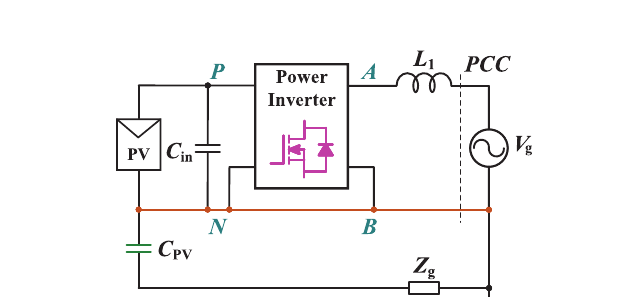
In the context of high-penetration distributed photovoltaic generation in low-voltage distribution networks, photovoltaic inverters have evolved from single power conversion devices into key equipment for power quality regulation, grid support, and intelligent operation and maintenance. This paper reviews the literature, compares typical engineering applications, focusing on three common issues in recent photovoltaic inverter research: leakage-current suppression in transformerless structures, voltage support and harmonic adaptability during grid-connected operation, and data-driven modeling and parameter optimization under complex operating conditions. The reviewed studies show that common-ground, multilevel, and quasi-Z-source topologies can improve system efficiency and suppress leakage current; Volt-VAR control, energy storage coordination, and cascaded control can improve voltage quality; and black-box modeling, symbolic regression, and swarm intelligence optimization can enhance state prediction and parameter tuning. Future research should further establish unified experimental benchmarks, improve measured data coverage, and facilitate quantitative comparisons across different technical routes.
Show more
Read Article PDF
Cite