Articles in this Volume

Research Article Open Access
Jilin city central wastewater treatment plant renovation design scheme
Article thumbnail
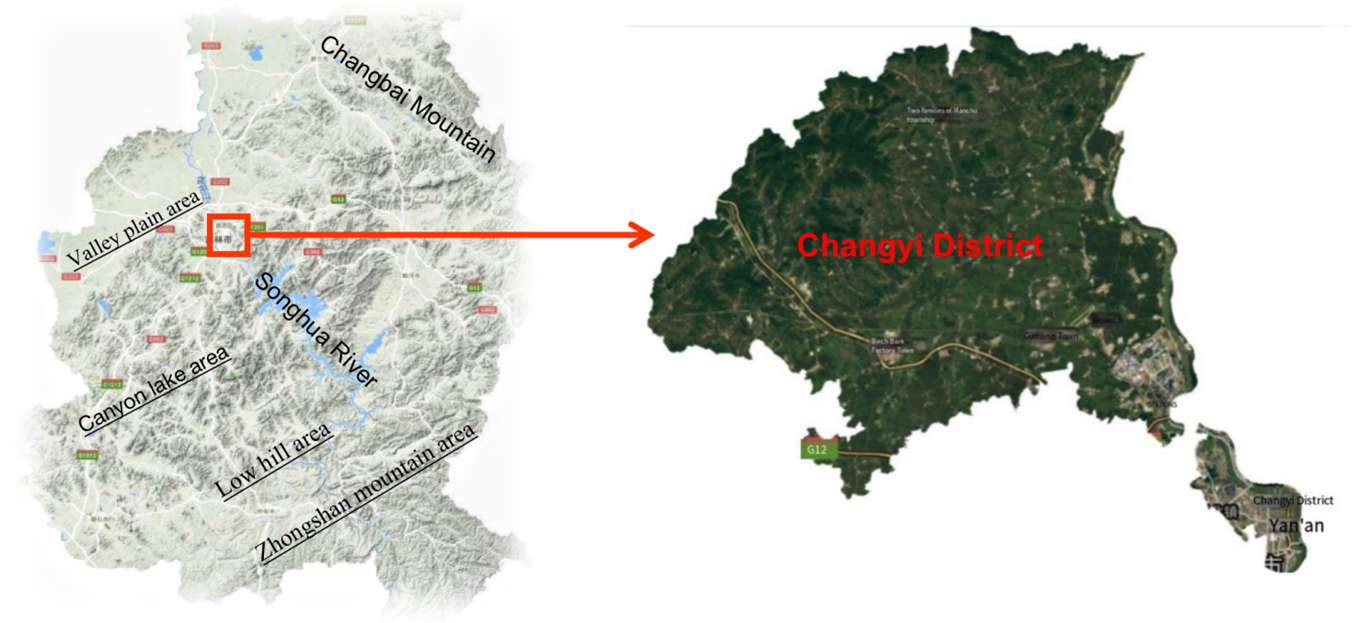
Jilin City is one of the top ten famous Chinese cities worth introducing to the world. To further improve the construction of urban infrastructure and meet the needs of the economic and social development of Jilin City, the Jilin City Government Joint Development and Reform Commission and the Ecological Environment Bureau decided to expand and renovate the former Jilin City wastewater treatment plant. This study designs a wastewater treatment plant by comprehensively considering the policy needs and the local basic background characteristics of Jilin to solve the wastewater overflow problem. The design modified the anaerobic tank and Carroussel oxidation ditch processes, which have more advantages than traditional treatment processes, mainly including better BOD, nitrogen and phosphorus removal efficiency, less power consumption, and lower operating costs. This treatment plant design contains two special characteristics: the design considers the overall plan and pipeline layout of the wastewater treatment plant, and the size data of each module are calculated through theoretical study conforming to the real case.
Show more
Read Article PDF
Cite
Research Article Open Access
Utilizing mycelium-based materials for sustainable construction
Mycelium-based materials have gained significant attention in recent years as a sustainable alternative for construction in civil engineering projects. This literature review aims to explore the utilization of mycelium-based materials for carbon dioxide (CO2) mitigation in construction practices. The review examines various studies and research articles to understand the potential of mycelium-based materials in reducing carbon emissions in the construction industry. The findings indicate that mycelium-based materials offer promising opportunities for sustainable construction, as they have the ability to sequester CO2 during their growth process. Additionally, mycelium-based materials possess desirable properties such as lightweight, fire resistance, and thermal insulation, making them suitable for structural and non-structural applications. The review also identifies the challenges and limitations associated with the implementation of mycelium-based materials in construction. Overall, this literature review provides valuable insights into the application of mycelium-based materials for carbon dioxide mitigation in civil engineering projects.
Show more
Read Article PDF
Cite
Research Article Open Access
Wind speed prediction
With the help of wind farms, wind energy is a vital renewable energy source that contributes significantly to the world’s energy balance. The lifespan and maintenance costs of wind turbines will be reduced with an accurate wind speed prediction. On the other hand, wind speed is highly volatile and unpredictable. Thus, it is essential to do research into creating complex models and algorithms for precise wind speed prediction. So far, some of the most promising models include Support Vector Machine (SVM), Artificial Neural Networks (ANN), and Autoregressive Moving Average (ARMA). Python, as an advanced and versatile programming language, is exceptionally suited for scripting the algorithms of these sophisticated models. This paper will use the data from Austin Texas and apply a Support Vector Machine (SVM) for wind speed prediction involves several stages, including data collection, data preprocessing, model selection, model training, parameter optimization, model validation, and prediction. Wind energy resource optimisation, maintenance cost reduction, and total wind farm efficiency can all be significantly improved by incorporating these models into predictive analytics and continuously improving them against changing data.
Show more
Read Article PDF
Cite
Research Article Open Access
Applications of graphene in organic anticorrosive coatings
Article thumbnail
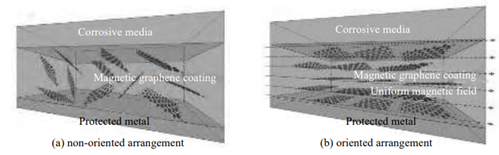
The problem of corrosion of materials has lasted for a long time, corrosion causes damage to the structure of buildings and bringing loss of economy. The coating method, which is an easy and economical way to solve the problem, is still unable to satisfy the needs limited by the paints’ properties. However, this can be solved by introducing graphene, by its special 2-D material properties, to the paint. And a lot of researchers are working on this now. This paper mainly focuses on the overview of how graphene be applied to anti-corrosive coatings, the problems that are faced, what are solutions for those, and what are the advantages that graphene has in the area. Resulting that graphene is mainly used with organic anti-corrosion materials, by filling the holes in those materials to stop the corrosion molecules from infiltrating through. Graphene can also be used as containers, carrying corrosion inhibitors that would be released and fill the crack when the coating is damaged. By modifying graphene, problems like agglomeration and accelerating corrosion can be solved. The result will be used for researchers who are looking for a conclusion in the graphene anti-corrosive coatings research area and provide the main focuses and details.
Show more
Read Article PDF
Cite
Research Article Open Access
The application of renewable energy in transportation systems in China
Article thumbnail
The energy consumption level in transportation is projected to continue its current upward trend until the year 2040. Motor gasoline and diesel are the most consumed energy sources in common transportation, followed by jet fuel and natural gas. Regrettably, biofuel and electric energy, which are renewable energy sources, had only a little contribution to overall energy consumption in transportation. This indicates that the use of renewable energy sources in transportation is still in its early stages. The rapid advancement of energy innovation is causing alarm among the general people. In 2020, greenhouse gas emissions from transportation reached a record high. In order to predict the future trajectory of renewable energy, it is crucial to closely monitor the utilization of nonrenewable energy sources in transportation, which is currently at a high level. This study examines the existing energy sources in China and utilizes reliable research papers and data to demonstrate the practicality of several energy advancements in current transportation systems. The study will employ a literature review method to examine the advancements in energy innovation within the domains of internal combustion engines and electric motors in automobiles, waterborne transportation, and aircraft.
Show more
Read Article PDF
Cite
Research Article Open Access
Historical and Future global warming under different RCP emission scenarios
Article thumbnail
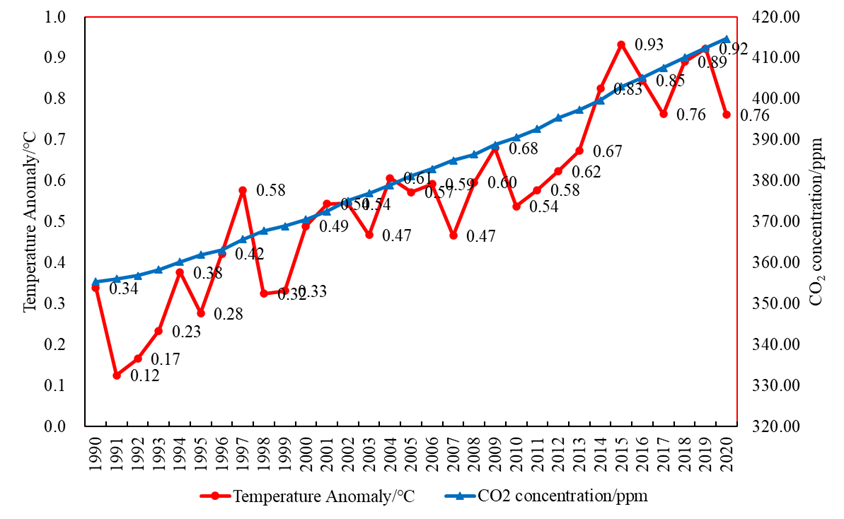
Understanding the relationship between carbon emissions and climate change has become increasingly urgent amidst the universal endorsement of sustainable development and the establishment of net-zero carbon emission target (The Paris Agreement). In this study, model projections based on Coupled Model Intercomparison Project Phase 5 (CMIP5) are used to examine future climate change under different representative concentration pathway (RCP) emission scenarios till 2300. Besides analysis of future global average temperature change under the emission scenarios of RCP2.6, RCP4.5, RCP6.0, and RCP 8.5, historical data is first collected during the past three decades (1990-2021). The results show that the simulated global warming ranges from 0.9 to 1.3 ℃ between 1990 and 2021, consistent with the observations (0.93℃). Carbon emissions in China arose mostly from manufacturing and construction, electricity and heat and transport. Emissions from electricity, heat and transport increase by a high ratio of 7.7 and 3.5 times due to industry development. Under different RCP scenarios, the global surface temperature anomaly will increase by 0.2-1.0, 1.2-2.0, 3.5-4.3 and 3.0-8.5 ℃, respectively. The surface temperature anomaly values under RCP8.5 are much higher than those under other emission scenarios. Only in the RCP2.6 scenario (“sustainability”), the surface warming in all simulations stays below a 2℃ threshold at the end of the 21st century. To attain net zero emissions, it is highly demanded to develop strict emission policies, chart a course toward decarbonization, and institute effective measures aimed at realizing net zero emissions within the short to medium term. Concurrently striving for economic objectives, managing the equilibrium between economic growth and environmental sustainability emerges as a critical imperative.
Show more
Read Article PDF
Cite
Research Article Open Access
Medium office energy consumption optimization using EnergyPlus
Article thumbnail
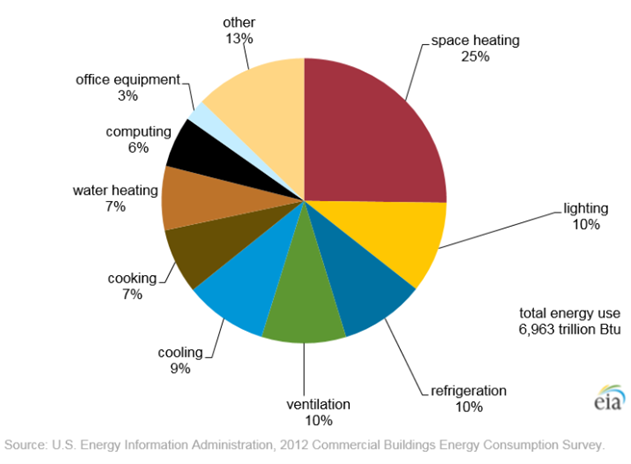
This research paper studies the impacts of HVAC system scheduling and building envelope material properties on the building energy efficiency in the downtown New York City, metropolitan area, that is highly associated with Urban Heat Island. By utilizing EnergyPlus for whole energy building simulation, the research compares two HVAC operational cases: a baseline case with constant temperature setpoints, and an occupancy-based temperature setpoint schedule. The study also investigated the influence of thermal conductivity variations in stucco exterior wall materials, with three cases, the default baseline thermal conductivity and a ±15% variance, respectively. Results indicate that occupancy-driven scheduling significantly reduces energy consumption by approximately 16% annually compared to baseline. Conversely, the influence of thermal conductivity on energy consumption is minimal, with only a 0.35% deviation noted in response to a 15% variation in thermal conductivity. This suggests that both optimizing HVAC scheduling and the thermal conductivity of building envelope materials can save building energy consumption while optimizing HVAC scheduling has a relatively stronger impact than optimizing the thermal conductivity with a 15% variance in downtown New York City.
Show more
Read Article PDF
Cite
Research Article Open Access
Plane and vertical design research on end-around taxiways at high plateau airports
Article thumbnail
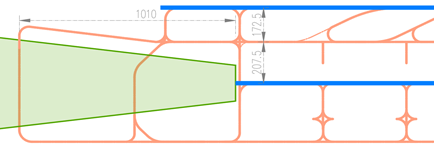
The end-around taxiways have been proven to effectively reduce the risk of runway incursions caused by frequent aircraft crossings on closely spaced parallel runways, thus enhancing airport capacity. This practice has gained popularity in recent years, especially in large airports. However, there is currently limited experience in designing and operating end-around taxiways, particularly in high plateau airports facing challenging conditions such as a high water table and low obstacle clearance gradient. In this paper, we present a case study of the second runway project at a specific airport and propose various operational schemes for end-around taxiway construction, including straight, oblique, and controlled designs. We calculate aircraft payload under different obstacle clearance gradients using flight performance analysis. Taking into account both operational and groundwater levels, we determine the appropriate plane and vertical design of end-around taxiways. The findings of this research provide valuable references for the design of end-around taxiways.
Show more
Read Article PDF
Cite
Research Article Open Access
Mechanistic study on the role of 3D-Printed biomimetic coral bone scaffolds in bone defect repair
With the continuous innovation and development of 3D printing technology, 3D-printed biomimetic coral bone scaffolds have demonstrated significant potential in the field of bone defect repair. This paper aims to explore in-depth the mechanistic study of 3D-printed biomimetic coral bone scaffolds in bone defect repair, by systematically reviewing relevant literature and analyzing their potential mechanisms in promoting bone growth and improving the success rate of bone defect repair. Firstly, this paper introduces the fabrication process and material characteristics of 3D-printed biomimetic coral bone scaffolds. Secondly, the paper discusses the mechanisms of 3D-printed biomimetic coral bone scaffolds in terms of biocompatibility, biomechanical performance, as well as their roles in vascularization and bone formation. Finally, the paper outlines future research directions for 3D-printed biomimetic coral bone scaffolds, including further optimization of material properties, improvement of printing precision, and expansion of clinical applications.
Show more
Read Article PDF
Cite
Research Article Open Access
Intelligent monitoring of surface evapotranspiration in the Heihe River Basin based on dual-source modelling
Article thumbnail
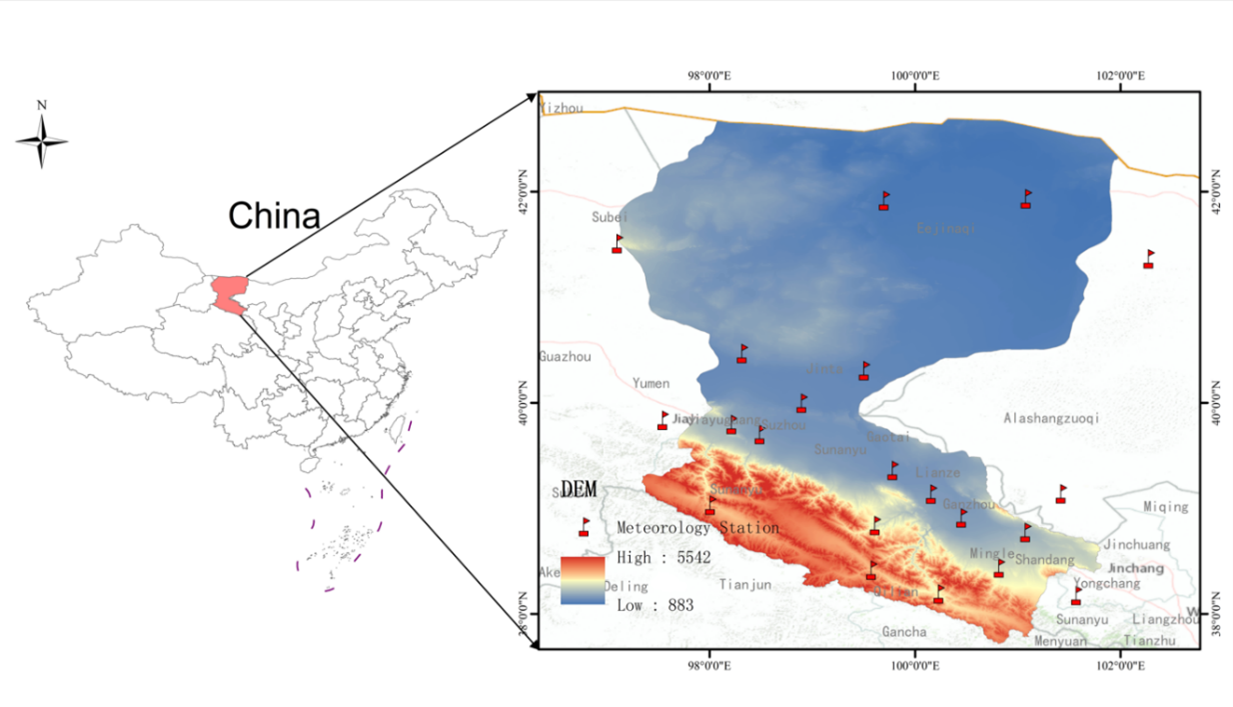
[Objective] The Heihe River Basin, located in northwestern China, is the second largest inland basin in China, and its water resources play a crucial role in the ecology, agriculture and human life of the region. The aim of this study is to investigate the spatial and temporal variations of surface evapotranspiration in the Heihe River Basin and the potential impacts of these variations on water resource management. [Methods] To achieve this goal, we applied the PM-based dual-source model, a meteorological model for estimating global surface ET, which takes into account a variety of factors such as temperature, humidity, wind speed and downward solar shortwave radiation. By analysing the meteorological data and remote sensing data of the Black River Basin, we first investigated the spatial and temporal distribution of surface evapotranspiration. [Conclusion] The results show that surface evapotranspiration shows obvious seasonal and regional variations and is significantly affected by meteorological conditions. The inversion of surface ET in the Heihe River Basin by this dual-source model needs to be improved, and the trend of ET values calculated by the model is relatively small compared with the actual values.
Show more
Read Article PDF
Cite