Articles in this Volume

Research Article Open Access
Recovery of cathode material of abandoned lithium-ion battery: Comparison of methods and the recent situation of utilization of Chinese factories
Article thumbnail
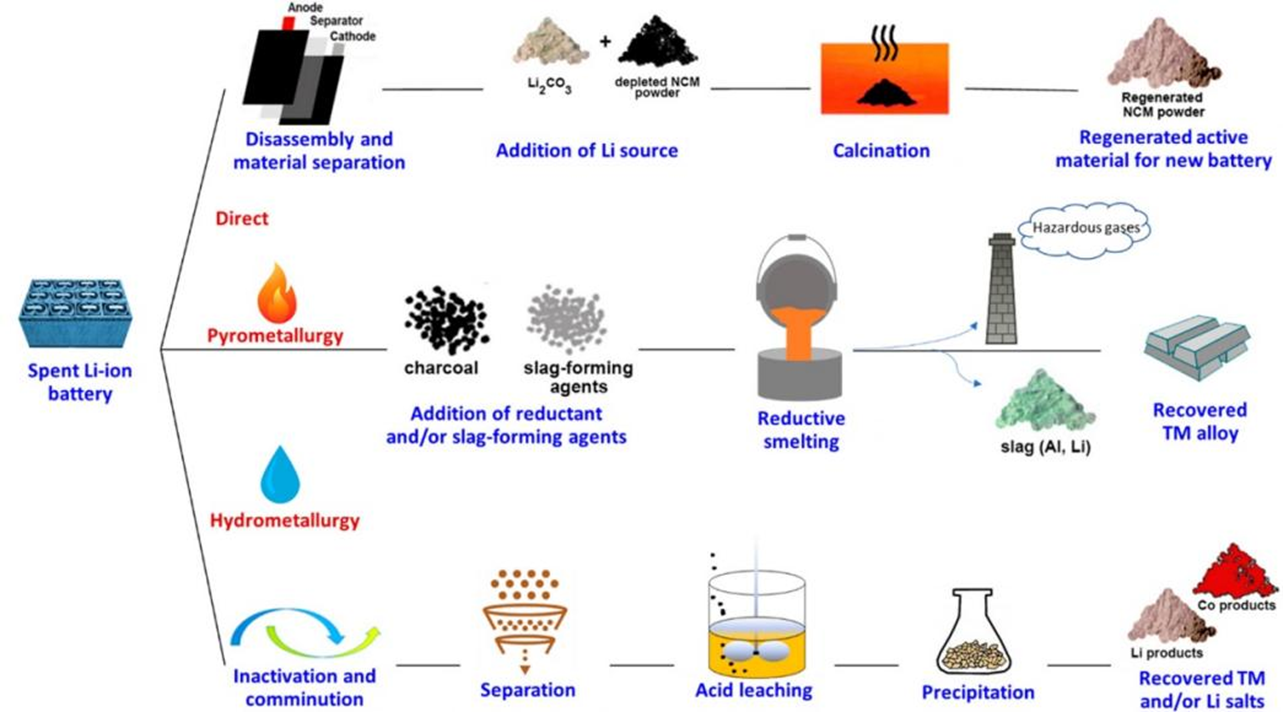
Lithium-ion batteries were successfully brought to the forefront of various industries more than 30 years ago, and today they play an important role in the portable power and electric vehicle industries. In the context of expanding markets and increasing industrial and domestic demand, the recycling of materials from batteries after their disposal has received some attention. However, lithium-ion batteries contain inactive chemical components that make recycling complex and expensive. Existing technologies, therefore, need to be analyzed and improved. This paper uses thesis research to summarize, compare, and critique the current methods of recycling batteries to recover valuable cathode metals and the utilization of these methods in factories across China. It was found that the current plants usually use hydrometallurgy, pyrometallurgy, and combinations thereof, and that the plants utilize bioleaching, although it is more environmentally friendly. In the end, a conclusion about the current situation and a prediction for future challenges are made.
Show more
Read Article PDF
Cite
Research Article Open Access
BIM - based modular integrated construction risk management
Article thumbnail
Traditional Modular Integrated Construction risk management (MiCRM) is sometimes hindered by challenges such as fragmented communications, unreliable data interchange, and subpar risk management procedures. With the ongoing evolution of the construction sector, there is a pressing want for novel methods to tackle these deficiencies. With the rising digitalization of the construction sector, Building Information Modeling (BIM) plays a crucial role in enhancing project efficiency, fostering collaboration, and managing risks. Nevertheless, the full potential of its implementation in MiCRM has yet to be completely investigated. This study investigates the incorporation of building information modeling (BIM) with modular Integrated Construction Risk Management (MiCRM), focusing on its individual applications and the joint utilization of digital technologies associated with BIM, such as 3D-MCCT (3D mobile cloud computing technology) and SST (on-site security technology). This research is being done in response to the growing need for effective and secure construction techniques, particularly in the field of modular construction. This study examines the difficulties and advantages of BIM-based MiCRM by reviewing existing literature, industry practice, and case studies. Primary obstacles encompass interoperability concerns, the intricacy of data administration, and a demand for specific expertise among building practitioners. This study intends to offer practical insights for stakeholders that want to successfully adopt BIM-based MiCRM by tackling these issues.
Show more
Read Article PDF
Cite
Research Article Open Access
Research on the potential of biomass as a chemical energy source
Biomass is an important renewable energy source, derived directly or indirectly from photosynthesis in plants. At present, the world relies heavily on traditional fossil energy, which are hydrocarbons or their derivatives, formed by the accumulation of ancient fossils over time. This paper analyzes and compares the energy produced by various chemical energy sources, as well as their environmental impact and energy efficiency to study the feasibility of substances as bio-energy sources. As energy is indispensable for the survival of human beings, how to discover more green energy and utilize it will become a major challenge for us in the future. Biomass, as a kind of chemical energy has the potential to solve the problem of lack of chemical energy. This paper finally concludes that biomass is feasible as a future chemical energy source, and its super renewable capacity and its nature for solar energy tell us about its huge potential.
Show more
Read Article PDF
Cite
Research Article Open Access
Numerical simulation of flow around two side-by-side elliptic cylinders at different Reynolds numbers
Article thumbnail
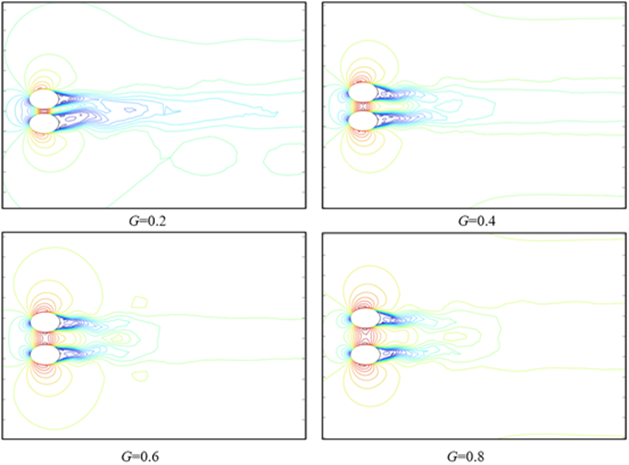
The study of the flow around the parallel elliptic cylinder is important to the analysis of the shedding vortex, lift, and drag characteristics in practical engineering, while relevant research is limited. In this paper, the flow around two side-by-side elliptic cylinders at different Reynolds numbers (Re=100,3900,105) is numerically simulated, and the flow characteristics at different gap-ratios and aspect-ratios are analyzed. By comparing the shedding characteristics of the vortexes and the lift (C_(L,AMP) and C ̅_L)and drag (C ̅_D) characteristics of the structure, we found that the vortex appears as a single elliptic cylinder at different Reynolds numbers and when G is small. Then, with the increase of gap-ratio G, vortexes gradually occur at the gap. Furthermore, C ̅_D, C_(L,AMP)and C ̅_L show a decreasing trend. With the increase of aspect-ratio A, the size of the vortices in the upper and lower branches decreases at different Reynolds numbers, while the vortexes in the middle branch show different characteristics at different Reynolds numbers.C ̅_Ddecreases at different Reynolds numbers as A increases. At Re=100, with the increase of A, C_(L,AMP) decreases, while C ̅_L increases. At Re=3900 and Re=105, The curves of C_(L,AMP) and C ̅_Lshow fluctuations.
Show more
Read Article PDF
Cite
Research Article Open Access
Prediction method of rock deformation in slope under construction disturbance
Slope engineering plays a crucial role in civil engineering, and its stability directly affects the safety, reliability, and economy of the entire project. During construction, the rock layers of slopes are prone to deformation due to construction activities, which not only affect the progress and quality of construction but also pose potential safety hazards to the surrounding environment and structures. Therefore, accurately predicting the deformation of rock layers in slopes under construction disturbance is of paramount importance. This paper analyzes the traditional and modern methods of slope rock deformation analysis and discusses the prediction method of rock deformation in slopes under construction disturbance. Based on this, a comparison and evaluation of prediction methods for rock deformation in slopes under construction disturbance are conducted, aiming to provide theoretical support and guidance for engineering practice.
Show more
Read Article PDF
Cite
Research Article Open Access
Next-generation electronic devices: Innovations in integrated circuits, sensors, and computing architectures
Article thumbnail
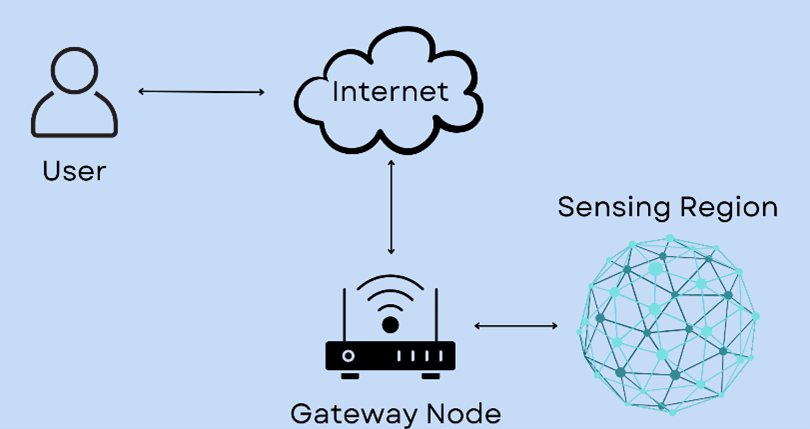
This paper delves into the forefront of electronic engineering, showcasing the evolution of integrated circuits (ICs), sensor technology advancements, and the latest enhancements in microprocessors and microcontrollers. It underscores the significant strides made towards miniaturization, energy efficiency, and the integration of high-performance computing (HPC) within these devices. Through detailed examination, the paper highlights three pivotal areas: the revolutionary fabrication techniques enabling nanometer-scale ICs; the emergence of nano-sensing devices, wireless sensor networks (WSNs), and flexible sensors transforming the landscape of environmental monitoring and healthcare; and the development of energy-efficient architectures and security enhancements in microprocessors and microcontrollers. Employing quantitative analyses and mathematical models, the paper provides insights into the technological breakthroughs driving these advancements, including dynamic voltage and frequency scaling (DVFS), near-threshold computing (NTC), and the implementation of hardware-based security measures [1]. This comprehensive analysis not only illuminates the current state of electronic engineering but also outlines the potential future directions of the field, emphasizing the interdisciplinary approaches required to tackle the challenges of modern electronic device design and application.
Show more
Read Article PDF
Cite
Research Article Open Access
Soft nanotechnology: Used as a functional coating on a nanostructured germicidal surface
Bacterial contamination has emerged as a significant threat to human health over the past century. Initially, antibiotics were seen as the solution to this problem, but their overuse has led to the development of drug resistance and the rise of “superbugs.” These superbugs are resistant to most, if not all, conventional antibiotics, making them particularly difficult to treat. Interestingly, research has shown that the wings of dragonflies and cicadas possess natural nanopillar structures that are capable of inhibiting bacterial growth. These nanopillars puncture bacterial cell membranes, leading to bacterial death. This discovery has opened up new avenues for combating bacterial contamination. Recent advancements in soft nanotechnology have introduced innovative antibacterial coatings that are crucial for combating these antibiotic-resistant superbugs. These coatings work by mimicking the nanopillar structures found on the wings of dragonflies and cicadas. Understanding the interaction between bacteria and these nanoantibacterial coatings is essential for achieving effective bactericidal outcomes. Different bacteria require varying optimum aspect ratios, which can be achieved through various formation methods. Therefore, this paper elucidates the principles of soft nanocoating, with a focus on comparing aspect ratios obtained through different preparation techniques and, according to the different aspect ratio, determining the corresponding applicable sterilization scene. It also explores the practical application of nanostructure bactericidal surface coatings to address the growing threat of antibiotic resistance and enhance public health. Moreover, as an emerging field, this paper examines the challenges in soft nanocoating applications and the directions that can be improved in the future. The versatility and potential of soft nanotechnological coatings seems to apply to various industries, promising enhanced performance and safety standards. This is a crucial step towards creating a safer and healthier future for all.
Show more
Read Article PDF
Cite
Research Article Open Access
Aligning building information modeling and prefabricated construction with sustainable development goals: A framework for sustainable urbanization
Article thumbnail
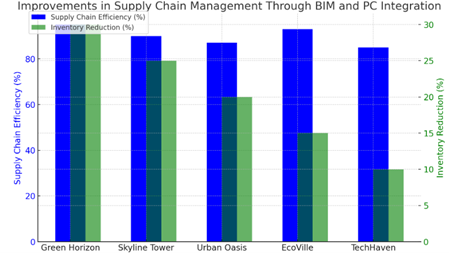
Given its large environmental footprint and the urgent need for more efficient and sustainable practices, sustainability in the construction industry has never been more urgent. This paper explores the integration of building Information Modelling (BIM) and prefabricated building (PC) as a transformative approach to aligning the construction sector with the United Nations Sustainable Development Goals (SDGS), Special attention is given to SDG 9 (industry, innovation and infrastructure), SDG 11 (Sustainable cities and communities), SDG 12 (responsible consumption and production), SDG 13 (climate action) and SDG 7 (affordable clean energy). Through the lens of BIM and PC, the study illustrates how these technologies can significantly reduce waste, optimize resource use, and contribute to the construction of energy-efficient buildings, thereby mitigating the environmental impact of urban development. Enhanced stakeholder collaboration and information sharing facilitated by BIM was highlighted as a key factor in integrating community needs and environmental considerations into project planning and execution. This paper argues that the strategic adoption of BIM and PC not only promises to revolutionize construction practices by increasing efficiency and reducing costs, but also plays a vital role in the global pursuit of sustainability. Through a comprehensive analysis of the benefits and challenges associated with BIM and PC integration, this study highlights the importance of continuous technological progress, adaptation to different global environments, and alignment with the Sustainable Development Goals as important steps towards achieving sustainable urbanization.
Show more
Read Article PDF
Cite
Research Article Open Access
Optimizing façade shading design for public buildings in China’s hot and humid regions: A comprehensive analysis
Article thumbnail
This paper presents a comprehensive analysis of façade shading design methods tailored for public buildings in China’s hot and humid regions. Through a multidisciplinary approach integrating climatic analysis, quantitative modeling, and architectural principles, the study investigates the critical role of shading in enhancing energy efficiency and occupant comfort. Highlighting the climatic characteristics and solar radiation impact specific to hot and humid areas, the analysis underscores the necessity of tailored shading solutions. A review of traditional and modern shading strategies, alongside case studies, elucidates successes, limitations, and emerging trends. The paper also delves into mathematical modeling techniques for optimizing shading efficiency and explores the integration of shading with architectural design and renewable energy systems. The findings advocate for a holistic approach to façade shading, emphasizing its significance in achieving sustainable building practices in hot and humid climates.
Show more
Read Article PDF
Cite
Research Article Open Access
Numerical analysis of lubrication performance of variable cross-section sealing rings
Article thumbnail
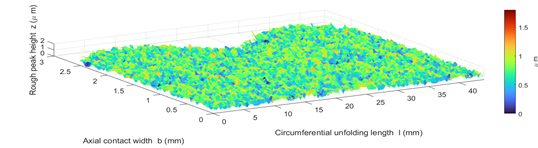
A variable section seal ring is a special type of sealing element that features a regularly changing sealing boundary. This paper proposes a numerical analysis method for calculating the elastohydrodynamic lubrication performance of the sealing surface of a variable section seal, considering factors such as the surface morphology of the seal lip, the initial compression rate of the seal, and the micro-elastic deformation of the rough surface of the seal lip. The three-dimensional distribution of the oil film thickness was obtained. The results show that the oil film thickness on the sealing lip of the variable section seal changes both circumferentially and axially, being thicker in the middle and thinner at the sides when viewed axially, and thicker at the peaks than at the troughs when viewed circumferentially. Higher compression rates of the seal lead to greater friction during operation; different compression rates significantly affect the distribution of the oil film and the oil film pressure on the variable section seal, which directly impacts the lubrication and sealing effectiveness of the seal. Therefore, choosing an appropriate initial compression rate for the seal is very important.
Show more
Read Article PDF
Cite