Articles in this Volume

Research Article Open Access
Harmonizing human-computer interaction: Exploring evolution and integration in media and computing
Article thumbnail
This paper delves into the intricate relationship between Human-Computer Interaction (HCI), media, and computing, examining its historical evolution and contemporary challenges. From the rudimentary interfaces of the 1970s to the immersive digital experiences of the present day, HCI has undergone a profound transformation, driven by advancements in technology and changing user expectations. The convergence of media and computing technologies has blurred traditional boundaries, reshaping user interactions and opening new frontiers for research and innovation. Through quantitative analysis and mathematical modeling, researchers gain insights into user behavior, preferences, and interactions, informing the design of more intuitive and engaging interactive systems. However, this integration also poses challenges related to cross-platform compatibility, ethical considerations, and accessibility. By embracing user-centered design principles, ethical stewardship, and technological innovation, HCI researchers and practitioners can navigate these challenges and shape the future of HCI-Media-Computing integration.
Show more
Read Article PDF
Cite
Research Article Open Access
CNN-Based Cancer Image Diagnosis: Current Progress and Future Directions
Article thumbnail
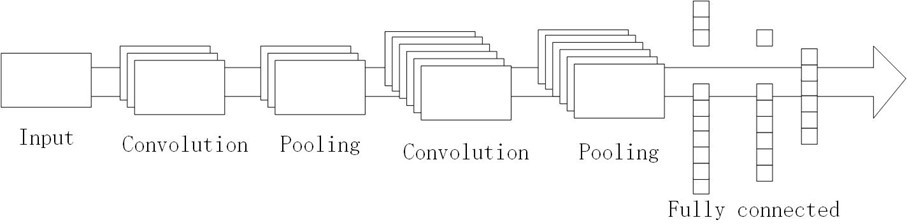
With the development of deep learning technology, CNN (Convolutional Neural Network) models have shown great value in medical image analysis, especially in diagnosing early lung cancer, breast cancer, and brain tumors. In this study, we recall and organize the application and progress of CNN models in the field of cancer and tumor diagnosis in the past five years to provide a theoretical basis and reference for related researchers. This article introduces the principles of different CNN cancer diagnostic models and compares and analyzes their results, and ultimately finds that these models have significant advantages in improving the accuracy and efficiency of cancer diagnosis, but at the same time, there are also problems such as too much reliance on large datasets, high model complexity, and poor generalization ability. In the future, we can consider optimizing the performance of CNN network models, enhancing the generalization ability of the models, and developing data enhancement techniques on this basis, so that CNN models can be better applied in the field of cancer diagnosis.
Show more
Read Article PDF
Cite
Research Article Open Access
Leveraging GIS for sustainable tourism development: A comprehensive spatial approach
Article thumbnail
This paper explores the application of Geographic Information Systems (GIS) as a pivotal tool in the spatial analysis and sustainable development of tourism. By mapping tourism resources, analyzing visitor flows, and planning for accessibility and infrastructure, GIS enables a nuanced understanding and management of tourism's spatial dynamics. We delve into the innovative use of GIS for personalized itinerary planning, augmented reality experiences, safety, risk management, environmental impact assessments, resource management, conservation, stakeholder engagement, and community planning. Through a series of methodical processes, GIS facilitates the visualization of natural and cultural attractions, optimizes visitor experiences, and ensures the sustainability of tourism development. The integration of spatial data with advanced analytical tools supports the creation of dynamic, inclusive, and environmentally responsible tourism strategies. This paper highlights the critical role of GIS in shaping future tourism practices, underlining the importance of spatial analysis in fostering a balanced approach to tourism that benefits local communities, preserves cultural heritage, and minimizes ecological footprints.
Show more
Read Article PDF
Cite
Research Article Open Access
Improve Transmission Fault Tolerance and Speed for Distributed Machine Learning
Article thumbnail
As a matter of fact, with the advent of the big data era, traditional stand-alone machine learning methods are facing computational as well as storage bottlenecks. On this basis, distributed machine learning has become a popular research direction. Withs this in mind, this research explores the basic principles of distributed machine learning and its application on large-scale datasets. According to the analysis, it is shown that the use of distributed architecture can effectively shorten the model training time and improve the scalability of the system. By comparing different distributed algorithms, it is found that the architecture based on parameter servers has obvious advantages in dealing with heterogeneous data. In addition, the experimental results show that a reasonable data partitioning and parallel computing strategy can significantly improve the training efficiency and the final performance of the model at the same time. The significance of this study is that it provides a theoretical foundation and practical guidance for distributed machine learning, which helps to promote its wide application in industry.
Show more
Read Article PDF
Cite
Research Article Open Access
Imagine Denoising Methods Based on GANs
Article thumbnail
With the continuous development of technology, people’s demand for image clarity is also constantly increasing. Whether in the fields of medical imaging, aerospace, or people's daily lives, noise in images seriously affects their clarity. Therefore, how to remove noise on the premise of preserving image details has now become a hot research topic. In the domain of image denoising, both early spatial domain filtering methods and recently proposed convolutional neural network models have certain limitations. Compared to other denoising methods, GANs can better remove noise from images and improve image quality. Therefore, this article summarizes and organizes image denoising methods based on GAN models. This article explains four GAN based image denoising methods, namely GAN, WGAN, DNGAN, and GCBD, from the perspectives of framework structure, advantages and disadvantages, and application fields. At the same time, this article also analyzes the development trend of GAN application in image denoising and makes prospects.
Show more
Read Article PDF
Cite
Research Article Open Access
Potential Safety Issues and Moral Hazard Posed by Artificial General Intelligence
Artificial Intelligence (AI), a technology with a wide range of intelligence capabilities, has developed rapidly in recent years, bringing significant convenience and efficiency to society. However, most of the current artificial intelligence technologies belong to narrow artificial intelligence. Unlike Narrow AI, Artificial General Intelligence (AGI) possesses a more comprehensive understanding and problem-solving capability. AGI can learn in an unsupervised manner. General artificial intelligence can not only stand out in specific fields. It can also make effective decisions to a certain extent and operate in a wide range of environments. However, rapid progress has also raised widespread concerns about its potential risks. Therefore, the development of artificial intelligence requires standardization, which is urgent to ensure that it can make decisions that benefit humanity. Based on existing literature and data results, this paper explores the security issues and moral risks that general artificial intelligence may bring to humans. The research results indicate that these risks include user privacy breaches, system security issues, and social ethical conflicts. Dealing with these risks requires the joint efforts of all practitioners. This includes developing AGI in an ethical manner and ensuring that AI does not engage in activities that violate human interests.
Show more
Read Article PDF
Cite
Research Article Open Access
An Adaptive Cruise Control Algorithm Based on DDPG Algorithm Based on Deep Reinforcement Learning Under Variable Acceleration Conditions
Article thumbnail
Adaptive cruise control (ACC) dynamically regulates a vehicle's speed to preserve a secure gap from the preceding vehicle, enhancing road safety. In this study, ACC is examined through the lens of deep reinforcement learning, with a focus on the Deep Deterministic Policy Gradient (DDPG) technique. The reward function takes into account the speed error, and two modes—speed control and distance control—are implemented. The proposed ACC strategy is trained and validated through simulations on the MATLAB/Simulink platform. The experimental results indicate that the reward function converges rapidly, confirming the suitability of the DDPG algorithm for automotive ACC research.
Show more
Read Article PDF
Cite
Research Article Open Access
Depression Detection Method Using Multimodal Social Media Data: An Integrative Review
An increasing number of people are suffering from depression due to rising chronic stress levels. With the advent of Web 2.0, individuals are more inclined to express their emotions on social media, offering new opportunities for depression prediction. Researchers have developed various single-modal methods for early-stage depression prediction. Recently, multimodal social media data has been utilized to enhance the accuracy of depression detection methods. These methods primarily extract multidimensional information such as text, language, and images from social media users, integrating these diverse modes to assess the risk or severity of depression. This approach significantly improves the precision of depression prediction. However, the research is still in its early stages, with challenges such as limited datasets and many areas requiring further improvement. To aid researchers in better understanding and refining multimodal approaches, we conducted a review that summarizes emerging research directions in using multimodal techniques for depression prediction on social media. Additionally, this review compares different depression detection methods, datasets, and the various modalities used in multimodal approaches, analyzing their strengths and limitations. Finally, it offers suggestions for future research.
Show more
Read Article PDF
Cite
Research Article Open Access
Application of Artificial Intelligence Methods in Knowledge Graphs
This paper mainly explores the application of artificial intelligence (AI) technologies in knowledge graphs (KGs), focusing on how natural language processing (NLP), machine learning, and deep learning methods can achieve the automated construction of KGs. First, the paper introduces the basic concepts of KGs and the limitations of traditional construction methods. Then, it analyzes recent technological advancements in knowledge graph construction, data fusion, and reasoning, with particular emphasis on the application of graph convolutional neural networks (GCNs) in handling multi-relational data. Finally, the practical applications of KGs in business analytics, healthcare information systems, and recommendation systems are discussed, demonstrating their broad potential in data management and reasoning.
Show more
Read Article PDF
Cite
Research Article Open Access
Research on Detection Methods for Text Generated by Large Language Models Based on Multi-Model Ensemble
Article thumbnail
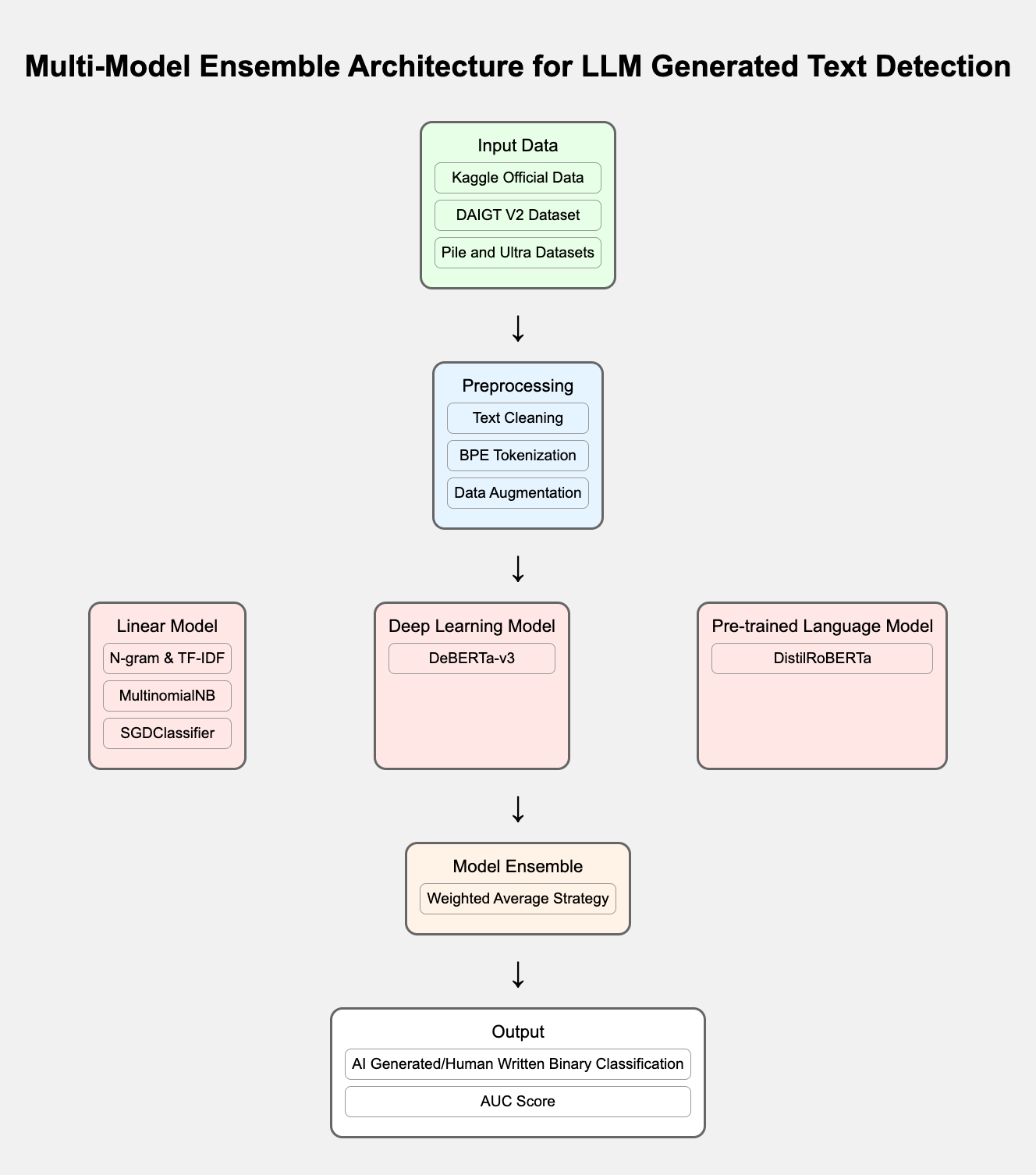
The rapid development of Large Language Models (LLMs) has made their generated text almost indistinguishable from human writing, posing significant challenges to traditional human-machine recognition techniques. This paper proposes a detection method based on multi-model ensemble to accurately identify text generated by LLMs. Firstly, a large-scale, diverse, and heterogeneous dataset is constructed, covering student writings and texts generated by models such as GPT-3, GPT-2, CTRL, and XLM. Then, a multifaceted detection framework integrating linear models, deep learning models, and pre-trained language models is designed. The linear model utilizes an argumentative essay dataset (DAIGT V2 Train Dataset) similar in distribution to the competition dataset, combined with adaptive BPE tokenization, N-Gram, and TF-IDF features. It employs Multinomial Naive Bayes and SGDClassifier to train classifiers that capture shallow statistical features of the text. The deep learning model fine-tunes the DeBERTa-v3-small model on large-scale datasets (Pile, Ultra, Human vs. LLM Text Corpus) to learn deep semantic representations of the text. The pre-trained language model introduces a fine-tuned DistilRoBERTa model, enhancing detection capabilities using third-party datasets. Finally, the above models are integrated through a weighted average strategy, significantly improving the generalization and robustness of the detection results. Experimental results show that this method achieved a score of 0.967466 in the Kaggle competition, earning a silver medal and outperforming any single model. The study demonstrates the effectiveness of multi-source data and multi-model ensemble in detecting LLM-generated text, providing new ideas and practical references for research in this field.
Show more
Read Article PDF
Cite