Articles in this Volume

Research Article Open Access
Application of Active Components such as DC Generators and Operational Amplifiers in Mechanical Design
DC generators and operational amplifiers have become increasingly important as the need for automation and precise control in mechanical engineering continues to grow. Since their invention in the 19th century, DC generators have played an important role in power systems, especially in applications that require a stable DC power supply. Meanwhile, since the 1960s, operational amplifiers have played an important role in analog circuits, and their applications cover a wide range of fields such as audio processing, signal conditioning, data acquisition and control systems. This paper explores the multiple applications of DC motors and operational amplifiers in mechanical systems and their integration through a literature review approach. It is found that these components not only improve the efficiency and performance of mechanical systems, but also provide higher control accuracy in areas such as robotics and industrial automation. In addition, with the continuous advancement of technology, the combination of the two is expected to realize innovations and breakthroughs in more fields. The research in this paper provides an important reference for the future innovation and development of mechanical engineering
Show more
Read Article PDF
Cite
Research Article Open Access
A survey of pilot behavior detection methods
Article thumbnail
This research investigates the use of action and gesture detection technology to analyze pilot behavior and ensure flight safety by employing artificial intelligence. In civil aviation, pilot and passenger safety is of paramount importance ,and the pilot behavior is an important factor in safety. Thus, it is necessary to detect the pilot behavior to secure the flight process which involves the detection of multiple modalities. In the past, most researchers have focused on single-modal behavioral detection methods, primarily gestures. However, a single modality, which may also include physiological data like EEG, is not a good and comprehensive understanding of a series of scenarios. Therefore, this paper proposes using multimodal data fusion to integrate behavior detection data from multiple sources. This paper summarizes and outlines the main methods of pilot behavior detection, such as cockpit voice, gesture detection and text information, and look forward to the possibility of multimodal data fusion of these there modalities data
Show more
Read Article PDF
Cite
Research Article Open Access
Research on the Application of PID Control Algorithm and Fuzzy Control Theory in the Field of Temperature Control
In the field of industrial automation control systems, PID control algorithms are widely used in various control fields such as temperature, speed and position. Among them, fuzzy PID control can improve control accuracy and stability, can significantly improve product quality and production efficiency, in food processing, chemical engineering, pharmaceutical and textile industries have a wide range of applications. Therefore, this paper comprehensively discusses the theory of fuzzy PID control algorithm and its application in the field of temperature control. The advantages of fuzzy PID control in complex industrial environments are emphasized through a comparative analysis with other temperature control methods as well as traditional linear PID control. The research indicates that by optimizing the control algorithm and hardware design, the fuzzy PID control algorithm can reduce the system overshoot and steady state error, thus improving the control accuracy and response speed. At the same time, the introduction of multivariable PID controllers or the use of advanced multivariable control strategies can achieve coordinated control of multiple variables, thereby improving the performance of the entire system. In addition, the integration of advanced energy management system and data analysis technology can comprehensively monitor and optimize the management of energy consumption, further improving the energy efficiency of the system
Show more
Read Article PDF
Cite
Research Article Open Access
Impact of Tunnel Fire and High Ground Temperature on the Durability and Thermal Damage Mechanism of Structural Materials
Article thumbnail
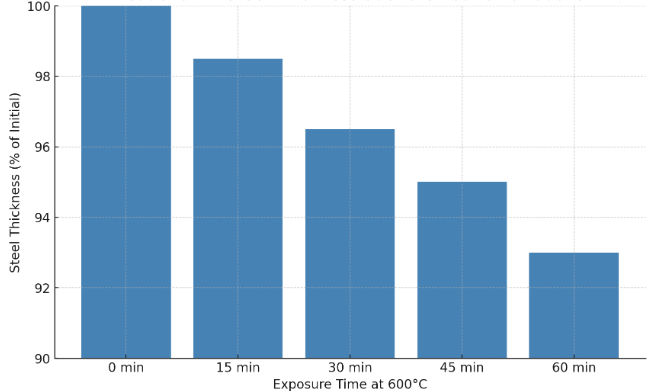
The goal of this paper is to investigate how tunnel fires and high temperatures interact to reduce the structural and thermal properties of tunnelling materials, namely concrete and steel. The work looks at microstructural modifications in concrete (pore expansion, micro-cracking, and the chemical degradation of calcium silicate hydrate (C-S-H) that reduce compressive strength and make concrete porous). Oxidation, surface scaling and yield strength degradation under high temperature are studied in steels to evaluate their negative impact on the capacity to carry loads. The paper also incorporates simulated data on how the insulation material performs over time as a result of repeated high-temperature exposure. Such results emphasise the double-edged structural hazard of fire and geothermal heat, which hastens material decomposition, weakens robustness and undermines long-term stability of critical infrastructure. The paper ends with suggestions for new, thermophilic materials to make tunnels safer in extreme conditions
Show more
Read Article PDF
Cite
Research Article Open Access
Research on Visual Fatigue and Discomfort of Amblyopic People in VR Environment
The advent of virtual reality (VR) technology has marked a significant leap in immersive experiences, offering unprecedented opportunities in various sectors such as gaming, education, healthcare, and professional training. However, the current VR systems face notable limitations, particularly in terms of visual resolution and field of view, which are inferior to human visual capabilities. This results in reduced visual acuity and clarity, creating a barrier for users with visual impairments or those who require corrective lenses. This overview delves into the visual limitations of VR devices, examining the impact of resolution and field of view on user experience. It discusses the relationship between resolution and image clarity, highlighting the need for advancements in display technology to match or surpass human visual acuity. While VR holds immense potential, it is imperative to address its current limitations and focus on research and development aimed at making VR technology more accessible and comfortable for a wider range of users. The future of VR lies in its ability to integrate multiple sensory modalities, thereby creating a truly inclusive and immersive digital interaction era
Show more
Read Article PDF
Cite
Research Article Open Access
The Present Status of Research and Related Applications of Three-dimensional Printing in the Field of Healthcare
As a new manufacturing technology, 3D printing technology has shown great potential in healthcare. The current study attempts to provide a comprehensive review of the current research landscape regarding the utilization of 3D printing technology in the healthcare sector. Nowadays, three-dimensional printing is applied in tissue engineering to manufacture complex and functionalized tissue scaffolds, hence providing strong support for regenerative medicine and enabling more precise tissue replacement in vivo. In the context of the manufacturing of medical models, the technology can reproduce with great accuracy the diseased organs or structures in question by the patient; in this respect, even bones are included. That gives intuitive physical models for surgical planning, simulation training, thereby improving the success rate of surgery and reducing complications. In the context of bespoke medical devices, 3D printing facilitates personalization of medical devices, such as prosthetics and implants, to a greater degree of fit for individual patient requirements. In the pharmaceutical sector, 3D printing technology is being employed to develop personalised medicines, with the objective of optimising drug release profiles in innovative ways. However, the application of 3D printing in healthcare also encounters obstacles, including the necessity to enhance the biocompatibility of the materials, achieve greater precision in printing, and establish more comprehensive standards and regulations. Nevertheless, the rapid development and wide spread of the use of 3D printing in health cannot be ruled out; more so, it is likely to change the face of healthcare in times to come
Show more
Read Article PDF
Cite
Research Article Open Access
The Application of 3D Printing in Mechanical Manufacturing
In modern society, with the continuous development of science and technology, 3D printing technology has become a hot technology in the field of machinery manufacturing. 3D printing can improve production efficiency, and can accurately produce three-dimensional products that can be directly applied to the mechanical parts that need to be manufactured. This article will introduce the basic principles of 3D and its advantages, but also introduce the application of 3D printing, focusing on the application of 3D printing in the construction field using cement-based materials, while printing some key components in the automotive field, fiber composite materials in the aviation field is also a development direction. This article also looks for some obvious problems with 3D printing, especially the performance of 3D printed products, as well as the cost-related issues of 3D printing, for these problems, the paper gives solutions and future directions. 3D printing will have an important position in the future, and will be widely used in the field of mechanical manufacturing and production, which has great significance
Show more
Read Article PDF
Cite
Research Article Open Access
Research and Application of Bionic Robotic Arms
The research on bionic robotic arms originates from the aspiration to imitate and replicate the structure and functions of the human arm. With advancements in technology, particularly in the rapid development of robotics, sensor technology, and materials science, robust technical support has been provided for the study of bionic robotic arms. Additionally, as people's demands for a higher quality of life increase, so does the need for mechanical devices that can undertake arduous, hazardous, or high-precision tasks in place of humans. Especially in fields such as industrial production, healthcare, and military security, the research and application of bionic robotic arms have become a focal point in today's technological landscape. This article presents a comprehensive overview of the research background, development trajectory, and future prospects of three specific areas: flexible robotic arms for confined space operations, bionic robotic arms for rotorcraft, and bionic jellyfish robotic arms. The aim is to provide theoretical support and technical references for research and engineering applications in related fields
Show more
Read Article PDF
Cite
Research Article Open Access
Industrial Applications of Collaborative Robots
With the advent of the Industry 4.0 era, the application of collaborative robots (cobots) in industrial fields has greatly increased. Intelligent collaborative robots or smart cobots enable high flexibility by combining the human ability to adapt to new tasks with automated robots (precision, repeatability) performance. This paper will analyze the current application status and usage of collaborative robots in the various industrial fields, and its benefits and disadvantages from the discussion. Firstly, this paper the defines collaborative robots and explains the difference between cobots and traditional industrial robots. Then, it analyzes the specific application cases of collaborative robots in automotive manufacturing, electronics and electrical appliances, food and beverage, pharmaceutical and chemical industries. Subsequently, this paper introduces the main technologies linked to collaborative robots, including sensors, Human-Robot Interaction (HRI), machine learning and safety technologies. Through the study of actual application cases, this paper summarizes the significant advantages of collaborative robots to improve productivity, reduce costs, and optimize the working environment. Meanwhile, this paper also discusses the current technical challenges, regulatory and standard issues as well as marketing difficulties for collaborative robots, and looks at future development trends and research directions. The results demonstrate that the utilization of collaborative robots in industry has a promising future and research and practical significance as well
Show more
Read Article PDF
Cite
Research Article Open Access
Mechanical Design and System Construction of Ankle Rehabilitation Robots
Article thumbnail
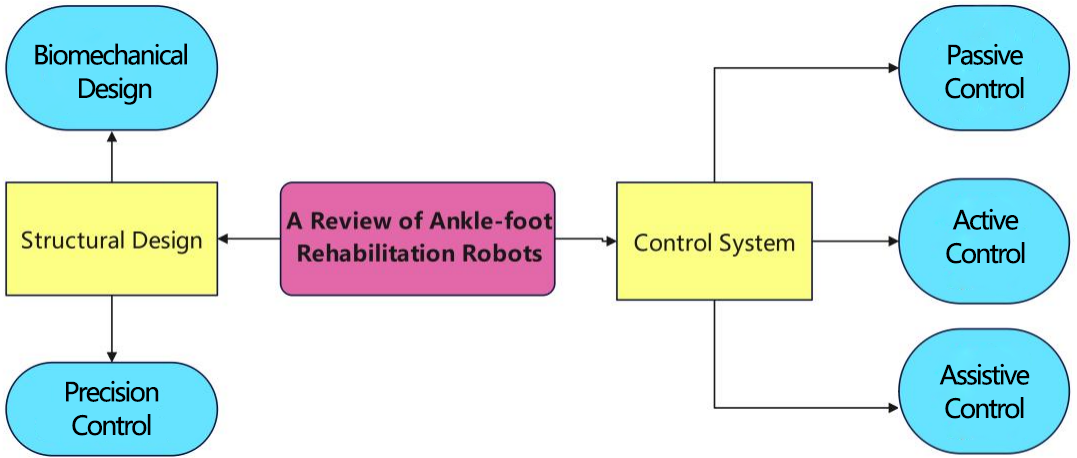
The ankle joint is the most heavily loaded joint in the human body and plays a crucial role in daily activities, making it susceptible to injuries. Currently, rehabilitation robots for the ankle joint facilitate the assessment of rehabilitation outcomes and the adjustment of rehabilitation programs, demonstrating significant practical value and application prospects. This paper reviews the mechanical structure design and control system construction of existing ankle rehabilitation robots. In this narrow review, we first analyze the characteristics and issues of current mechanical designs of ankle rehabilitation robots based on the analysis of physiological structure of the ankle joint. Subsequently, we examine design aspects aimed at enhancing precision based on the movement characteristics of the ankle joint, suggesting directions for further research. The control system is categorized into three types based on the driving method: passive, active, and assistive, with an explanation of their mechanisms of action. Finally, we summarize our findings and propose perspectives about the future development of ankle rehabilitation robots
Show more
Read Article PDF
Cite