Articles in this Volume

Research Article Open Access
Research on Fossil Energy Emission and Environmental Protection Equipment
Article thumbnail
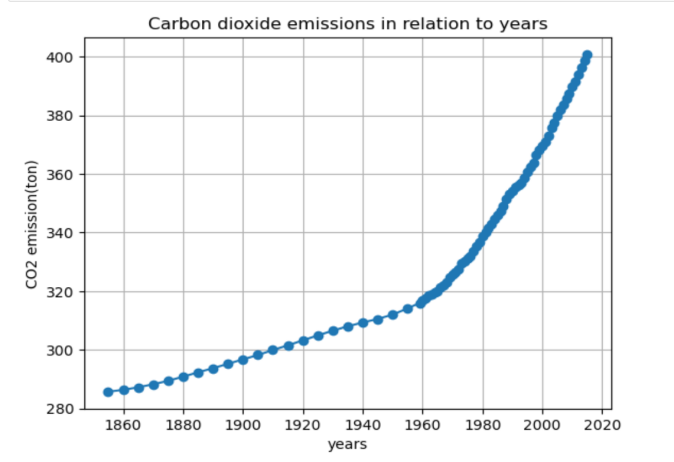
With the severe challenge of global climate change, reducing fossil energy emissions has become a common concern of the international community. China, as the world's largest energy consumer and carbon emitter, the environmental protection of the emission equipment of its fossil energy enterprises is particularly important. In the process of energy transformation and development, it is an inevitable trend to move towards clean and low-carbon, and ensuring the safe supply of energy is the fundamental task to improve energy. Source production and consumption efficiency have an important connotation. This paper aims to explore the current situation of emission equipment in China's fossil energy enterprises, evaluate their environmental performance by analyzing most of the enterprise equipment, and analyze the core link of specific enterprises, including flue gas desulfurization and denitrification equipment and carbon capture and storage technology (CCS), and point out that the equipment used by most enterprises has a certain advanced nature and environmental protection. However, there are still some problems in quality, performance and wide application. Finally, it is proposed that enterprises should optimize technology according to their own conditions and seek government help and other targeted opinions and pertinent suggestions. Enterprises should actively respond to the call of national green development and sustainable development strategy to promote their own green transformation and sustainable development. To provide reference for the green transformation of China's fossil energy industry.
Show more
Read Article PDF
Cite
Research Article Open Access
The Analysis of the Development and Application Prospects of Nanomaterials
Nanotechnology is one of the most revolutionary sciences and technologies in the 21st century, involving materials science, physics, chemistry, biology and other fields. Nanomaterials, as the core of nanotechnology, exhibit their unique physical and chemical properties that make them highly promising for a wide range of applications in various fields. In 1981, Japanese scientist Mieko Kawamura successfully prepared nanoscale ceramic particles for the first time, laying the foundation for the research of nanomaterials. Since then, the research of nanomaterials has gradually attracted the interest of scientists. This paper will discuss the development of nanomaterials, current research hotspots and future application prospects. The main research method we use in this article is a literature review, which mainly studies the development and application of nanomaterials in today's era, as well as some problems and challenges we are facing at present. The high production cost of nanomaterials limits their large-scale application. The safety of nanomaterials is still in doubt, and their impact on the environment and human health still needs to be further evaluated.
Show more
Read Article PDF
Cite
Research Article Open Access
Analysis of Locational Factors for Enhancing Comprehensive Benefits in Offshore Wind Energy: A Systematic Review
Off-shore wind energy is an emergent and promising research field, although traditional onshore wind energy has already been explored for several decades. It has already been discovered that constructing wind turbines in the maritime space takes apparent advantages but meanwhile also creates disturbance that cannot be neglected. In academia, various locational factors have been described to estimate the rationality of different off-shore wind energy in certain regions. This study takes systematic research into the existing literature, compares each of the wind energy locational factors, analyzes how these factors determine the wind energy effects, and ultimately provides a clear summary of locational factors that are necessarily or mostly considered for the construction of off-shore wind energy facilities. As an academic review, the purpose of this study is to reveal vital factors and improve the comprehensive benefits of offshore wind energy. The result is that currently wind energy efficiency and benefits are highly relevant to natural environment factors, social technical factors, and financial factors. Other factors related to ecosystems are gradually raising the awareness of scholars, which can only be found in the latest research. It is common to figure out conflicts between different kinds of factors; thus, balance and optimization are required.
Show more
Read Article PDF
Cite
Research Article Open Access
Applications and Future Developments of Microelectronics and Integrated Circuit Technologies in Smart Home Systems
With the rapid development of smart home systems, microelectronics and integrated circuit (IC) technologies have not only driven the miniaturization and multifunctionality of home appliances but also significantly enhanced their intelligence, enabling them to better meet personalized user needs and improve overall quality of life. This paper explores in depth the application of these technologies in improving smart home systems, especially how to enhance user experience and address challenges in smart home development, such as energy efficiency, comfort, security, privacy protection, and system stability. By reviewing the current status and future trends of the smart home market, it analyzes the role of these technologies in real-time data analysis, rapid response, and advanced function implementation, combined with the evolution of microelectronics and IC technologies from single sensors to integrated sensing systems, from basic controllers to complex control systems. Moreover, this paper discusses the technical challenges and innovations faced in power management, security and privacy, and device interoperability. The results indicate that, notwithstanding certain technical challenges, microelectronics and IC technologies are crucial for enhancing the automation, convenience, and security of smart home systems, providing a robust foundation for the future advancement of smart homes.
Show more
Read Article PDF
Cite
Research Article Open Access
Key Influences on the Preparation of Carbon Nanotubes by Chemical Vapour Deposition: Optimisation of Catalysts, Gas Parameters and Reaction Conditions
Carbon nanotubes (CNTs) have garnered significant interest in the field of nanomaterials due to their remarkable physicochemical properties, including exceptional strength, electrical conductivity, and thermal stability. The predominant method for synthesizing CNTs is chemical vapor deposition (CVD), a process that allows for precise control over the nanotube characteristics. This paper investigates the crucial roles of catalysts, reaction gases, and specific reaction conditions in the CVD method for CNT growth. It elaborates on how the selection of an appropriate catalyst, optimization of gas flow rates, and meticulous control of reaction temperature and duration can significantly influence the growth rate, structural integrity, and overall quality of the produced CNTs. Furthermore, the study confirms that by strategically adjusting these parameters, both the yield and purity of CNTs can be markedly enhanced. Ultimately, the objective of this paper is to provide insights that will facilitate the broader industrial application of CNTs, contributing to advancements in various fields such as electronics, materials science, and nanotechnology by optimizing the critical factors that affect their synthesis. This work aims to pave the way for innovative applications of CNTs in emerging technologies.
Show more
Read Article PDF
Cite
Research Article Open Access
Research and Design on Noise Performance Optimization of Operational Amplifiers
Article thumbnail
With the department of electronic technology, operational amplifiers (or op-amps) are playing an increasingly vital role in signal processing. Noise, as one of the key factors affecting the performance of operational amplifiers, has become a significant topic in electronic design for controlling and optimizing performance. This paper begins by categorizing and analyzing common types of noise found in operational amplifiers, including thermal noise, shot noise, and flicker noise, and discusses their mechanisms of generation. Based on this foundation, the paper proposes three noise reduction strategies: circuit design optimization, shielding processes, and physical layer design. Circuit design optimization reduces noise by selecting appropriate components and adjusting circuit layouts; shielding processes employ electrostatic, electromagnetic, and magnetic shielding techniques to minimize external interference; physical layer design optimizes noise performance by altering component dimensions. Through referenced research and analysis, this paper demonstrates the effectiveness of the proposed noise reduction methods and showcases their performance enhancements in practical applications. Finally, the paper summarizes the research findings and provides an outlook on future research directions.
Show more
Read Article PDF
Cite
Research Article Open Access
Factors Influencing Nanoscale Catalysts Prepared Impregnation Method
With the rapid advancement of nanotechnology, nanocatalysts have found extensive applications in chemical reactions and environmental remediation. The impregnation method stands as a pivotal technique for the synthesis of nanocatalysts, with its efficacy influenced by a multitude of factors. This study substantiates that the type and concentration of the impregnating agent significantly impact the catalyst's loading capacity and dispersion. Furthermore, the duration and temperature of impregnation effectively govern the particle size of the catalyst, thereby optimizing its catalytic performance. Additionally, the physicochemical properties of the support, along with the pH and ionic concentration of the solution, collectively alter the reduction behavior of metal ions, further affecting the formation mechanism and overall performance of the catalyst. Future in-depth investigations into the interplay of these factors will pave the way for innovative strategies and methodologies for the efficient fabrication of nanocatalysts. Understanding these complex interdependencies is crucial for designing catalysts with improved selectivity, activity, and stability, which are essential for advancing various catalytic processes and addressing challenges in sustainable chemistry and environmental protection.
Show more
Read Article PDF
Cite
Research Article Open Access
Application of Surface Super-wettability Materials in Oil/Water Separation
Article thumbnail
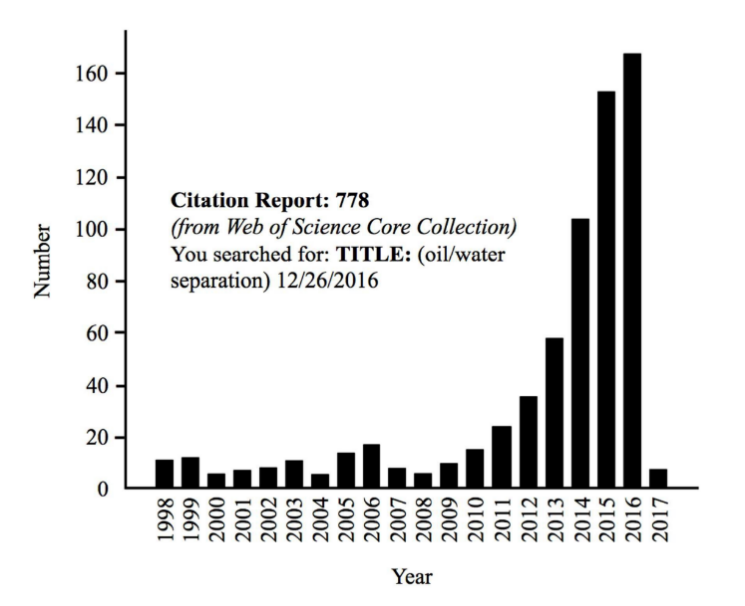
Oil-water separation has long been a critical issue in environmental protection. With industrial growth and the frequent occurrence of marine oil spills, oil-contaminated wastewater has caused severe pollution to aquatic environments, which not only results in irreversible damage to ecosystems but also leads to a significant waste of petroleum resources. Therefore, developing efficient oil-water separation materials has become a popular topic of research. This paper primarily analyzes the advantages and disadvantages of various oil-water separation materials that are based on hydrophilic and hydrophobic, focusing on their practical applications and limitations. Additionally, through the review, analysis, and synthesis of relevant academic literature and case studies, the paper compares the characteristics of filtration-based and adsorption-based separation materials. The conclusion drawn is that while current oil-water separation materials can perform well under specific conditions, they often fail to be fully effective in broader, real-world applications. Researchers need to continue exploring these materials, developing preparation methods that meet industrial production demands, and continuously evaluating and optimizing the materials for practical use.
Show more
Read Article PDF
Cite
Research Article Open Access
The Analysis of Robust Optimization Methods in the Field of Virtual Power Plants
With the global energy transition and the rapid development of renewable energy, power systems are facing unprecedented challenges. As an innovative solution integrating and coordinating distributed energy resources, the virtual power plant (VPP) has gained increasing importance in the energy market, emerging as a highly regarded field in recent years with widespread applications. In response to many popular issues within this field, this paper categorizes them into three main aspects: cooperation/competition, market transactions and bidding strategies, as well as scheduling and forecasting. It examines the applications of robust optimization methods in each of these areas. Lastly, the paper summarizes potential future research directions for robust optimization, anticipating the development of more versatile methods that can address issues in the VPP field by considering multiple factors comprehensively.
Show more
Read Article PDF
Cite
Research Article Open Access
Development and Challenges of UAV Technology in Civil Engineering Surveying and Mapping
In recent years, as the cost of Unmanned Aerial Vehicle (UAV) technology has steadily decreased and advancements in data processing speed and image recognition have accelerated, UAVs have become increasingly favored in civil engineering surveying and mapping. The purpose of this paper is to study the development of UAV technology in the field of civil engineering surveying and mapping and its current application methods. By analysing the above contents, the problems still existing in the current practical use of UAV technology are studied. Through a review of relevant literature, newly developed technologies will be integrated with current UAV capabilities to propose recommendations for future improvements. This article employs literature analysis and case study methodologies to investigate the utilization of UAV technology. It delineates the current state of development and the challenges that UAV technology faces in the surveying field by examining extant academic research materials and legal regulations. It also provides a concise overview of the distinctive benefits of UAV technology. Simultaneously, the deficiencies of UAV technology in field environments are investigated, particularly focusing on data collection and accuracy in engineering surveying projects. UAV technology has obvious advantages compared with traditional methods in the field of civil engineering surveying and mapping. It can complete surveying and mapping tasks efficiently and quickly in many application scenarios. The high flexibility of UAVs and the high-precision scanning of their sensors are enough to meet the needs of current engineering surveying and mapping. The wide application of UAV technology still faces problems such as imperfect laws and regulations, insufficient surveying and mapping scope, and large surveying and mapping data. Addressing these issues requires the development of new laws and the creation of algorithms to enhance data processing capabilities.
Show more
Read Article PDF
Cite