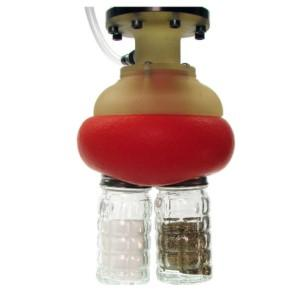
This paper introduces the design and analysis of a novel tri-layer granular jamming gripper, developed to address the performance limitations of traditional granular jamming grippers in intelligent soft robotics. While universal grippers offer adaptability and flexibility in grasping a wide range of objects, they suffer from constraints such as limited load capacity, insufficient shape adaptability, and challenges in handling smooth or irregular surfaces. The proposed tri-layer gripper introduces an intermediate airbag layer between the rigid outer shell and the granular medium, allowing enhanced conformability and grip strength through active air inflation. To evaluate the performance of the tri-layer gripper, comparative experiments were conducted against a conventional granular jamming gripper, serving as a control. The experiments included grasping tests with objects of varying shapes, sizes, surface properties, and gripping force measurements. Results demonstrate that the tri-layer gripper consistently outperforms the traditional gripper, particularly in handling smooth and irregularly shaped objects, providing a firmer and more stable grip. The airbag’s ability to increase contact area and apply lateral pressure significantly improves both load-bearing capacity and overall adaptability. Despite these advancements, current limitations include the rudimentary nature of the materials used, inefficiencies in the inflation mechanism, and constraints on size scalability. Future improvements could focus on optimizing material selection, refining manufacturing techniques, and integrating more intelligent control systems for enhanced precision and adaptability. The findings of this study contribute to the advancement of intelligent soft robotic gripping technologies, paving the way for more efficient and versatile robotic manipulation in real-world applications.