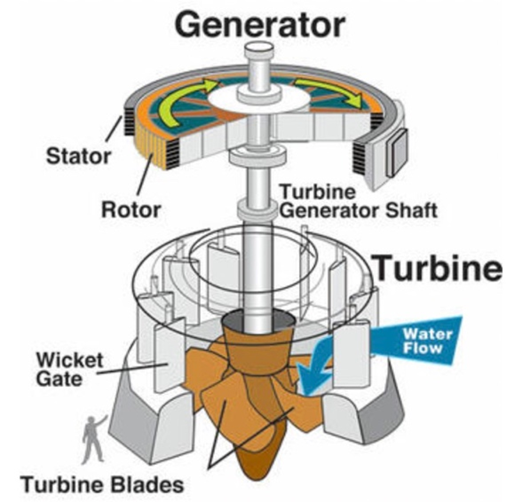
Hydropower is a clean and sustainable energy source that generates electricity by utilizing the potential energy of flowing water for energy conversion. It produces 16% of the world’s electricity and is the most widely used renewable energy source. In most cases, hydropower plants are built on rivers or other bodies of water that vary widely in elevation. The basic concept is to use dams or other structures to create reservoirs at higher altitudes and then release the water through turbines to generate electricity. Renewable energy has become the future development trend, and the amount of coal, oil, and natural gas has been drastically reduced due to human exploitation in the past few decades. This report presents the history of hydropower development since the Han Dynasty; the working mechanism of hydropower, such as its composition and basic physical principles; the physical construction of hydropower and the overall economic system; and the impact of hydropower on the environment and economy, mainly on ecology and global climate.