Articles in this Volume

Research Article Open Access
An analysis of various deep learning-based target detection algorithms in the field of autonomous driving
Article thumbnail
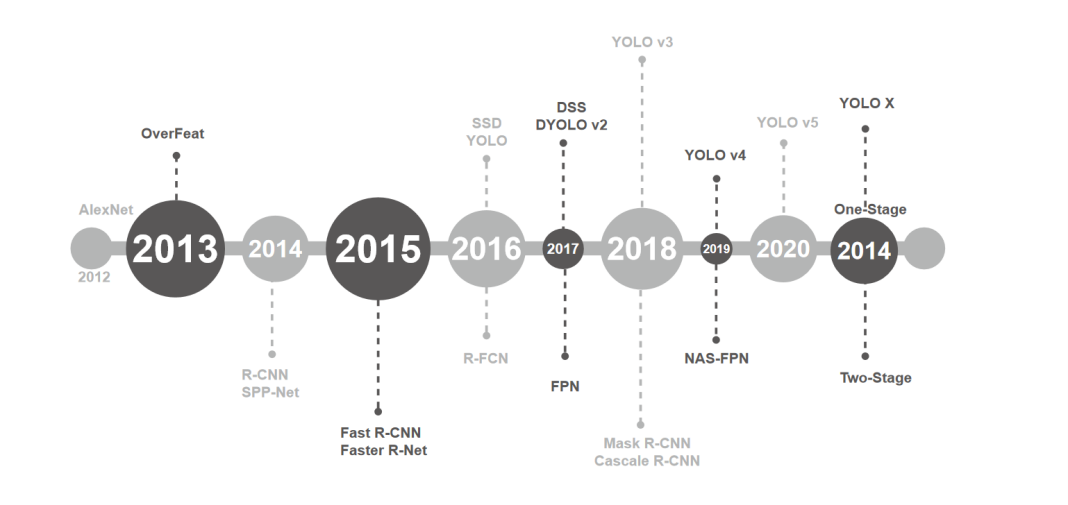
Target detection is a crucial research objective within the domain of computer vision, finding extensive applications in areas such as robotics, autonomous driving, industrial inspections, and various other fields. Based on the foundation of deep learning theory, this paper systematically summarizes the application and prospect of each type of target detection algorithm (based on regression and based on candidate region) on automatic driving, compares the advantages and disadvantages of the two types of algorithms, as well as the results of detecting traffic signals, traffic vehicles, and pedestrians, and focuses on the application scenarios as well as the comparison of advantages and disadvantages of each method. A systematic summary of the current development results is made. Among them, the most prominent target detection in the field of transportation is undoubtedly the algorithms of various branches of the YOLO series.
Show more
Read Article PDF
Cite
Research Article Open Access
Research on the technology of intelligent vehicle sensor positioning system in autonomous driving
In this comprehensive exploration of positioning and navigation technologies, we have delved into the intricacies of GPS (Global Positioning System), IMU (Inertial Measurement Unit), and VPS (Visual Positioning Systems) systems, shedding light on their unique attributes and applications. GPS, a global satellite-based system, offers precise positioning on a worldwide scale, although it encounters challenges in complex urban and environmental conditions. Its role in navigation and tracking is undeniable. IMU, characterized by accelerometers and gyroscopes, excels in delivering high-precision positioning over short durations, making it invaluable for applications in aviation, robotics, and virtual reality. However, it is susceptible to drift over time. Visual Positioning Systems (VPS), harnessing computer vision and visual sensors, provide remarkable sub-meter to centimeter-level accuracy when conditions are optimal. Their significance is particularly pronounced in indoor navigation, augmented reality, and robotics, although they may face challenges in less favorable environments. These technologies are not isolated but can synergize to enhance accuracy and reliability. GPS and IMU collaborate to compensate for signal disruptions, while GPS and VPS join forces to tackle urban complexities. IMU and VPS integration offer precise indoor navigation and augmented reality experiences, delivering impeccable positioning and orientation data. Ultimately, the choice of technology hinges on specific application requirements, encompassing accuracy, environmental considerations, cost factors, and the need for complementary systems. As these technologies advance, they hold the promise of revolutionizing navigation across various domains, from autonomous vehicles to immersive augmented reality environments.
Show more
Read Article PDF
Cite
Research Article Open Access
The comprehensive performance analysis and improvement of flexible screen with its reality applications
Article thumbnail
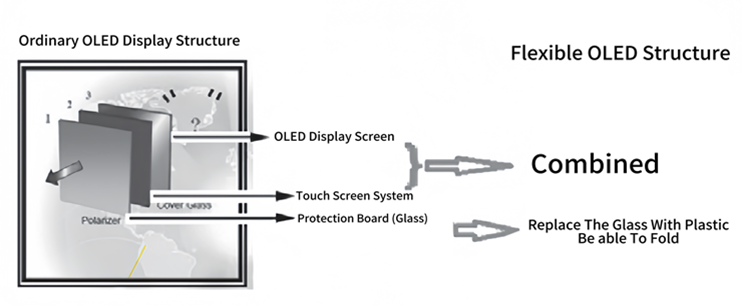
Flexible display technology and flexible screens are one of the key research topics today. The research focus of this paper is to study the basic concept of flexible screen, analyze the development and research process of it, explore the reasons why it can lead the display technology revolution, and the challenges and problems it is currently facing for further development. On this basis, the paper also makes a reliable prediction of the future development direction of the flexible screen, explores the solution ideas to deal with its shortcomings, and looks forward. Through the analysis of this study, the main advantages of flexible display technology are lightweight, portable, wearable. However, the mechanical strength of the flexible screen is also a big challenge, and it is the main solution point for its performance to be improved in the future. Flexible screens have been initially applied in smart phones, folding computers and other electronic devices, and more smart products with flexible display technology will be born in the future, deeply integrated with people’s lives. In this paper, the current situation and future of flexible screens are comprehensively explained.
Show more
Read Article PDF
Cite
Research Article Open Access
Challenges and countermeasures in planning, building, and managing electric vehicle charging piles
The widespread adoption of new energy vehicles, particularly electric vehicles (EVs), has created a significant demand for charging infrastructure globally. China, a key player in the EV market, has made substantial advancements in charging pile technology and infrastructure development. However, several critical challenges threaten the sustainability and efficiency of the EV charging ecosystem. This paper identifies and analyzes these challenges, including insufficient planning and construction of charging piles, increased demand for electric energy affecting power grids, high construction costs of fast-charging infrastructure, regional disparities in investment returns, and operational management issues. Moreover, it explores potential strategies to address these challenges. Proposed strategies include optimized planning for charging pile construction, the creation of integrated vehicle-charging-pile platforms, the development of distributed energy systems using blockchain technology, promoting recycling and reutilization of waste charging infrastructure, continuous financial subsidies, and enhanced follow-up operation supervision. Addressing these challenges through comprehensive strategies is essential for China and other nations to establish robust and sustainable EV charging infrastructure, ensuring it meets the growing demand for new energy vehicles in the years ahead. This effort will contribute to a cleaner and more sustainable future for the transportation sector.
Show more
Read Article PDF
Cite
Research Article Open Access
The signal generator: A critical analysis of its basic principles, applications, and development
Article thumbnail
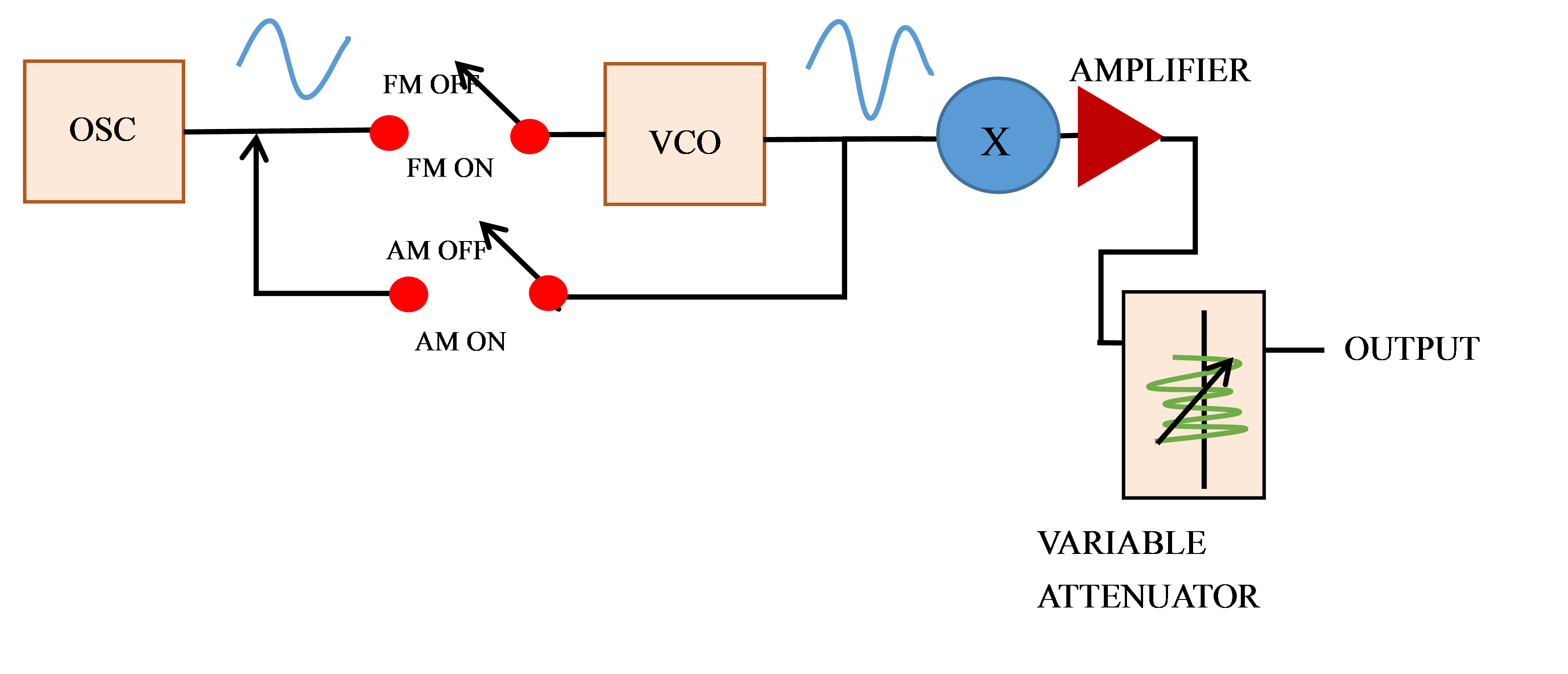
The signal generator is a fundamental electronic device used in a wide range of applications, from communication systems to research fields. This paper provides a comprehensive overview of the basic principles, applications, and development of signal generators. Beginning with an introduction to the signal generator and its importance in various fields, the paper delves into its basic information, including the definition, types, basic components, and working principles. The applications of signal generators in communication, research, and software implementation are then discussed. The development of modern signal generators and their specifications are analyzed, followed by a comparison with previous technologies. The design of a signal generator based on FPGA is presented, including the working principles and advantages of FPGA, results and data, and the problems solved by FPGA. Finally, the paper concludes with key findings, limitations, and future issues.
Show more
Read Article PDF
Cite
Research Article Open Access
Enhancing UAV safety with an innovative anti-collision cage: Design, testing, and future prospects
Article thumbnail
The rapid evolution of Unmanned Aerial Vehicles (UAVs) or Unmanned Aircraft Systems (UAS) has revolutionized aviation across military and civilian domains with their pilotless flight capabilities. Despite their versatility, UAVs pose challenges in in-flight piloting precision, leading to potential mishaps. Addressing these concerns, this research introduces an innovative UAV Anti-Collision Cage designed to enhance drone safety. Constructed from C60-shaped carbon fiber rods and 3D-printed connectors, the cage resembles a football’s geometry, offering 360° protection. Experimental validations, including rolling, collision, and flying tests, were conducted to assess the cage’s performance. While the cage demonstrated resilience against minor impacts, significant impacts posed challenges. The study concludes with recommendations for future improvements, emphasizing geometric refinements, material choices, enhanced rolling abilities, sensor integration, and payload capacity. This research underscores the importance of safety mechanisms in UAV operations, paving the way for safer and more efficient drone operation in confined and complex environments.
Show more
Read Article PDF
Cite
Research Article Open Access
Advancements and comparative analysis of high-voltage direct current transmission technologies
Article thumbnail
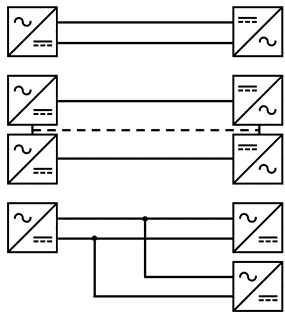
This paper outlines the fundamental principles of high-voltage direct current (HVDC) transmission, elucidating its two primary variants: current-source converter (CSC) HVDC and voltage-source converter (VSC) HVDC. It also undertakes a comparative analysis with high-voltage alternating current (HVAC) technologies, focusing on aspects such as power transmission efficiency and cost-effectiveness, drawing upon prior research findings. Additionally, the paper underscores the critical role of circuit-breakers (CB) as essential components for controlling HVDC systems. HVDC technology plays a pivotal role in augmenting AC transmission systems, facilitating the integration of large-scale renewable energy sources, and enhancing the efficiency of expansive power grids over considerable distances. Its continued evolution and refinement are highly probable, given its indispensable role in the energy landscape.
Show more
Read Article PDF
Cite
Research Article Open Access
Adverse Drug Reactions prediction by combining wide & deep learning and POLY2
Accurate prediction of Adverse Drug Reactions (ADRs) holds immense importance in the field of clinical medicine and drug development. The requirement of accurate prediction spans various stages, ranging from drug design and clinical trials to marketing monitoring. The traditional ADR forecasting method has the disadvantage that it requires a lot of computing resources and is not suitable for large-scale forecasting. To address this issue, this study introduces the Wide & Deep model. This model combines the abilities of memorization and generalization to enhance the accuracy of ADR predictions. Additionally, we identify a shortcoming in the wide component of the traditional Wide & Deep model – the lack of nonlinear transformation. Therefore, we propose the inclusion of POLY2 in the Wide & Deep model to rectify this shortcoming. By incorporating POLY2, our aim is to retain the model’s memorization and generalization abilities, leverage the nonlinear relationship between features, and capture the interaction effect between drug chemical substructures for better model performance. To validate our proposed method, we conduct experiments on two datasets: the FDA Adverse Event Reporting System (FAERS) and PubChem. The evaluation metric utilized is the Area Under the Curve (AUC) score, which demonstrates that our method outperforms the original model. The results indicate that by combining POLY2 feature crosses with the Wide & Deep model, we have achieved significant improvements in the prediction of ADRs.
Show more
Read Article PDF
Cite
Research Article Open Access
The research on the solutions of the energy consumption problem in WSN in medical field
In the last few years, the Wireless Sensor Networks technology has been a hot topic, and depending on its self-organization feature, it has been utilized in many fields. The WSN is a technology that collects different kinds of data from different sensor nodes and processes them to a database center which will provide information to the users. But, because the main tool to collect data is the sensor nodes, the problem of energy consumption will be caused. The article will mainly give the exact reason why the energy consumption problem shows up and pay attention to different solutions to this problem. The solutions are very effective in solving these problems and can be gradually applied in many fields, especially in the medical field, which the article focuses on.
Show more
Read Article PDF
Cite
Research Article Open Access
Research on the intersection of natural language processing and deep learning
In the past ten years, Natural Language Processing (NLP) has made many surprising progress due to the rapid development of Deep Learning(DL) and further explored the possibility of future development. This article briefly introduces the NLP field, the basic structure of DL, and the impact of the combination of DL and NLP on the NLP field. Finally, it reviews the limitations of the two under the constraints of current science and technology and looks forward to the possibility and direction of their future development. Appropriately applying DL to NLP can indeed bring great progress to the core areas and applications of NLP. Still, at the same time, the development of NLP will also be limited by the shortcomings of DL. It is necessary to continuously optimize the DL model while taking advantage of the advantages of DL. The most critical factor to promote the development of DL and NLP in the future.
Show more
Read Article PDF
Cite