Articles in this Volume

Research Article Open Access
Design and experiment of real-time reseeding system for transversal sugarcane planter with seeds pre-cutting
Article thumbnail
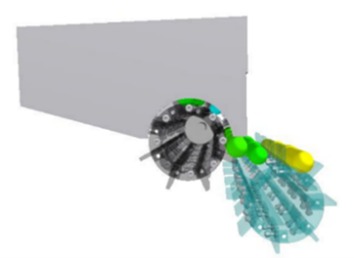
The issue of sugarcane seed leakage is one of the practical challenges encountered in the current utilization of sugarcane planting machinery, directly leading to reduced yields in sugarcane fields. This paper addresses the problem of seed leakage in the process of transverse planting of pre-cut sugarcane using theoretical analysis, modeling, simulation, and experimental research. It designs a real-time reseeding system for pre-cut sugarcane transverse planting machines, composed of seed boxes, backup seed rollers, reseeding rollers, and an electronic control system. The real-time reseeding system detects seed leakage on the planting machine’s seeding chain to control the reseeding mechanism, filling the gaps in the seeding chain with sugarcane seeds. During experimentation, the real-time reseeding system achieved a maximum reduction of seed leakage by 6% in the seeding chain, effectively addressing the issue of seed leakage in pre-cut sugarcane transverse planting machines.
Show more
Read Article PDF
Cite
Research Article Open Access
Overview of the development of chip manufacturing technology
With the rapid progress of modern science and technology, the manufacturing process of chips, which serves as the core of microelectronics technology, plays a crucial role in both producing and improving electronic products. With the advancement of science and technology and the continuous growth of market demand, the research and development of the chip manufacturing process has become more and more critical. This paper explores the historical development, essential technologies, and prospects related to chip manufacturing. It provides a comprehensive understanding of this field through six sections including an introduction, overview of the process, application areas, key technologies, future trends, and concluding remarks. This study offers valuable guidance and reference for related industries and research fields. It is found that the chip process has an important position and broad application prospects in the field of modern science and technology. In the future, chip manufacturing processes will move towards smaller feature sizes. Future chip manufacturing processes will pay more attention to process optimization, and improve the process flow to reduce loss and waste, in order to improve the efficiency and reliability of chip production.
Show more
Read Article PDF
Cite
Research Article Open Access
Comparison and analysis of various machine learning algorithms in predicting the excitation current of constant speed AC motor
Article thumbnail
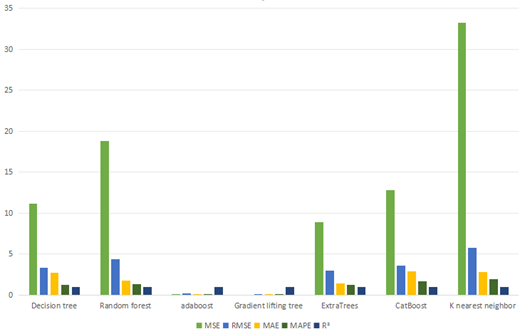
With the wide application of motor in industry, transportation, home appliances and other fields, the performance requirements of motor are getting higher and higher, in which the excitation current of constant speed AC motor is one of its important performance indicators. Although the traditional method based on physical model can calculate the motor excitation current accurately, it needs a lot of physical parameters and experimental data, which is expensive and difficult to popularize. Therefore, the research of predicting the excitation current of constant speed AC motor based on machine learning algorithm has important practical significance. Divide the data set into the training set and the test set in a 7:3 ratio. Decision tree regression model, Random forest regression model, adaboost regression model, Gradient lifting tree regression model, ExtraTrees regression model, CatBoost regression model and K nearest are used respectively neighbor regression model was trained and the evaluation indexes MSE, RMSE, MAE, MAPE and R2of the model were calculated. According to the results of model evaluation parameters, the Gradient lifting tree model had the best prediction effect, and its MSE reached 0.002. The adaboost model has the second best performance, and its MSE reaches 0.055. The performance of CatBoost, Decision tree and CatBoost is average, while the performance of K nearest neighbor is the worst, with an MSE of 33.205. This paper compares five different models and analyzes the reasons why they perform well. In practical application, it is necessary to select the appropriate model according to the specific problem, and adjust and optimize it to achieve better performance.
Show more
Read Article PDF
Cite
Research Article Open Access
The development history and applications of graphic processing unit and graphics card
Article thumbnail
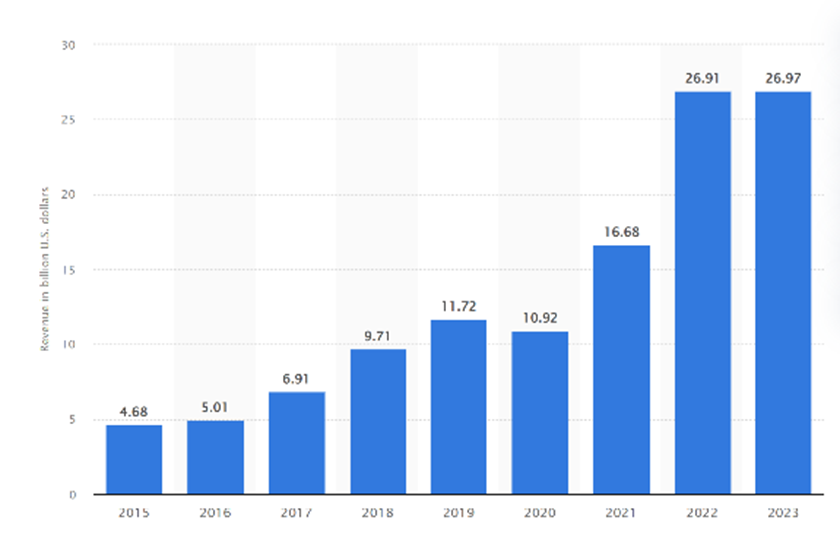
Concepts like artificial intelligence (AI) and cryptocurrency have become nowadays hot spots. Graphics cards stand as one of the most important hardware components behind technologies like cryptocurrency mining and artificial intelligence. The rapid advancement of these projects relies on the immense computational power provided by graphics cards. Therefore, an analysis of the development history of graphic cards is essential. This paper primarily investigates the evolutionary journey and application scenarios of graphics cards since the last century. This paper conducts a relevant analysis by collecting historical product information and financial data from leading graphics card manufacturers like NVIDIA, Advanced Micro Devices, and others. This paper finds that the primary applications of graphics cards are currently well-established, and future expansions into other fields would likely build upon existing technologies rather than introducing entirely new ones, like artificial intelligence. However, the future of technology is unpredictable, and making absolute predictions is challenging.
Show more
Read Article PDF
Cite
Research Article Open Access
A low-latency and energy-efficient 4-bit absolute value detector for brain-machine interface applications
Article thumbnail
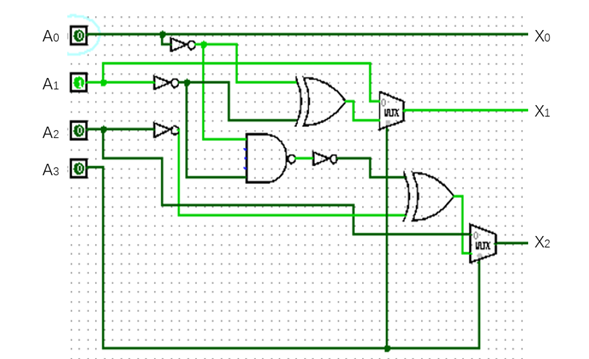
This research article aims to develop a 4-bit absolute value detector, balancing speed and power efficiency, with potential applications in Brain-Machine Interface (BMI) systems. The detector outputs a binary signal, indicating whether the absolute value of the input surpasses a predefined threshold. The design integrates two primary modules: an absolute value calculator and a comparator. Initially, the study focuses on enhancing the architecture of a multiplexer-based adder for absolute value calculation and selecting an efficient comparator structure, emphasizing least significant bit comparison. Further, the implementation of logic gates using Complementary Metal-Oxide-Semiconductor (CMOS) technology is elaborated. The research concludes by assessing the minimum delay achievable in the critical path, quantified at 74.22 units, and investigating strategies to minimize energy consumption. This is achieved by adjusting gate dimensions and supply voltage, aiming for a delay 1.5 times the minimum. The energy expenditure of the critical path is extrapolated to estimate the overall circuit consumption. The findings demonstrate that, at 1.5 times the minimal delay, the circuit achieves a maximum energy savings of 62.8% with a supply voltage of 0.815V.
Show more
Read Article PDF
Cite
Research Article Open Access
Advancements and future prospects of Gallium Nitride (GaN) in semiconductor technology
Article thumbnail
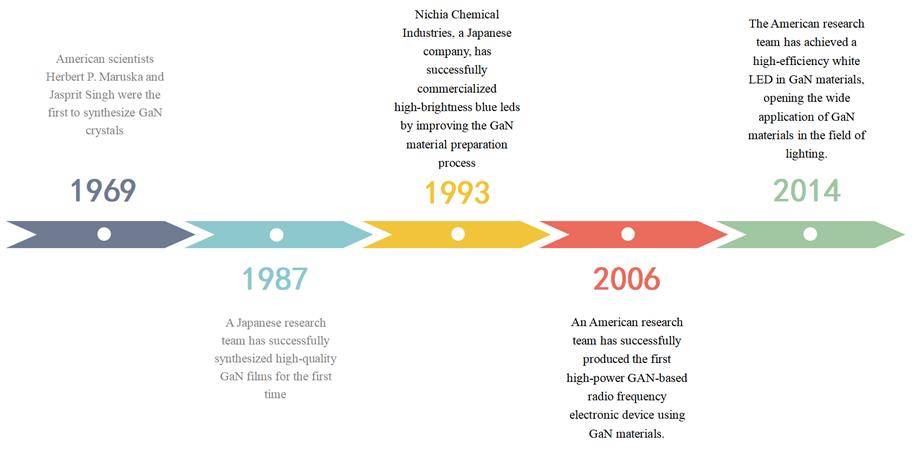
Gallium Nitride (GaN) is a semiconductor material distinguished by its exceptional attributes and potential for diverse applications. Characterized by high electron mobility, substantial saturation drift velocity, an extensive forbidden energy band, and remarkable thermal stability, GaN demonstrates versatility in various electronic applications. These include high-frequency power amplifiers, luminous high-brightness Light Emitting Diodes (LEDs), and lasers. Advancements in synthesis techniques, such as gas-phase epitaxy, hydrothermal, and solution methods, have facilitated the production of high-quality GaN thin films. The research on GaN’s physical properties encompasses an in-depth analysis of its structure, crystallographic defects, and optical characteristics, alongside investigations into the performance of optoelectronic devices. Future research trajectories are oriented towards developing scalable synthesis methodologies, designing and optimizing energy-efficient devices, and enhancing sustainable and eco-friendly attributes. Nonetheless, challenges persist in the realms of cost efficiency and reliability of GaN materials, necessitating further refinement in design and processing techniques and broadening the spectrum of potential applications. With no doubt, GaN materials exhibit significant potential for future development and are poised to assume a crucial role in the advancement of science and technology.
Show more
Read Article PDF
Cite
Research Article Open Access
Clairvoyance: Vision-impaired friendly assistive mobile device
Our design is a wearable device that assists the visually impaired to move. Our goal is to enable visually impaired people to travel alone after wearing our designs, helping them reduce the risks they may face when walking out alone. After several iterations of design ideas, our final design mainly relies on two webcams, Jetson TX2 Development board, and six vibrators. These components are installed on a sports vest and a belt. We decided to use visual systems and GPS to predict the trajectory of people and objects, and help users identify the direction of obstacles and achieve the purpose of obstacle avoidance through vibrators at different positions.
Show more
Read Article PDF
Cite
Research Article Open Access
Comparative analysis of working principles and applications of MOSFET and HEMT
Article thumbnail
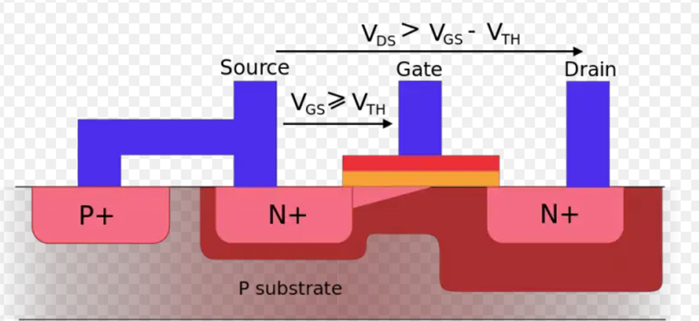
Semiconductor materials are currently one of the most core materials in the world’s high-tech industry, and the research and development of semiconductor materials is related to the improvement of human technological level. This paper presents a comparative study of Metal-Oxide-Semiconductor Field-Effect Transistors (MOSFETs) and High Electron Mobility Transistors (HEMTs), two pivotal components in electrical engineering, each with unique characteristics and functions. Despite structural similarities, MOSFETs and HEMTs differ significantly in operation and conduction methods. MOSFETs rely on an inversion layer formed at the semiconductor-oxide interface, controlled by gate voltage, for electron conduction. Conversely, HEMTs utilize a two-dimensional electron gas (2DEG) at the interface of materials like Gallium Nitride and Aluminum Gallium Nitride, offering high electron mobility crucial for performance. Both share similar I-V characteristics but differ in performance under various conditions. MOSFETs are cost-effective, ideal for mass production and general applications, while HEMTs excel in stability and performance in extreme conditions, suitable for high-performance needs. This study underscores the importance of selecting the right component based on application-specific requirements, highlighting MOSFETs for cost-efficiency and HEMTs for challenging environments. This article will provide some guidance for the research of MOSFET and HEMT.
Show more
Read Article PDF
Cite
Research Article Open Access
Advancements in driver fatigue detection: A comprehensive analysis of eye movement and facial feature approaches
Article thumbnail
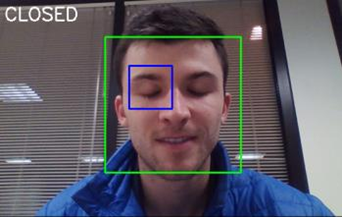
This article goes into sophisticated tiredness detection methods that make use of computer vision algorithms, including the Eye Movement and Facial Feature approaches. Eye movement analysis, which emphasizes blink frequency, Scanning speed, and gaze length, excels in tasks requiring sustained visual attention, which is critical in high-attention vocations. Facial Feature detection, on the other hand, monitors changes in expressions, muscle activity, and emotions, providing flexibility across a wide range of settings. Eye movement enables accurate indications, real-time responsiveness, and task-specific precision, which is especially important in high-attention occupations. Facial Feature is ideal for a variety of scenarios since it gives complete assessments, flexibility, contextual analysis, and non-intrusiveness. Case examples show how eye-tracking and convolutional neural networks may be used to improve accuracy. This study helps to weariness management by detailing the advantages and disadvantages of Eye Movement and Facial Feature methods. Given the pervasiveness of fatigue, knowing these sensing systems is critical for maintaining safety, productivity, and general well-being in a variety of professional and everyday life scenarios.
Show more
Read Article PDF
Cite
Research Article Open Access
Machinery and logistics: Development trends and prospects of automated warehouse technology
The ongoing evolution of the logistics industry drives a significant shift towards intelligent warehouse systems, merging mechanical devices with advanced control systems. This study delves deeply into this fusion, striving to elevate cargo handling efficiency, reduce reliance on manual labor, and lower error rates. Through an exhaustive examination of contemporary warehouse models as well as key technologies like the Internet of Things (IoT), Artificial Intelligence-driven automation, robotics, Radio Frequency Identification (RFID), and specific industry applications, this research emphasizes the pivotal role of intelligent warehouse systems in transforming logistics. From real-time tracking to predictive maintenance and streamlined operations, these systems leverage cutting-edge technology, offering new optimization avenues across warehouse functions. Additionally, it showcases successful industry adoptions in sectors such as e-commerce, manufacturing, retail, and healthcare, spotlighting tangible benefits, and versatile applications. Despite acknowledging challenges like initial investment costs and integration complexities, this research anticipates future trends in Artificial Intelligence (AI), robotics, and data analytics, projecting further advancements in intelligent warehouse systems. Ultimately, it reveals the profound impact of technology on logistics, promising enhanced efficiency, reduced errors, and optimized warehouse management practices in a seamlessly integrated technological future.
Show more
Read Article PDF
Cite