Articles in this Volume

Research Article Open Access
Application of 3D Printing in Key Automotive Components
Article thumbnail
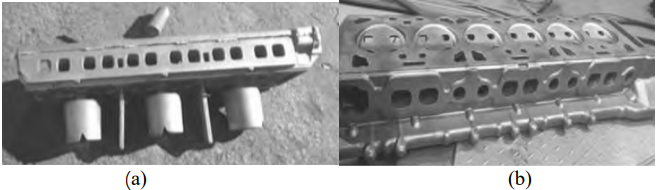
As the global automotive industry transitions towards low-carbon and high-performance development, 3D printing technology has gradually attracted the attention of both the academic and industrial sectors in the field of automotive manufacturing. This paper introduces the latest progress in the design, manufacturing, and optimization of 3D printing technology for key automotive components, with a focus on discussing its technological breakthroughs in lightweighting, function enhancement, and material innovation. By combining specific typical cases, it reveals the important contributions of 3D printing technology in weight reduction, efficiency improvement, and support for topological optimization. However, the large-scale application and production of 3D printing still face challenges such as high costs, material anisotropy, and bottlenecks in production efficiency. In the future, it is necessary to further promote the industrial application of this technology in the automotive field through means such as the combination of multiple materials and intelligent process control. This paper provides a technical reference for the in-depth research and industrial promotion of 3D printing technology in the automotive field.

Show more
Read Article PDF
Cite
Research Article Open Access
A Review of Convolution and Impulse Response and Their Applications in Audio Technology and Production
Article thumbnail
This essay is a summation of the author’s personal survey on the topics of convolution, impulse response (IR), and linear time-invariant (LTI) systems. The essay briefly introduces the definition and properties of convolution, unit impulse functions and impulse response, and linear time-invariant systems; discusses further into the time complexity, optimized algorithms of convolution, and the applications of impulse response technology with LTI systems in audio production; and gives a mathematical proof on the linearity of a modeled non-LTI system. The essay addresses the importance of these applications and the impact on music industry, points out the limitation of applicable scenarios of these technologies due to the non-linearity of some systems, and concludes some possible directions for future development of convolution and IR technology in audio production.
Show more
Read Article PDF
Cite
Research Article Open Access
Optimizing Power Efficiency in CMOS Image Sensors Control Circuits
CMOS image sensor (CIS) control circuit has a non-negligible problem, which is the power efficiency. Research has shown that the power consumption of the CIS control circuit is affected mainly during the process of converting light to voltage signals. By reviewing the related research and products that use CIS control circuits, this study aims to find the current efficiency and flaws of the components in CIS control circuits to provide an optimized solution for each impediment. We separate different components in CIS control circuits and analyze each of them with corresponding efficiency and obstacles to increase efficiency. Subsequently, ideas and solutions for overcoming the challenges to increase the efficiency of components with certain trade-offs will be provided. Based on the analysis of each possible solution, the team recommended future development for these solutions that may optimize the efficiency of CMOS image sensors with minimal trade-offs.
Show more
Read Article PDF
Cite
Research Article Open Access
Tracking Lost Jet Energy in Individual Collisions: New Insights to Quark-Gluon Plasma Study
The investigation of jet energy loss in high-energy proton-proton (pp) collisions offers crucial insights into the properties of Quark-Gluon Plasma (QGP) and strongly interacting matter. In this study, we simulate 10,000 pp collision events using the Pythia event generator, followed by jet clustering via the longitudinally invariant anti-k_t algorithm implemented in Fastjet. The analysis focuses on examining missing transverse momentum (MET) and jet momentum imbalances to identify a mechanisms behind the potential energy loss on an event-by-event basis. Our results reveal a significant correlation between large MET values and low p_T2/p_T1 ratios, indicative of pronounced momentum imbalance between the leading and sub-leading jets. These findings suggest a substantial jet energy loss. Which is likely due to the medium interactions with implications for studying jet quenching phenomena in QGP. This work introduces a refined methodology for assessing jet quenching at a level of individual events, providing a detailed characterization of jet-medium interactions and contributing to the broader understanding of energy loss in high-energy nuclear collisions.
Show more
Read Article PDF
Cite
Research Article Open Access
Optimization of Parameter Allocation System for LoRaWAN
Article thumbnail
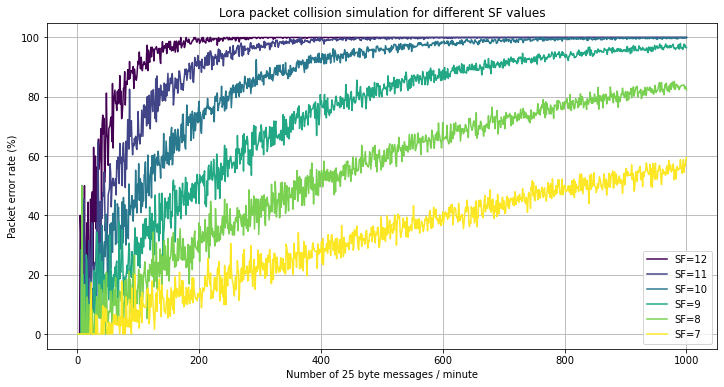
This paper investigates the allocation of parameters of Long Range (LoRa) system and does some optimization to improve the performance. The objective of this paper is to adjust the assignment of parameters like spreading factor (SF), transmission power (TP), and bandwidth (BW) to foster the performance of packet error rate (PER), bit error rate (BER), and energy consumption. First, some models and basic relationships used in the simulation process have been shown in the methodology. Also, the process of the simulation and the parameter setup are displayed. The result, it is demonstrated the different parameter allocation systems for the networks of different densities. In the low-density network, using lower SF and a more specific allocation of TP and BW can improve the overall performance. In the high-density network, using a higher value will be the optimal option for the SF, adjusting the area of the SF according to the number of devices and allocating the parameters more specifically can also both get better performance of the LoRa, especially for the PER and BER. These findings can assist designers in developing more reliable LoRa wireless communication systems.
Show more
Read Article PDF
Cite
Research Article Open Access
Intelligent Application of Software in Aerospace
Article thumbnail
In the context of the continuous development of the global manufacturing industry, milling has become a key means to meet the needs of precision or ultra-precision machining, and intelligent milling technology has gradually become the core of high-quality and efficient processing. This paper systematically reviews the relevant technologies, application scenarios, and future challenges of the intelligent application of milling software, and shows that the interactive integration of an intelligent milling system and hardware can effectively improve the machining accuracy and efficiency. However, in actual production, there are still data barriers and real-time computing bottlenecks that restrict large-scale and group application production. The future for intelligent milling needs to focus on multi-sensor fusion (cross-device knowledge transfer) to promote the transition of intelligent milling from 'simple intelligence' to 'industrial intelligence'. This paper provides the theoretical framework and technical route guidance for the intelligent transformation of milling manufacturing.
Show more
Read Article PDF
Cite
Research Article Open Access
Research on Enhancing Vehicle Fuel Efficiency Based on Custom Material Properties
Article thumbnail
This paper highlights the benefits of using carbon fiber, ceramics, titanium alloys, and aluminum alloys to replace traditional metals in the manufacture of automotive components. Carbon fiber is lightweight and of high strength and has a high impact absorption capacity. Its wide application will significantly reduce the weight of the vehicle, but there is a problem of high cost. Ceramics are hard and wear-resistant and can be used to manufacture parts that are directly subjected to alternating loads. Titanium alloy has high hardness but high density and can be used to manufacture key parts with high strength requirements. The aluminum alloy has high specific strength, but low fatigue strength and no wear resistance, so it can be used to manufacture parts that do not bear alternating loads such as frames. Furthermore, these materials possess a significantly lower density compared to conventional steel. They are reasonably applied to the manufacture of automotive parts, to ensure safety the same time can also significantly improve fuel efficiency.
Show more
Read Article PDF
Cite
Research Article Open Access
Improving the Assessment of Post-Earthquake Building Damage in Underdeveloped Regions with Vision Transformers
Article thumbnail
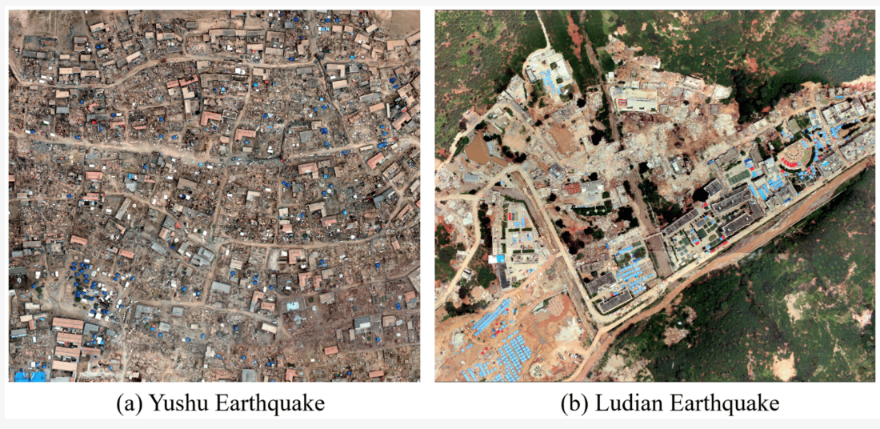
Assessing building damage following an earthquake is vital for first responders to effectively target their efforts in disaster-stricken areas. Satellite imagery is a powerful tool for visualizing such damage, particularly in underdeveloped regions where infrastructure is limited and access to disaster sites is challenging. This paper focuses on enhancing the process of classifying building damage following an earthquake by utilizing high-resolution satellite imagery and the state-of-the-art Vision Transformers (ViT) model. Experiments are carried out using two real-world datasets from the Ludian and Yushu earthquakes, contrasting the effectiveness of ViTs with sophisticated CNNs like ResNet50, Inception-V3, and EfficientNet-B0. The results show that ViT can more effectively assess rural buildings compared to other models. It also demonstrated better generalization across different earthquake scenarios and stays robust when trained and tested on smaller datasets. Furthermore, we proposed a new architecture that incorporates a CNN-based Inception module so the local features on the damaged buildings can be better extracted. improved the model’s ability. The results show that ViTs have the potential to be a reliable and powerful tool for constructing damage assessments in disaster-affected areas, providing a more precise and effective solution than conventional CNN-based techniques. Furthermore, the proposed Inception-enhanced ViT architecture presents a viable path for further study, with the potential to be refined and validated on larger datasets and applied to a broader range of disaster scenarios
Show more
Read Article PDF
Cite
Research Article Open Access
Maximize CMOS Data Processing Speed Through Low Temperature Operation
Article thumbnail
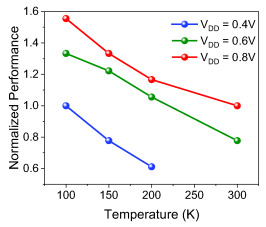
Low temperature operation Complementary Metal Oxide Semiconductor (CMOS) is a promising method to improve high performance computing after traditional CMOS fails to break through the “power wall” composed of and heat loss and Moore's Law is pushed to the limits of physical scale and technological capability. This study discusses the increasing of data processing speed of CMOS under low temperature operation. The focus is on carrier concentration and mobility, in addition, two experimental methods and theoretical modeling methods for measuring carrier concentration and mobility are presented. and finally discuss the challenges and opportunities of low temperature CMOS.
Show more
Read Article PDF
Cite
Research Article Open Access
Data Analysis of Planar Deployable Structure with Cross-link Element
Article thumbnail
This essay focuses on the data analysis of planar deployable structures with cross-link elements, which are widely used in engineering due to their ability to fold and expand. These structures, often employed in architecture and aerospace, use scissor-like mechanisms to control their open area. The paper explores the relationship between angle changes, length, and height in these structures, specifically examining how adjustments in element angles affect the structure's dimensions. A detailed study of a model using 135-degree elements is presented, along with an analysis of non-standard variations where side lengths are reduced, leading to 3D deformations. The essay concludes that as the deployment angle increases, the rate of change in both length and height decreases, and a positive correlation exists between angle changes and gap lengths in non-standard configurations. Future research is suggested in finding correlation equations between angle changes and structural height, as well as integrating motors and autonomous control systems for practical applications in engineering.
Show more
Read Article PDF
Cite