Articles in this Volume

Research Article Open Access
Reinforcement Learning-Based PI Control Strategy for Single-Phase Voltage Source PWM Rectifier
Article thumbnail
To address issues of lagging dynamic response and complex parameter tuning in traditional double-loop control of single-phase voltage source PWM rectifiers, this research proposes a hierarchical intelligent control strategy integrating reinforcement learning (RL). Firstly, the mathematical model in the d-q rotating coordinate system is established by analyzing the circuit topology of a single-phase VSR. Subsequently, a double-loop control structure comprising a voltage outer loop and a current inner loop is developed: the current inner loop adopts DQ feedforward decoupling control to achieve independent conditions; the voltage outer loop innovatively employs a single-neuron PI controller based on reinforcement learning, which optimizes control parameters in real-time via a deep deterministic policy gradient (DDPG) algorithm, thus forming an adaptive hierarchical control system. Finally, the effectiveness of the strategy is validated through simulation models built on the Matlab/Simulink platform. Simulation results demonstrate superior dynamic performance of the proposed method under load mutation conditions, significantly improving dynamic response quality and steady-state performance.
Show more
Read Article PDF
Cite
Research Article Open Access
The Impact of Drag Reduction System Technology on the Performance of Formula One Cars
Article thumbnail
With the rise of motorsport in recent years, an increasing number of people have turn their attention to this sport. A racing competition is not just a contest of physical strength and strategy. More importantly, it involves the continuously innovative racing car technologies. These technologies not only have an impact on motorsport but also play a significant role in the design and innovation of civilian vehicles. The paper, through a method of literature review, explores the impact of the Drag Reduction System on Formula One cars under different conditions. The paper finds that a Drag Reduction System can improve the performance of a racing car. Specifically, it enhances the vehicle’s straight-line speed by reducing aerodynamic drag, which is particularly crucial in high-speed racing environments where every fraction of a second can make a difference. This improvement in speed not only makes overtaking maneuvers more feasible but also significantly enhances the competitiveness and spectacle of the races. Moreover, the study highlights the strategic importance of DRS in modern Formula One, where its use is governed by specific rules and regulations to ensure fair competition. The findings suggest that while DRS provides a significant performance boost, its effectiveness is contingent upon the driver’s skill and the car’s overall setup, making it a complex yet essential tool in the arsenal of Formula One teams.
Show more
Read Article PDF
Cite
Research Article Open Access
The Design and Optimization Technology of Propulsion Systems for Operative Underwater Robots
The importance of underwater robots is evident in ocean exploration, resource development, and environmental monitoring. However, the harsh underwater environment requires higher efficiency, stability, and intelligence from their propulsion systems. The challenges faced by operational underwater robots today include low propulsion efficiency, poor adaptability to extreme environments, and a lack of sufficient autonomous control capabilities. To address these issues, this paper reviews the definition, requirements, core technologies, and key performance indicators of underwater robot propulsion systems by analyzing relevant literature from 2016 to 2024. It emphasizes optimization strategies aimed at enhancing propulsion efficiency, fault diagnosis and identification, reliability, durability, and adaptive control. Besides, it summarizes the current technical challenges and provides a reference for subsequent research. The results show that optimizing the propulsion system of operational underwater robots relies primarily on bionic design, new materials, adaptive control, deep learning, and fault diagnosis technologies to enhance propulsion efficiency, stability, durability, and environmental adaptability. However, optimizing the propulsion system involves challenges such as energy control, cost, and multi-objective optimization. Future research should prioritize efficient, low-energy propulsion, multi-modal perception, and intelligent adaptive control to advance underwater robot technology.
Show more
Read Article PDF
Cite
Research Article Open Access
Combining Deep Generative Models with Generalized Linear Models for Image Generation and Repair Systems: Transitioning from Statistical Modeling to Deep Learning
This study proposes a novel hybrid framework that integrates deep generative models and generalized linear models. Considering the limitation that generative models such as GAN and VAE can create realistic images but lack interpretation, we combine the statistical modeling capability of GLM with the abstract representation of deep learning by sharing the latent space. In the model architecture, the GLM branch ensures the consistency of the image structure, and the generative network is responsible for reconstructing semantic features. The two work collaboratively. The three types of random missing, center masking, and Gaussian noise degradation experiments conducted on the CelebA, cifar 10, and MNIST datasets show that this framework outperforms the single-model benchmark in terms of FID, PSNR, and SSIM metrics. Especially in medical imaging and cultural heritage restoration scenarios, the feature interpretation advantage provided by the GLM module is significant, and the influence of key parameters during the restoration process can be clearly traced. The experimental results confirm that the organic integration of statistical models and deep learning can not only improve the generation quality, but also open a new path for building reliable visual intelligence systems.
Show more
Read Article PDF
Cite
Research Article Open Access
Multi-Scale Convolution-Aided Transformer-Based Medical Image Super-Resolution
Article thumbnail
The focus of this study is on the multi-scale super-resolution technology for medical images, with the intention of enhancing the fine texture features of the Transformer model. With the evolution of deep learning, medical image super-resolution has turned into a tool for boosting diagnostic accuracy and aiding clinical decision-making, making it a crucial area of research. However, although the Transformer model performs well in dealing with long-distance dependencies, it is sensitive to image details and texture information. The capturing ability is relatively insufficient. This can lead to the neglect of some small but crucial texture features during the high-resolution reconstruction process, thus affecting the final super-resolution result. In order to make up for this shortcoming, this study will introduce an additional convolutional neural network structure. The framework operates in concert to fully leverage the advantages of CNN in local detail extraction.
Show more
Read Article PDF
Cite
Research Article Open Access
A Simulated Design of a Ring Oscillator with Phase Noise of -104.3 dBc/Hz@1MHz
Article thumbnail
This paper presents the design of a fifth-order ring voltage-controlled oscillator (VCO) featuring low phase noise, based on the TSMC 65nm CMOS RF process. The design employs a low-noise inverter amplifier to replace the conventional inverter, thereby enhancing the performance of the ring oscillator. Simulations were carried out using Cadence Virtuoso. The results show that under a tunable control voltage ranging from 0.7V to 1.3V, the oscillator achieves a frequency tuning range of 108 MHz to 203 MHz. At a resonant frequency of 203 MHz, the phase noise is -83.6 dBc/Hz@100 kHz and -104.3 dBc/Hz@1 MHz. The typical power consumption at room temperature is 30.3 μW.
Show more
Read Article PDF
Cite
Research Article Open Access
A Review of the Functions, Development, and Future Prospects of Pulse Oximeters
As an essential medical monitoring device, pulse oximeters play a critical role in assessing respiratory health. This paper reviews the functions, development, and future prospects of pulse oximeters, elaborates on the working principles of pulse oximeters, including optical measurement and signal processing technologies. By analyzing the development history of pulse oximeters, it summarizes their advancements in portability, accuracy, and multifunctionality. In response to current challenges in measurement accuracy, the paper explores primary methods for improving precision. Finally, it provides an outlook on the future development directions of pulse oximeters, including high-precision measurement, AI integration, and applications in special environments. A pulse oximeter is a medical device that non-invasively monitors blood oxygen saturation. It has evolved from traditional fingertip models to smarter, more portable, and multi-functional designs, with promising future applications in telemedicine, wearable technology, and chronic disease management.
Show more
Read Article PDF
Cite
Research Article Open Access
Textual Sentiment Classification and Mental Health Analysis Based on Bidirectional Gated Recurrent Unit Modeling
Article thumbnail
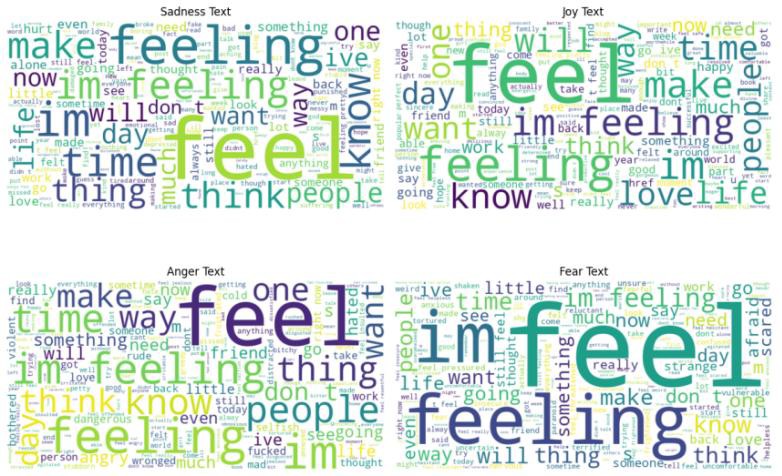
This study focuses on the task of text sentiment classification, aiming to lay the foundation for in-depth analysis of user mental health. To achieve this goal, we innovatively introduced and applied the Bidirectional Gated Recurrent Unit (BiGRU) model for modeling and experimentation. This model can effectively capture the contextual dependencies in text sequences, significantly improving the learning and recognition ability of emotional semantic features. In the rigorous model evaluation process, the analysis results based on the test set confusion matrix showed that the model achieved a high prediction accuracy of 94.8%. This outstanding performance metric fully validates the high effectiveness and reliability of the proposed BiGRU model in handling text sentiment classification problems, with accurate and robust classification performance. Therefore, this study not only confirms the enormous potential of BiGRU in this field, but more importantly, its excellent classification performance provides strong core technical support for the subsequent construction of automated and intelligent text emotion recognition and classification systems. More importantly, the successful application of this model in mental health analysis scenarios means that it can efficiently identify the emotions contained in user texts, providing objective and quantifiable analysis basis for timely insight into user psychological states, warning potential risks, and providing personalized psychological support or intervention suggestions. It has important practical significance for improving the intelligence level and response efficiency of mental health services.
Show more
Read Article PDF
Cite
Research Article Open Access
Techniques Based on the Principles of MI: Rehabilitation of Neurologically Induced Motor Limitations
Article thumbnail
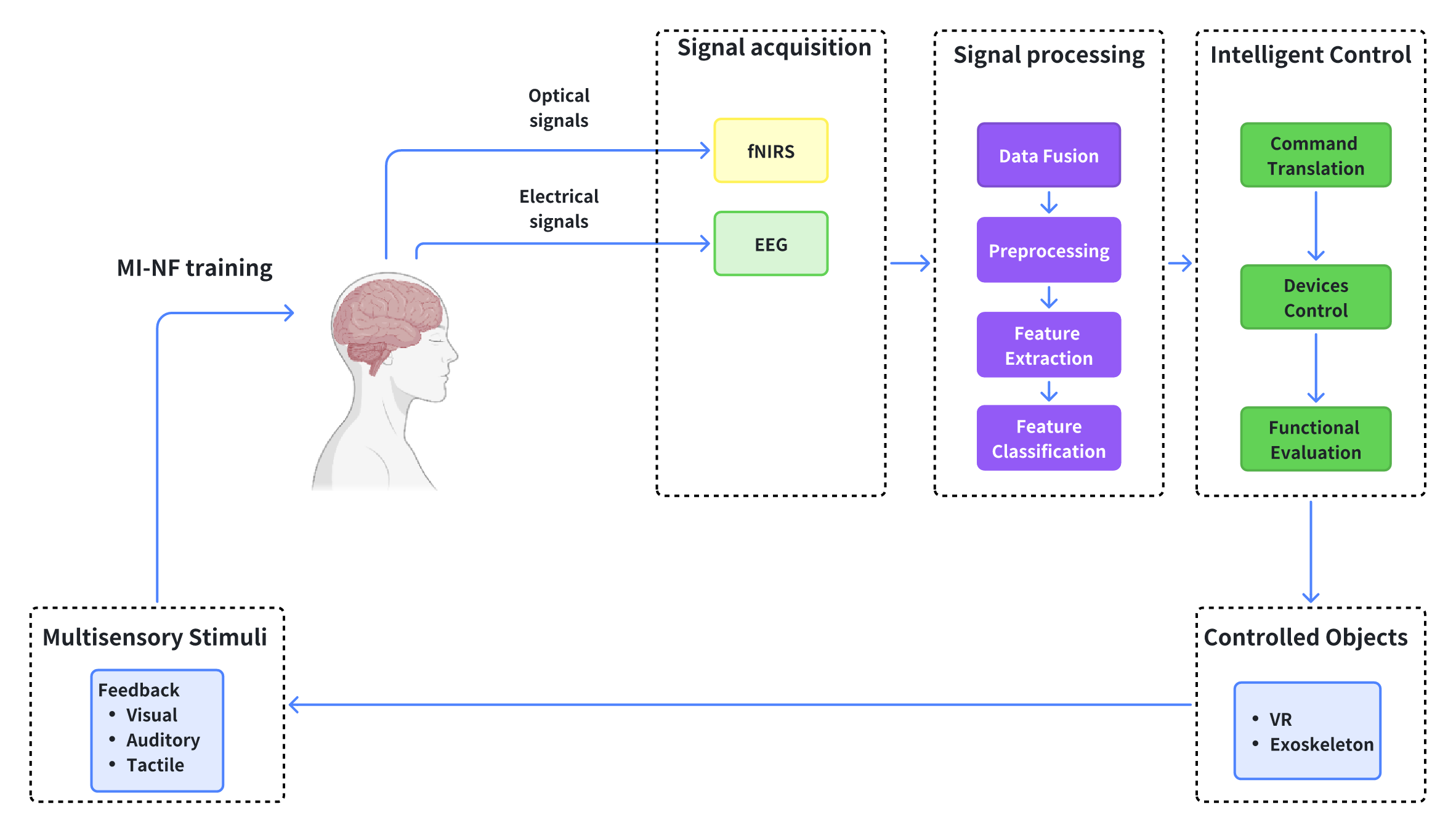
Neurological disorders are now the leading cause of illnesses and disability worldwide. It causes immense suffering to affected individuals and families and deprives communities and economies of human capital. Motor imagery (MI) is a cognitive process that involves mentally simulating movement without actual physical execution. It has emerged as a promising rehabilitation technique for individuals with movement impairments caused by neurological disorders. This review evaluates the advantages and challenges of various MI-based techniques, including brain-computer interface (BCI), Exoskeleton and virtual reality (VR). All these methods offered innovative pathways for motor function restoration. The application of MI-based techniques in rehabilitating motor deficits are explored in this work. Additionally, this paper discusses the future development of MI-based technologies in motor rehabilitation, focusing on multidisciplinary collaboration, technical innovation in accuracy, and clinical applications. The results show that the integration among MI-based technologies holds promise for creating more effective and personalized rehabilitation protocols, ultimately improving patient outcomes in neurorehabilitation.
Show more
Read Article PDF
Cite
Research Article Open Access
The Interplay of Structural Stiffness and MechanicalVibrations in Multi-Level Constructions
Article thumbnail
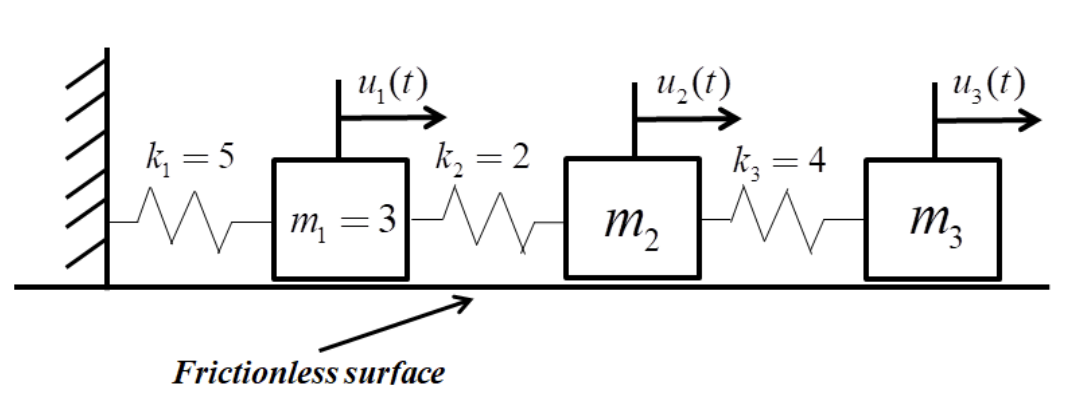
This paper explores the structural dynamics and vibration of a model can be used in varying types of structures. Structural dynamics has a wide range of applications like civil engineering, mechanical engineering, transportation, aerospace. When designing aircrafts, it is necessary to consider the disadvantages that comes from vibration due to its mass, stiffness and many inherent characteristics. For example, miscalculation of the influences of the separation surface joints of the aircrafts can be fatal, showing the significance of carefulness in calculation and consideration for theories and methods of structural dynamics. More application will be to be mentioned later on in the paper including large bridges, high-rise buildings and so on.
Show more
Read Article PDF
Cite